

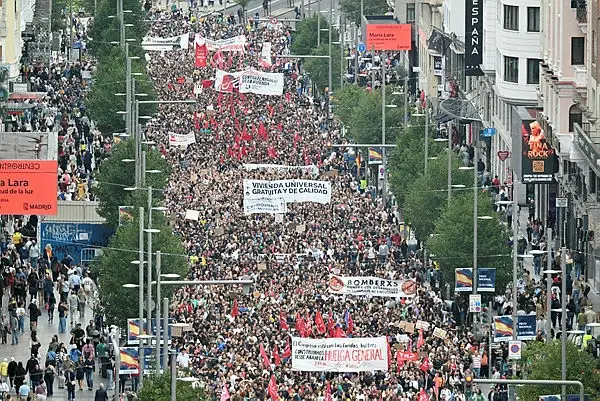

Mass Demonstrations Sweep Spanish Cities
Tens of thousands of protesters marched in Madrid and other Spanish cities on Saturday to demand affordable housing, following the rejection of tenant relief measures by lawmakers. The demonstrations highlighted growing frustration over rising rents and a lack of government intervention in the housing market.
Authorities reported 70,000 participants in the Madrid demonstration, while organizers claimed the figure was 500,000. Smaller protests occurred in Palma de Mallorca, Santander, Segovia, and Toledo. In Valencia, local media reported that five people were arrested after clashes with police.
The demonstrations extended a crisis triggered by the eviction of 87-year-old pensioner Maricarmen Abascal from her Madrid flat last month. Housing campaigners stated that Abascal was forced to leave her flat after an investment company sought to increase her rent by 275 percent. She subsequently reached a deal to return at a low rent.
Legislative Defeat Sparks Outcry
The protests followed the defeat of Prime Minister Pedro Sanchez’s proposed measures in parliament on Friday. The legislation, which included automatic tenancy contract renewal and restrictions on evicting vulnerable tenants, was voted down by opposition parties.
The defeat was attributed to the Catalan separatist party Junts voting against the bills due to a lack of rigor, joining the Popular Party (PP) and far-right Vox party in rejecting the measures.
Following the legislative setback, PP leader Alberto Nunez Feijoo urged Sanchez to call early elections on Saturday, stating the country could not take any more. Recent opinion polls generally place the Popular Party ahead of the Socialists, renewing questions over whether Sanchez’s minority government can survive until the next scheduled general election in 2027.
Cost of Living Drives Tenant Activism
Young workers and tenants cited extreme housing costs as a primary driver for the unrest. Marcos Sainz, a 26-year-old librarian, told AFP that a one-bedroom flat in Madrid now costs 1,000 euros, which is half the median monthly salary in the capital.
Javier, a 31-year-old solar panel installer, stated he spends half of his salary on a tiny room and demanded decent housing and stability. Data from real estate website Idealista reported that average rents in Spain have almost doubled over the past decade, while asking prices for homes have risen by about 90 percent.
Valeria Racu, a spokesperson for the Tenants’ Union, described the protests as showing that eight days of people’s power achieved more than eight years of progressive government and repeated calls for a general strike.