

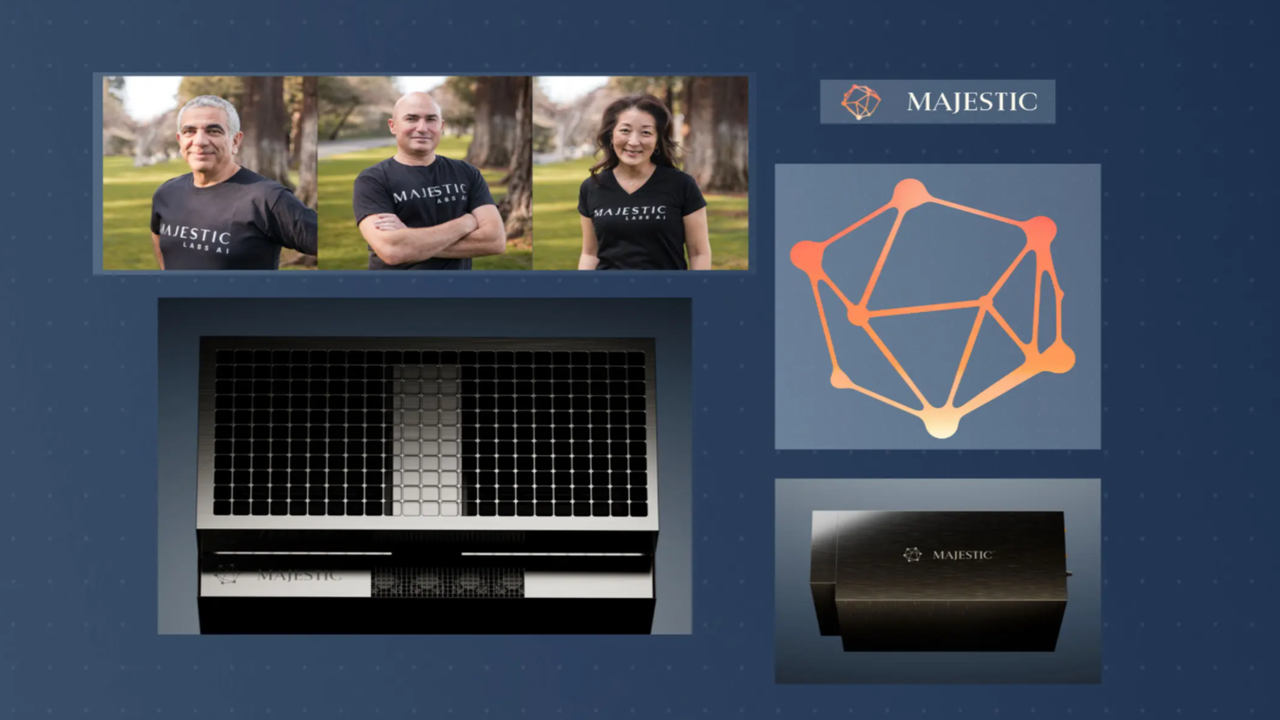

Majestic Labs Unveils New Server Architecture Focused on Cost Reduction and Capacity
A technology startup identified as Majestic Labs has announced the development of a specialized server designed for artificial intelligence workloads. The company states that this new hardware diverges from standard industry practices by replacing traditional graphics processing units with Arm processor cores.
According to reports, the system is configured to utilize up to 128TB of LPDDR6 memory. Majestic Labs describes this specific type of random access memory as affordable in contrast to other high-performance options used in similar computing environments. The company explicitly notes that it has chosen not to use High Bandwidth Memory for this architecture.
Industry analysts and the startup itself characterize High Bandwidth Memory as an expensive component within current server designs. By omitting this specific memory type, Majestic Labs claims its approach offers a pathway to lower overall costs for deploying large-scale AI infrastructure. The organization asserts that these financial savings are significant enough to alter how enterprises might calculate their budgeting for machine learning projects.
The primary objective stated by the company is to overcome what it terms the memory wall in artificial intelligence processing. This technical challenge refers to the limitations imposed when processors cannot access data fast enough or in sufficient quantities, which slows down computational tasks. Majestic Labs argues that its specific combination of Arm cores and vast LPDDR6 capacity directly addresses this bottleneck.
The startup positions this hardware as a direct alternative to servers relying on graphics processing units. While GPUs have historically been the standard for training large language models and other AI applications, Majestic Labs suggests their architecture provides an efficient substitute without sacrificing necessary performance metrics for certain types of tasks. The company maintains that shifting away from GPU reliance is essential for scaling AI operations economically.
Technical Specifications Highlight Shift From HBM to LPDDR6
The core technical distinction in this new server design lies in the memory subsystem. Traditional high-performance computing systems often rely on High Bandwidth Memory, which offers extremely fast data transfer rates but at a premium price point. Majestic Labs has opted for LPDDR6 technology instead.
Reports indicate that the startup claims up to 128TB of this specific RAM can be integrated into a single server unit. This capacity represents a substantial increase over typical configurations found in current market offerings, which often struggle to scale memory beyond tens of terabytes without prohibitive cost increases. The company highlights this volume as a key feature intended to support massive datasets required for modern AI training.
The decision to utilize LPDDR6 is part of a broader strategy to replace the expensive GPU component with Arm cores. This shift changes the fundamental architecture of how data moves within the server. Instead of relying on specialized graphics processors paired with niche memory types, the system uses general-purpose computing units that can access standard high-density memory pools.
According to Majestic Labs, this architectural change allows for a more balanced distribution of resources. The company suggests that the limitations previously associated with the memory wall are mitigated by simply providing enough accessible storage space within the LPDDR6 modules. This approach contrasts with previous methods where processors were bottlenecked regardless of how much external high-speed memory was attached.
The startup emphasizes that affordability is a critical factor in this design choice. By avoiding High Bandwidth Memory, they aim to make large-scale AI training accessible to organizations that might otherwise be priced out by the cost of specialized hardware components. This economic argument forms the basis of their marketing message regarding the viability of Arm-based servers for enterprise applications.
Industry Implications and Company Statements on Market Position
Majestic Labs presents this new server as a disruptive technology that challenges existing norms in artificial intelligence hardware deployment. The company believes that the reliance on expensive GPUs has created unnecessary barriers to entry for many businesses seeking to adopt AI solutions.
By introducing an alternative based on Arm cores and LPDDR6, the startup hopes to expand the pool of organizations capable of running advanced machine learning models. This move could potentially shift market dynamics away from a few dominant hardware vendors who control the supply chain for high-bandwidth memory and specialized graphics cards.
The company has not provided specific details on performance benchmarks in all metrics but focuses heavily on cost-efficiency ratios. They argue that while raw processing speed might differ, the total cost of ownership becomes more favorable when factoring in hardware expenses and energy consumption associated with cooling massive GPU clusters.
There are no reported responses from competing technology giants or established server manufacturers regarding this specific announcement at this time. Majestic Labs stands alone as the proponent of this particular architectural shift, suggesting that widespread adoption will depend on validating performance claims across diverse AI workloads.
The availability of up to 128TB of memory per unit is a reported figure intended to demonstrate scalability potential. This capacity allows for loading larger models into system RAM rather than relying solely on slower storage layers like SSDs or NVMe drives, which can introduce latency issues during inference and training phases.
Majestic Labs continues to develop this technology with the goal of making AI infrastructure more accessible globally. The company views its approach as a necessary evolution in hardware design that aligns computational power with economic reality for businesses operating on tighter margins than legacy tech giants.