

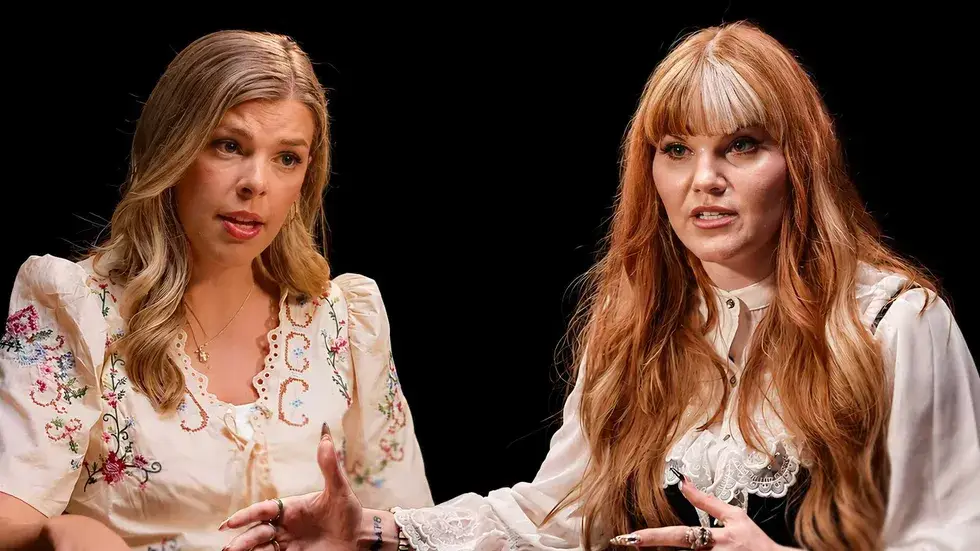

Debate Framework and Participant Positions
An hour-long "Face Off" hosted by Jubilee featured BlazeTV host Allie Beth Stuckey and progressive political commentator Monte Mader in a wide-ranging discussion regarding abortion, feminism, same-sex marriage, and the role of Christianity in American public life. The debate centered on four specific claims: whether Christians must oppose abortion, whether patriarchy or feminism is at odds with Christ's teachings, whether Christians can affirm same-sex marriage, and whether America can rightly be considered a Christian nation.
Across these subjects, the discussion repeatedly returned to a larger disagreement regarding what authority Scripture should hold over Christian moral beliefs and how much influence those beliefs should exert in American public life. Stuckey defended her positions from a biblical Christian perspective, asserting that Christians have the right and responsibility to bring the fullness of their worldview into the public square and into the voting booth.
Mader approached the debate as a critic of the conservative Christian worldview that Stuckey once embraced. The hour-long format allowed for an examination of these foundational differences, with each participant presenting arguments rooted in their respective ideological frameworks. The dialogue focused on the intersection of religious conviction and political action, with both parties outlining their stances on the moral obligations of believers in a democratic society.
Arguments Regarding Abortion and Personhood
The debate opened with Stuckey's assertion that Christians must oppose abortion. She argued that killing an innocent person is always wrong, framing the issue as one of fundamental morality rather than political preference. Stuckey contended that drawing any line after conception creates an arbitrary standard for determining which human beings have rights. For her, the protection of the unborn is a critical issue of personhood, requiring a consistent stance against abortion regardless of historical or cultural shifts.
Mader challenged Stuckey’s position by pointing to disagreements over abortion throughout Christian history. He argued that bodily autonomy should allow a woman to decide whether to continue a pregnancy, suggesting that individual rights regarding one's body take precedence in this context. Mader’s argument relied on the premise that the decision to carry a pregnancy to term is a personal choice protected by the principle of bodily autonomy.
Stuckey rejected the idea that historical disagreement determines whether abortion is morally permissible. When Mader cited historical dissent within Christianity, Stuckey dismissed appeals to past errors in church history. "I'm really not interested in all of the people throughout church history who were wrong about a number of things," Stuckey said. Her rebuttal focused on the current moral status of the unborn, arguing that the existence of historical debate does not negate the moral wrongness of killing an innocent person.
Scope of the Theological and Political Dispute
The disagreement over abortion served as a primary example of the broader conflict between the two commentators. Stuckey’s position emphasized the objective moral status of the fetus based on biblical interpretation, while Mader’s counter-argument highlighted the subjective experience and rights of the pregnant woman. This divergence illustrated the wider tension regarding how Christian doctrines are applied to contemporary legal and social issues.
While the debate covered multiple topics including feminism and same-sex marriage, the discussion on abortion remained a focal point. The exchange demonstrated contrasting views on the source of moral authority: Stuckey pointed to biblical texts as the definitive guide for opposing abortion, whereas Mader leaned toward secular principles of autonomy and historical context within Christian thought.
Broader Implications for Faith in Politics
The debate extended beyond the specific issue of abortion to address the role of Christianity in American public life. Stuckey maintained that Christians have a responsibility to engage politically with their faith-based convictions. This stance implies that religious beliefs are not merely private matters but should inform public policy and voting behavior.
Conversely, Mader’s critique of the conservative Christian worldview suggested skepticism toward the integration of specific religious doctrines into political platforms. As a progressive commentator, his approach favored a separation between personal faith and public governance, or at least a different application of moral reasoning in the political sphere.
The hour-long discussion provided a platform for these opposing views to be articulated in detail. By addressing claims about patriarchy, same-sex marriage, and the status of America as a Christian nation, the debate highlighted the complexity of applying ancient religious texts to modern political structures. The participants’ arguments underscored the enduring nature of the debate over the place of religion in American democracy.
Historical Context and Contemporary Application
The reference to historical disagreements within Christianity during the abortion segment illustrated how interpretations of faith evolve over time. Mader utilized this historical variance to question the certainty of conservative Christian positions on social issues. Stuckey’s rejection of this argument emphasized a commitment to specific doctrinal interpretations that she viewed as timeless and unchanging.
The debate concluded with both parties having presented their core arguments regarding the intersection of faith and politics. The discussion did not result in a consensus but rather clarified the distinct philosophical foundations upon which each commentator operates. Stuckey’s insistence on bringing her worldview into the voting booth stands in contrast to Mader’s critical perspective on that very practice.