

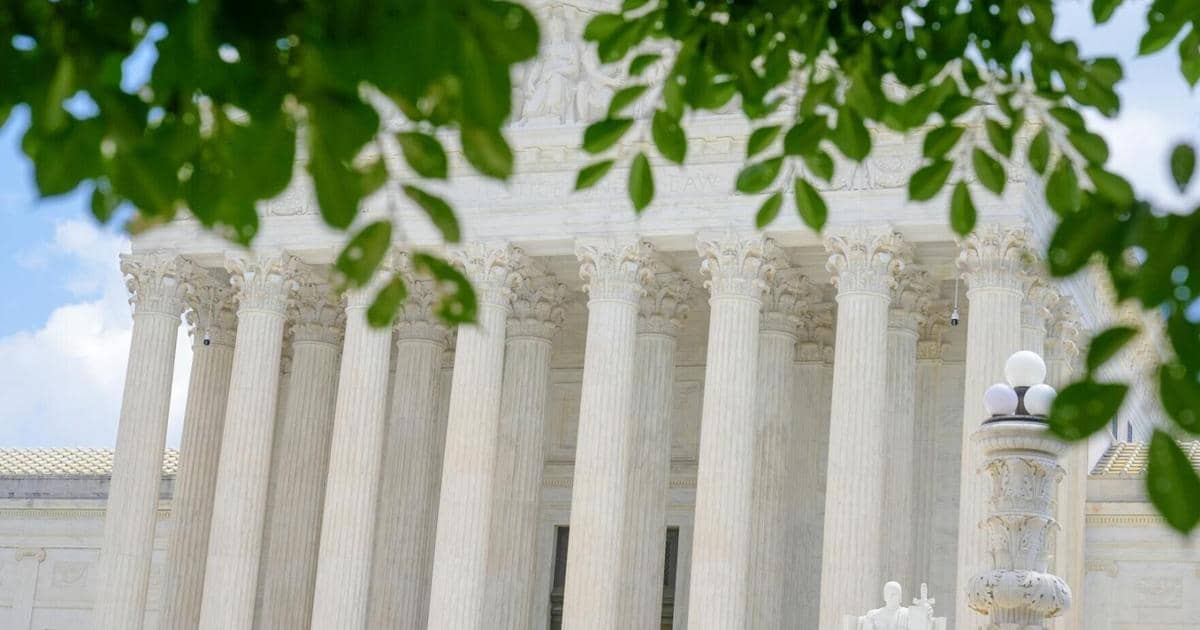

High Court Cites 14th Amendment to Confirm Citizenship Status
The Supreme Court of the United States has issued a ruling affirming that birthright citizenship remains the law of the land. In its decision, the high court pointed directly to the Citizenship Clause of the 14th Amendment to support its determination regarding the status of individuals born within U.S. borders.
According to reports from the Wyoming Tribune Eagle, the court explicitly stated that all babies born in the United States "are citizens by birth." This legal clarification serves as a definitive statement on the interpretation of constitutional provisions governing nationality and residency for those born on American soil.
The ruling addresses long-standing questions regarding the application of the 14th Amendment to newborns. By referencing the specific text of the amendment, the justices provided a clear legal framework that confirms citizenship status is automatic for those born within the country's jurisdiction.
Decision Characterized as Political Rebuke
The issuance of this ruling has been described in multiple news outlets as a rebuke to former President Donald Trump. Several publications, including Kpcnews, Communitynewspapergroup, and the Emporia Gazette, have used headlines framing the Supreme Court's action as a direct contradiction to positions previously held or advocated by the former president.
The characterization of the ruling as a "rebuke" stems from the context of political debates surrounding immigration and citizenship laws. While the court's decision is grounded in constitutional text, media coverage has highlighted the political implications of the judgment relative to Trump's past statements and policy proposals regarding birthright citizenship.
Trump has previously expressed skepticism about the automatic granting of citizenship to children born to undocumented immigrants, suggesting that executive action or legislative change might be necessary. The Supreme Court's affirmation of the current legal status thus stands in opposition to those proposed changes.
Constitutional Basis for the Ruling
The core of the Supreme Court's argument rests on the Citizenship Clause of the 14th Amendment. This clause states that "All persons born or naturalized in the United States, and subject to the jurisdiction thereof, are citizens of the United States and of the State wherein they reside." The high court utilized this text to establish that birth within the country is sufficient for citizenship.
By anchoring its decision in this specific clause, the Court avoided creating new precedent or interpreting ambiguous language. Instead, it reinforced the existing understanding that birth on U.S. soil confers citizenship automatically, regardless of the parents' status.
Media Coverage and Political Implications
The widespread use of the phrase "in a rebuke to Trump" in news headlines indicates the political sensitivity of the issue. The Wyoming Tribune Eagle summarized the event by noting that the Supreme Court rules birthright citizenship is the law of the land, explicitly linking this legal fact to the political figure.
This framing suggests that the ruling has immediate political repercussions. It invalidates any potential executive orders or legislative efforts aimed at altering the definition of citizenship for those born in the United States without requiring a constitutional amendment.
The consistency across multiple news sources, including the Emporia Gazette and Kpcnews, underscores the national attention paid to this decision. Each outlet reported the core legal outcome while emphasizing the political context surrounding former President Trump's stance on the matter.
Legal Precedent and Future Implications
The Supreme Court's affirmation solidifies birthright citizenship as a permanent feature of American law, absent a constitutional amendment. The ruling confirms that the 14th Amendment's Citizenship Clause applies to all babies born in the United States.
This decision prevents any administrative or executive branch from unilaterally changing the definition of citizenship for newborns. It establishes that the legal status is derived directly from the Constitution, not from statutory law or presidential decree.
The ruling effectively closes the door on attempts to reinterpret the 14th Amendment in a way that would exclude certain groups of newborns from automatic citizenship. The high court's reliance on the plain text of the amendment ensures that the current legal standard remains intact.
Response to Political Pressure
The description of the ruling as a rebuke highlights the tension between judicial independence and political pressure. While the Court's decision is based on legal interpretation, its impact is felt in the political arena, particularly regarding immigration policy debates.
Trump's previous positions on birthright citizenship have been a significant part of his political platform. The Supreme Court's clear affirmation that all babies born in the United States are citizens by birth serves as a direct counter to those positions.
This legal clarity provides stability for families and individuals who rely on birthright citizenship but introduces political challenges for those seeking to change immigration laws. The ruling ensures that the constitutional right remains protected from political shifts.