

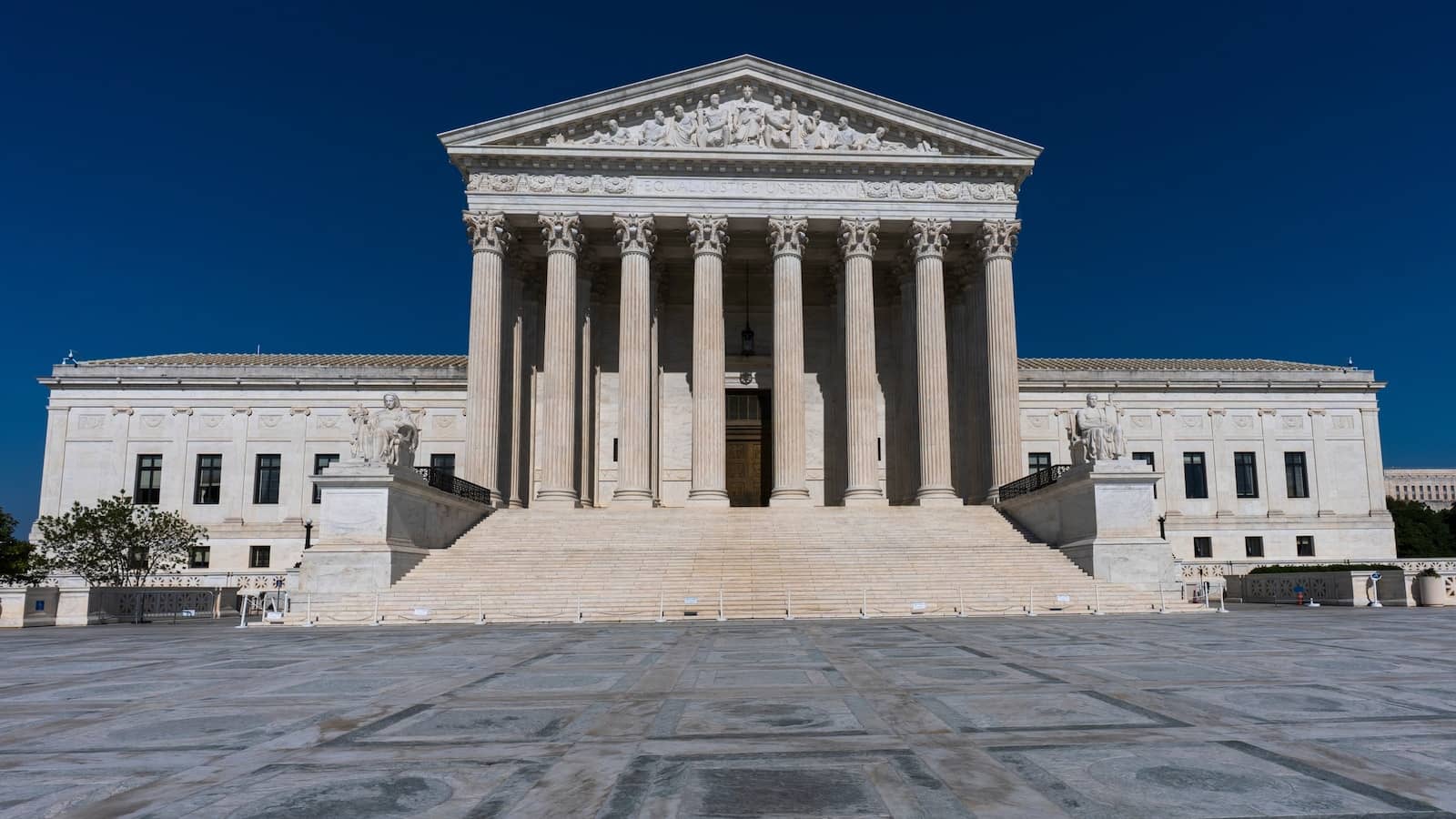

High Court Affirms Birthright Citizenship Under Fourteenth Amendment
The U.S. Supreme Court has issued a definitive ruling, confirming that children born within the geographical boundaries of the United States are citizens under the explicit provisions of the Fourteenth Amendment to the Constitution. This legal determination holds true irrespective of the immigration status of the child's parents, explicitly covering situations where parents may be present in the country unlawfully or on a temporary basis.
This decision addresses a longstanding constitutional question regarding the precise scope of citizenship for individuals born on American soil. By affirming this interpretation, the Court has unequivocally reinforced the principle that birth within the jurisdiction of the United States confers citizenship status automatically, a concept known as jus soli.
The Principle of Jus Soli Reinforced
The Court's judgment ensures that the place of birth remains the primary determinant for citizenship eligibility, rather than the legal standing or nationality of the parents. This principle, jus soli, meaning 'right of the soil,' is a cornerstone of American citizenship law, rooted deeply in the nation's post-Civil War constitutional amendments. The Fourteenth Amendment, ratified in 1868, states, 'All persons born or naturalized in the United States, and subject to the jurisdiction thereof, are citizens of the United States and of the State wherein they reside.'
This ruling solidifies the historical interpretation of this clause, confirming that the phrase 'subject to the jurisdiction thereof' applies broadly to nearly all individuals born on U.S. territory, with very limited exceptions not relevant to the immigration status of parents. The Court's affirmation underscores the stability and enduring nature of this foundational aspect of American law, providing clarity on a matter that has periodically been the subject of public and political debate.
Scope of the Ruling: Parents' Immigration Status Irrelevant
A critical aspect of the Supreme Court's ruling is its explicit clarification regarding the immigration status of parents. The decision makes it clear that whether parents are in the country unlawfully, temporarily on visas, or have other non-citizen statuses, their child born on U.S. soil is still a citizen. This removes any ambiguity that might have been exploited to challenge the citizenship of children based on their parents' legal standing.
This aspect of the ruling is particularly significant for families where parents might face deportation or have uncertain immigration futures, as it ensures their U.S.-born children retain their full rights and protections as American citizens. The Court's stance reinforces that the child's citizenship is an independent status, not contingent on the parents' legal relationship with the United States.
Justices Divided Along Ideological Lines
Despite the ultimate affirmation of birthright citizenship, the decision does not obscure the profound underlying disagreements among the Supreme Court justices regarding the broader implications of immigration law and constitutional interpretation. The ruling highlights significant divisions among the justices, exposing sharp ideological rifts that have characterized recent terms of the Court.
While the outcome of the case was settled, the legal reasoning and interpretive approaches provided by different members of the Court varied considerably. These divergences underscore the complex legal landscape surrounding immigration policy and the perceived limits of judicial authority in shaping such matters, even when agreeing on a final judgment.
Varied Reasoning Behind the Unanimous Outcome
The concept of a 'unanimous affirmation' in a Supreme Court case can sometimes be misleading, as it often signifies agreement on the final judgment but not necessarily on the legal path taken to reach that conclusion. In this instance, while all justices concurred that birthright citizenship under the Fourteenth Amendment applies to children of non-citizens, the opinions accompanying the ruling likely revealed differing interpretations of constitutional text, historical intent, and judicial precedent.
These varied rationales are crucial because they set the stage for how future related cases might be decided. Justices may agree on a narrow outcome but express fundamental disagreements on the broader principles involved, signaling areas of ongoing contention within the Court's jurisprudence. This intellectual split indicates that while the specific question of birthright citizenship has been resolved, the underlying philosophical debates continue to simmer.
Debates Over the Fourteenth Amendment's Original Intent
The split among the justices reflects broader debates within the legal community about the original intent of the Fourteenth Amendment and its application in modern contexts. Discussions often revolve around whether the framers of the amendment specifically intended to include children of non-citizens, particularly those whose parents might not have been considered 'subject to the full jurisdiction' of the U.S. at the time of its ratification. While the Court's ruling settles the practical application, the theoretical arguments persist.
These deep divisions suggest that while the specific question of birthright citizenship has been resolved through this ruling, related legal challenges concerning immigration, sovereignty, and constitutional interpretation may persist and evolve. The Court's internal dynamics mirror the national discourse on these complex issues, indicating that the path forward on immigration policy will likely remain contentious.
Legal Implications for Immigration Policy
The ruling establishes a clear and robust precedent that effectively prevents future legal challenges from overturning the principle of jus soli in the United States. This precedent is critical for maintaining consistency and predictability in immigration enforcement and citizenship processing across all federal agencies, from the Department of Homeland Security to the State Department.
Legal experts note that this decision decisively closes one significant avenue of argument previously utilized by those seeking to restrict birthright citizenship through either legislative or judicial means. The Court's firm stance effectively removes a major source of uncertainty regarding the citizenship status of children born to undocumented immigrants, providing a stable legal foundation for millions of individuals and their families. It clarifies that efforts to alter birthright citizenship would require a constitutional amendment, a far more arduous process than statutory changes or reinterpretation by the judiciary.