

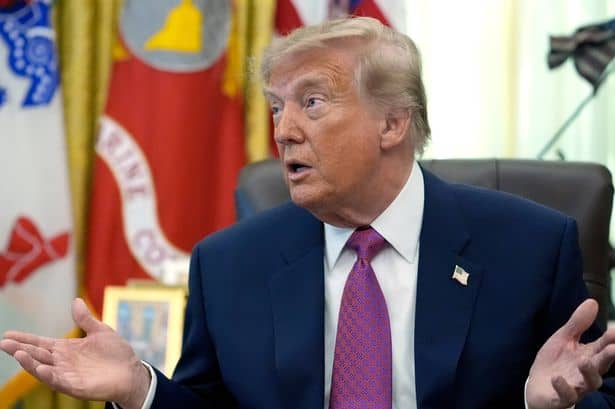

Expert Analysis Links Trump to Strongman Paranoia
Donald Trump is "living in fear" and has established a trusted "inner sanctum" to protect himself and maintain his grip on power, according to an expert on authoritarian leaders. Dr. Ruth Ben-Ghiat stated that the U.S. President's desire for protection and loyalty reflects a wider "strongman" mentality.
This mindset is characterized by powerful leaders becoming increasingly focused on self-preservation. In this framework, leaders surround themselves with people they believe they can trust while relying heavily on personal power and authority. The behavior suggests a shift in political strategy that prioritizes internal security over broader institutional engagement.
Defining the Strongman Mentality
Dr. Ben-Ghiat noted that this mentality involves specific structural changes to governance. These include weakening democratic institutions and limiting opposition. The focus remains on consolidating control through a small group of trusted individuals rather than traditional political coalitions.
The report highlights that this approach is not unique to Trump but is a pattern observed in other powerful leaders who adopt strongman characteristics. The reliance on personal authority often supersedes established protocols, creating an environment where loyalty is the primary metric for inclusion in the inner circle.
Role of Family in the Inner Sanctum
A significant component of this trusted circle involves family members. Dr. Ben-Ghiat specifically noted that family members, particularly sons-in-law, can be useful to leaders in this context. This reliance on kinship ties ensures that the core group shares a personal stake in the leader's survival and success.
The inclusion of sons-in-law in such positions suggests a strategy to further insulate the president from external influences. By placing relatives in key roles, the administration creates a barrier between the executive office and other political actors or advisors who may not share the same personal loyalty.
Implications for Political Structure
The formation of this inner sanctum has implications for how power is exercised within the White House. By limiting the circle of trust to family and a select few, the administration reduces the potential for dissent or conflicting advice from within the government. This structure aligns with the strongman model where decision-making is centralized and protected from external scrutiny.
The report indicates that this behavior is consistent with leaders who feel threatened by their political environment. The fear mentioned by Dr. Ben-Ghiat drives the need for such tight control, as leaders seek to mitigate perceived risks through isolation and reliance on a small, loyal group.
Source Attribution and Publication Details
The report was published by The Mirror US on September 8, 2026. The article cites Associated Press imagery and copyright for its visual content. The analysis provided by Dr. Ben-Ghiat serves as the primary basis for the claims regarding Trump's mindset and organizational changes.
Dr. Ruth Ben-Ghiat is identified as an expert on authoritarian leaders. Her assessment links current political behaviors to historical patterns of strongman rule. This connection provides a framework for understanding the reported shifts in presidential conduct and administrative structure.
Context of the Claims
The claims are based on Dr. Ben-Ghiat's expertise in the field of authoritarianism. She observes that as leaders become more powerful, they often exhibit increased paranoia. This paranoia leads to a greater emphasis on self-preservation and the creation of protective barriers around their authority.
The report does not include direct responses from Donald Trump or his administration regarding these specific claims. The analysis remains focused on Dr. Ben-Ghiat's interpretation of observed behaviors and their alignment with established political science concepts regarding strongman leaders.