

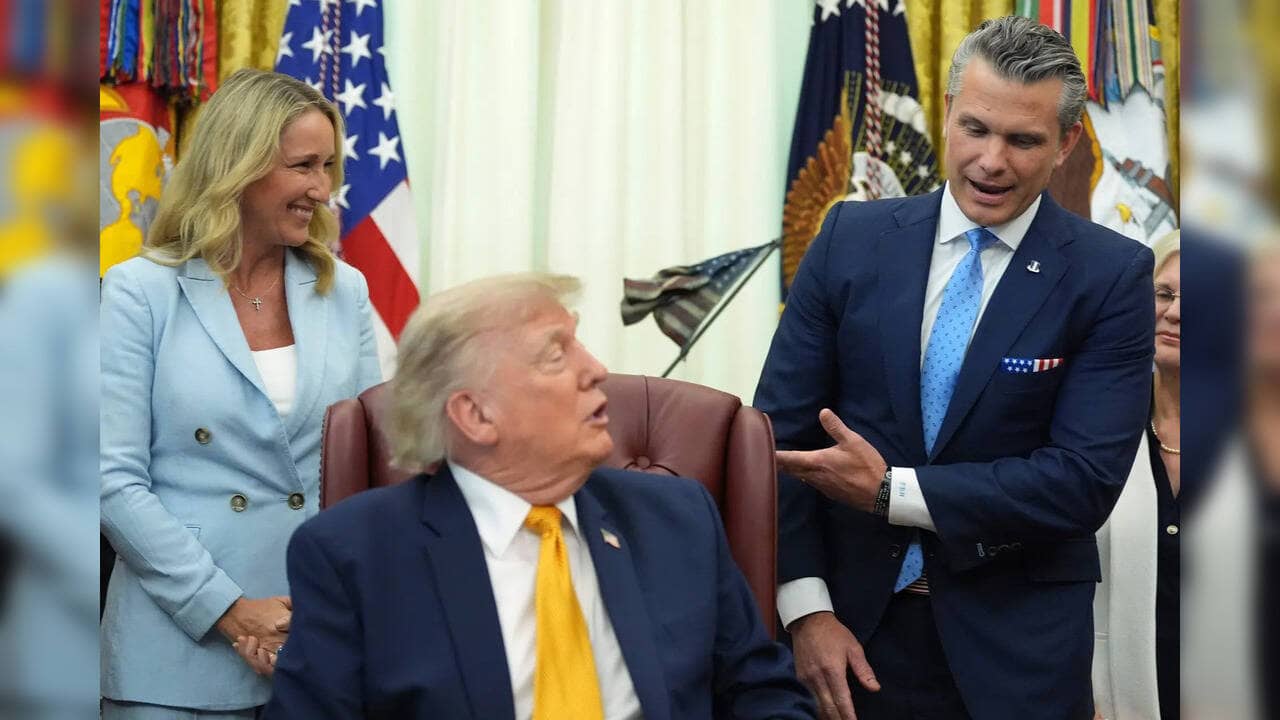

President Addresses Speculation on Defense Secretary's Ambitions
U.S. President Donald Trump recently addressed a flurry of reports regarding Defense Secretary Pete Hegseth's potential interest in a future presidential run, characterizing the timeline for discussing his potential successor as "very early." This statement effectively sidestepped direct commentary on whether Hegseth would actively pursue the nation's highest office in 2028.
The president's comments were prompted by inquiries from reporters, specifically referencing an NBC News report. This report alleged that the Pentagon chief had engaged in discussions with associates about a potential White House bid. When pressed by journalists on the matter, President Trump acknowledged Hegseth's current performance within his cabinet role, stating unequivocally that Hegseth is doing a "fantastic job" as Defense Secretary. However, he consistently reiterated that it was premature to delve into detailed succession plans for an election cycle still years away.
Trump notably did not confirm or deny the specific details of the reported discussions concerning a 2028 campaign. Instead, his focus remained firmly on the current status of his administration and the immediate political landscape confronting his Republican Party. The president's remarks were concise, offering no further elaboration on the nature of Hegseth's alleged conversations or the precise timeline for any potential future political activities, thereby maintaining a degree of ambiguity around the speculation.
Republican Party Priorities in November Elections
The emergence of discussions regarding presidential succession, even if downplayed by the president, occurs against the critical backdrop of immediate electoral challenges for the Republican Party. According to available information, the president's party is currently channeling its primary strategic focus and resources into maintaining control of both chambers of the U.S. Congress in the upcoming November elections. These mid-term elections are often viewed as a referendum on the sitting administration and are crucial for legislative agenda setting and the implementation of the party's platform.
This intense strategic focus on congressional retention underscores that internal discussions about long-term political succession, particularly for an election as distant as 2028, are currently secondary to the more pressing legislative and electoral goals. The timing of President Trump's comments, emphasizing the "very early" nature of the topic, highlights this clear distinction between near-term political objectives and speculative future campaigns. For the Republican Party, securing majorities in the House and Senate is paramount for the remainder of the current presidential term and for shaping the political narrative leading into future cycles, including the next presidential contest.
The Early Stirrings of 2028 Presidential Talk
Speculation regarding potential successors to President Trump has become a recurring theme in political analysis, particularly as the 2028 election cycle begins to subtly draw attention from political observers and media outlets. Defense Secretary Pete Hegseth, a prominent figure within the administration, has emerged as one of several individuals associated with these early rumors, though his direct involvement in an active campaign remains entirely unconfirmed by any official announcements from his end.
The NBC News report, which served as the catalyst for reporters' questions, specifically indicated that Hegseth had engaged in preliminary discussions about a potential White House bid with various associates. President Trump's subsequent response did not address the veracity of the report's claims directly. Instead, he offered a public evaluation of Hegseth's performance in his current duties, commending his work. By describing the situation as "very early," the president skillfully avoided making a definitive statement on whether Hegseth was, in fact, actively preparing for a presidential run, leaving room for future political developments without committing to an endorsement or a dissuasion.
Cabinet Ambitions and Administrative Focus
The interaction between the president and reporters concerning Hegseth's potential ambitions has inevitably drawn attention to the intricate dynamics within the current administration. While President Trump publicly praised Hegseth's work as Defense Secretary, the mere question of whether a sitting cabinet member is actively exploring a presidential campaign raises a host of procedural and political considerations. Such speculation can sometimes introduce complexities regarding focus, loyalty, and the perception of internal unity within a presidential team, potentially diverting attention from the administration's immediate policy objectives.
As per the available reports, no other members of the administration or the broader Republican Party have been cited as publicly responding to these specific allegations regarding Secretary Hegseth. This singular focus remains on President Trump's characterization of the timeline as premature and his assessment of Hegseth's performance in his current, demanding role. The president's measured response helps to manage the optics, ensuring that the administration's primary focus appears to be on governance and immediate political objectives rather than future electoral contests that are still years away.
Navigating Future Political Contests Amidst Current Priorities
As the United States rapidly approaches the pivotal November elections, the Republican Party's collective efforts are overwhelmingly directed toward securing and maintaining congressional majorities. This immediate and critical focus on legislative power may significantly influence how any nascent succession discussions are handled, or more likely, deferred, within the party structure in the coming months. The success or failure in November will undoubtedly shape the political landscape for years to come, potentially altering the field of prospective presidential candidates for 2028 by shifting party momentum and resources.
President Trump's deferral of detailed commentary on Hegseth's 2028 prospects aligns with a broader, often strategic, pattern of avoiding premature commitments to potential successors. By labeling the topic as "very early," Trump maintains flexibility and leverage within the party. This approach leaves open the possibility for various future developments and allows the political field to evolve naturally, without the president's early intervention either endorsing or discouraging any specific candidate at this nascent stage of the 2028 cycle. Such a stance can also prevent internal party divisions from emerging too soon.
Despite the president's remarks, reports regarding Hegseth's intentions continue to circulate in various media outlets, fueling ongoing political discourse. However, it is crucial to note that no official campaign has been launched by Defense Secretary Hegseth, nor have any formal exploratory committees been announced. The president's remarks serve as the most recent and authoritative public statement from the White House on the matter, providing a neutral acknowledgment of the circulating speculation without explicitly validating the underlying rumors or confirming any concrete plans for a future presidential bid, thereby keeping all options open for the political future.