

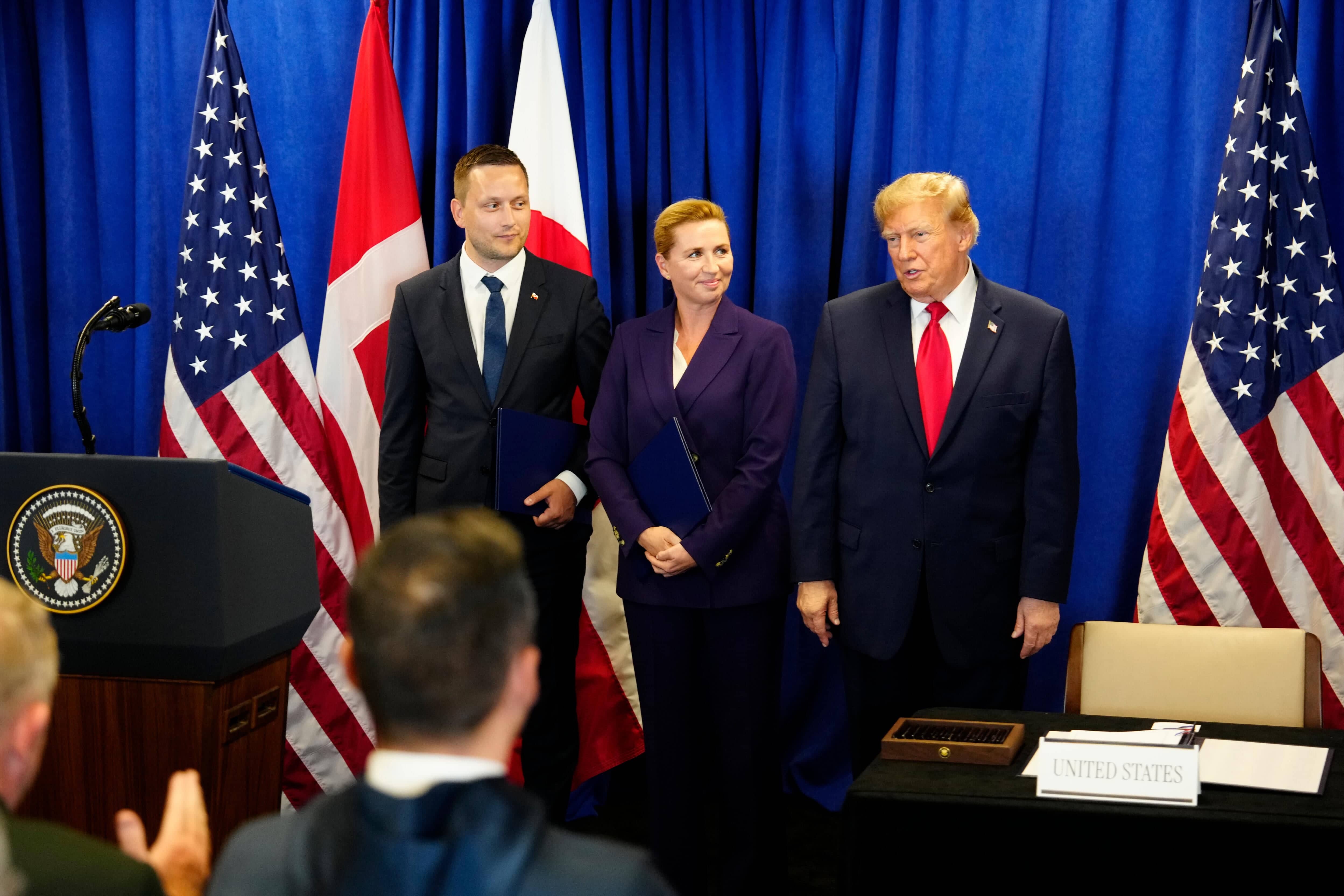

Leaders Gather in New York to Finalize Defense Deal
Washington — President Donald Trump signed a comprehensive security agreement with representatives from Denmark and Greenland on Tuesday, establishing expanded military authority for the United States on the North Atlantic island. The signing ceremony took place on the sidelines of the United Nations General Assembly in New York.
The document was signed by three key figures: President Trump, Greenland Premier Jens-Frederik Nielsen, and Danish Prime Minister Mette Frederiksen. According to reports from the White House, the agreement is designed to bolster the U.S. military and security presence on the island, which has long been a strategic point in the North Atlantic region.
The White House released the full text of the deal shortly after the signing event concluded. The release of the document provided immediate public access to the terms agreed upon by the three nations, marking a formal shift in the security architecture of the territory.
Agreement Marks End of Long-Standing Territorial Tensions
The new security pact is described as the culmination of years of tensions regarding the future of Greenland, a Danish territory. The agreement addresses long-standing disputes over sovereignty and defense responsibilities that have characterized relations between Washington, Copenhagen, and Nuuk for decades.
Strategic Implications for the North Atlantic
By granting the United States broad military authority, the deal significantly alters the operational landscape for U.S. forces in the Arctic and North Atlantic regions. The expansion of this presence is viewed as a direct response to evolving geopolitical dynamics in the high north.
The involvement of Greenland’s premier indicates that the local government has consented to these changes, moving past previous objections or hesitations regarding foreign military control on its soil. This cooperation between the three leaders signals a unified front in managing the island's defense and security interests.
Historical Context of U.S. Military Presence
The signing event highlights the continued strategic importance of Greenland to American national security. The territory’s location provides critical monitoring capabilities for air and sea traffic in the North Atlantic, a region that has seen increased military activity from other global powers in recent years.
President Trump’s participation in the signing underscores the administration’s priority of securing these assets. By formalizing the agreement during the U.N. General Assembly, the White House placed the deal within the broader framework of international diplomacy and collective security efforts.
Official Reactions and Documentation
The release of the agreement’s text by the White House allows for detailed scrutiny of its provisions. While specific operational details remain under the purview of military authorities, the political significance of the document is evident in its immediate availability to the public and press.
The presence of Danish Prime Minister Mette Frederiksen at the signing reaffirms Denmark’s role as the sovereign state responsible for Greenland’s foreign affairs and defense. Her participation suggests that Copenhagen has approved the transfer of certain operational authorities to the United States, maintaining the integrity of the Danish Realm while accommodating U.S. security requirements.
Greenland Premier Jens-Frederik Nielsen’s signature represents the local government’s endorsement of the deal. This step is critical for the implementation of the agreement, as it ensures that local administrative structures are aligned with the new military framework.
Next Steps in Implementation
With the signing complete and the text released, the focus now shifts to the practical application of the agreement. Military personnel and equipment will likely begin to move into positions under the new authority structure, though specific timelines for deployment were not detailed in the immediate reports.
The deal establishes a new baseline for U.S.-Greenland-Denmark relations, replacing previous periods of tension with a formalized security partnership. The agreement’s long-term effects on regional stability and international diplomacy will be monitored by global observers as the provisions are put into effect.