


Tsipras's Student Aid Proposal Ignites Political Firestorm
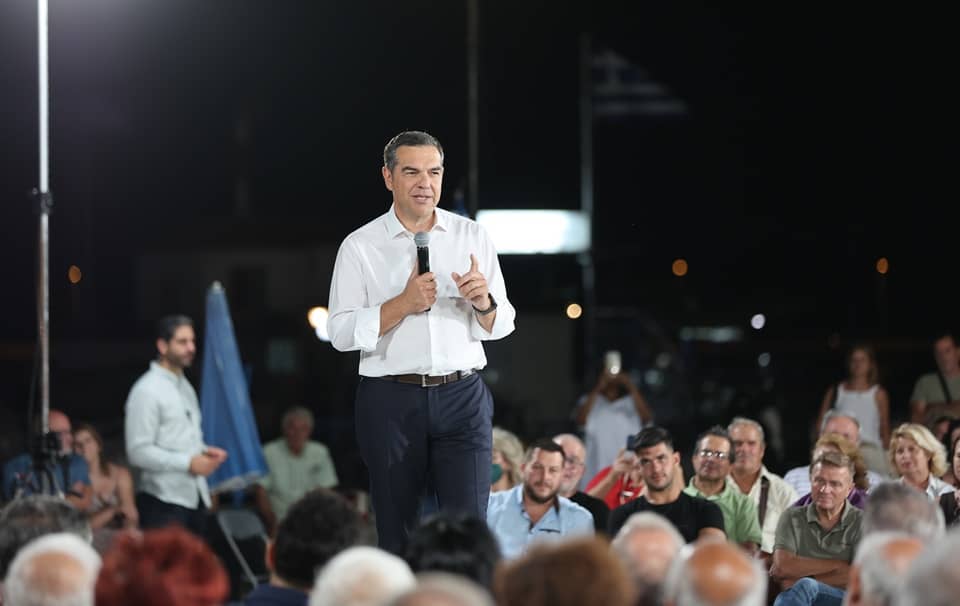
A significant political confrontation has erupted in Greece following a student support proposal unveiled by Alexis Tsipras, leader of the Greek Left Alliance (ELAS), during an announcement in Thessaloniki. The government swiftly responded, with spokesman Pavlos Marinakis launching a scathing attack, accusing ELAS of engaging in "political fraud" and alleging a drastic reduction in promised benefits compared to Tsipras's initial presentation.
Marinakis asserted that Tsipras had originally pledged a substantial €500 monthly allowance for 80,000 students. However, the government claimed that a subsequent party memo, distributed after the initial announcement, outlined a significantly lower figure. According to Marinakis, this revised plan would provide only €125 per student, a figure derived by dividing an annual allocation of €400 million over a four-year period. This alleged discrepancy formed the core of the government's accusation of misleading the public.
Government Alleges Intentional Deception
The government's criticism extended beyond mere financial discrepancies, delving into the character of the ELAS leader. Government officials characterized Tsipras as possessing an "innate tendency" to deceive voters, particularly concerning the true scope and financial value of his proposed educational support program. This strong language underscored the intensity of the political clash, framing the debate not just as a policy disagreement but as a question of political integrity.
The accusation of "political fraud" specifically targeted the perceived shift between the initial, more generous promise and the details presented in the later party memo. Marinakis's statements implied that the ELAS leadership had intentionally inflated expectations before quietly scaling back the financial commitment, a move the government sought to expose as disingenuous to the electorate.
ELAS Counters, Citing Phased Implementation and Fiscal Scrutiny
ELAS officials quickly moved to counter the government's accusations, dismissing them as a sign that the government was "panicking." The party clarified that their student support program was designed for gradual implementation, spanning the years between 2027 and 2030, rather than being fully active from the outset. This phased rollout, ELAS maintained, was a deliberate and integral component of their strategy, directly contradicting the government's characterization of the non-paper as a reduction of benefits.
To underscore the financial viability and transparency of their proposal, ELAS expressed a willingness to submit the plan to the Fiscal Council for review. This offer highlighted the party's confidence in the structural integrity of their program and aimed to dispel any doubts about its economic feasibility. The Fiscal Council, an independent body responsible for monitoring public finances, would provide an impartial assessment, lending credibility to ELAS's claims.
Long-Term Vision for Student Support
The ELAS defense emphasized a long-term vision for student aid, arguing that the government's immediate focus on the alleged reduction overlooked the strategic, multi-year approach. By clarifying the 2027-2030 timeline, ELAS sought to reframe the narrative, presenting their plan as a sustainable, forward-looking investment in education rather than a short-term, fully funded immediate payout. This distinction was crucial in their effort to refute the government's accusations of misrepresentation.
Opposition Parties Offer Broad Criticism
The heated exchange between the government and ELAS did not escape the scrutiny of other opposition parties, who offered their own criticisms of both sides. PASOK, another prominent opposition party, accused both the government and ELAS of pursuing "similar policies." This critique suggested that the dispute was less about substantive policy differences and more about political maneuvering and a superficial rivalry, implying a lack of distinct ideological platforms from either party on the issue of student support.
Meanwhile, the communist KKE party adopted an even more dismissive stance, characterizing the promises from both the government and ELAS as mere "hope trading." This strong condemnation from KKE implied that the proposed student aid initiatives, regardless of their specific figures or implementation timelines, were ultimately empty gestures designed to exploit the aspirations of voters without offering genuine, transformative solutions. The KKE's position underscored a broader disillusionment with the political establishment's approach to social welfare and education.