


Market Volatility and Borrowing Costs Surge
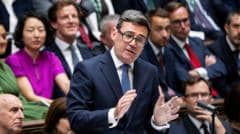
The United Kingdom’s financial markets experienced significant movement this week, with the cost of borrowing for the country reaching an 18-year high on Wednesday. This surge in borrowing costs coincided with Prime Minister Andy Burnham’s first session of Prime Minister's Questions (PMQs), where economic stability became the central topic of debate between the government and the opposition.
Specific indicators of rising debt servicing costs were highlighted during the parliamentary session. Interest rates on government bonds have been climbing, pushing the yield on a 10-year bond to its highest level since 2008. Additionally, the yield on a 30-year bond reached its highest point since 1998. These metrics reflect the immediate financial pressures facing the Treasury as Burnham’s administration navigates its early days in power.
Burnham assumed office in July, succeeding Sir Keir Starmer, before Parliament’s summer recess. This timeline meant that Wednesday’s session marked the first time the Prime Minister faced off against Conservative leader Kemi Badenoch at PMQs since his transition to the role.
Government Stance on Fiscal Responsibility
In response to the economic climate, Burnham sought to reassure lawmakers and the public that his administration would prioritize strict financial management. He stated that the government would be "grounded in fiscal responsibility" and committed to adhering to established fiscal rules.
Burnham outlined a dual approach for his ministry: reducing cost-of-living pressures for constituents while simultaneously taking steps to reduce national debt. He told MPs, "This will be a government grounded in fiscal responsibility. It will stick to the fiscal rules, but at the same time, we will help reduce cost-of-living pressure on our constituents, and that's the approach that we will take."
During his opening remarks, Burnham also highlighted policy actions already taken by his administration. He noted that he had already implemented tax cuts, specifically mentioning a reduction in VAT on energy bills and changes to hospitality business rates.
Attribution of Market Turbulence
When addressing the causes of the current economic instability, Burnham attributed the "turbulence on global markets" directly to the previous Conservative government. He argued that the current financial exposure was a legacy left behind by his predecessors. This assertion framed the Labour government’s narrative that the immediate market pressures were external and inherited rather than a result of current policy decisions.
Opposition Challenges on Spending and Debt
Kemi Badenoch, leading the Conservative opposition, pressed Burnham to provide specific details regarding how his government would manage the increasing national debt. She called on the Prime Minister to explicitly state where spending cuts would be implemented to address the fiscal shortfall.
Badenoch’s questioning focused on the practicalities of reducing debt in an environment of rising borrowing costs. By demanding clarity on expenditure reductions, she challenged the Labour government’s ability to balance its stated goal of fiscal responsibility with the need to fund public services and tax cuts simultaneously.
The exchange highlighted the immediate political friction between the two parties regarding economic management. While Burnham emphasized adherence to rules and past tax reductions, Badenoch focused on future spending constraints and the tangible impact of the 18-year high in borrowing costs on the national economy.