

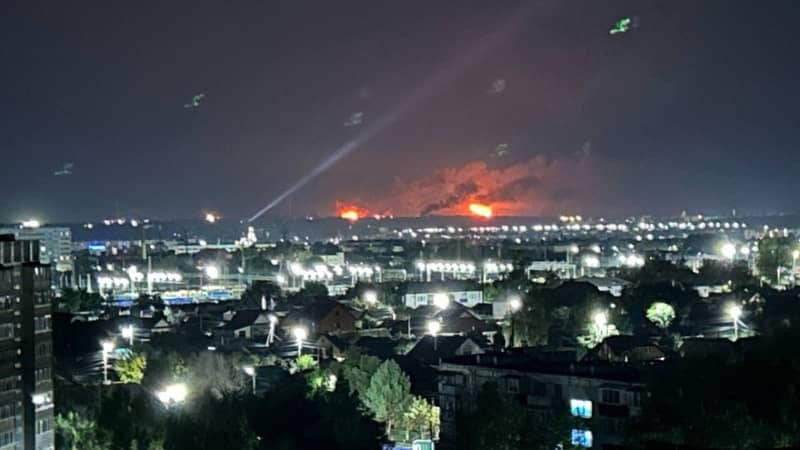

Overnight Attack Targets Rostov Region Infrastructure
The Ukrainian armed forces launched a coordinated strike involving both drones and missiles against Russian infrastructure located in the Taganrog and Samara regions. The attack took place overnight on September 15, marking a significant escalation in cross-border operations within the ongoing conflict.
Rostov Region Governor Yury Slyusar confirmed the details of the assault on Taganrog. In his official statement, Slyusar acknowledged that Ukrainian forces had targeted facilities within the city during the overnight hours. The confirmation from regional leadership provides direct verification of the event, which was reported by multiple news outlets covering the region.
Taganrog, a major port city in the Rostov Oblast, has previously been subject to various types of attacks throughout the war. The use of a combined arms approach, integrating aerial drones with missile systems, suggests a complex operational planning process by Kyiv's military command. This method allows for layered defense penetration and increased likelihood of hitting hardened or dispersed targets.
The timing of the strike, occurring in the early hours of September 15, aligns with historical patterns of Ukrainian long-range operations designed to minimize civilian casualties during initial impacts while maximizing strategic disruption. However, specific details regarding the extent of damage or any reported injuries were not immediately available in the initial reports from Rostov officials.
Strategic Scope Extends to Samara Region
In addition to the assault on Taganrog, Ukrainian forces directed strikes toward infrastructure within the Samara region. This geographic spread indicates a broadening of target selection criteria by Kyiv, moving beyond immediate border areas to deeper Russian territory.
The inclusion of Samara in the list of targeted regions highlights the strategic intent to disrupt logistical networks or industrial capabilities located far from the frontline. Samara is a significant industrial and transportation hub in the Volga region, making it a high-value target for efforts aimed at degrading Russia's war-making capacity.
Reports indicate that the simultaneous nature of the attacks on Taganrog and Samara was designed to stretch Russian air defense resources. By forcing defensive units to respond to multiple vectors simultaneously, Ukrainian forces may aim to create gaps in interception coverage for individual targets.
Political Context and Energy Infrastructure Debates
The strikes occur against a backdrop of intense diplomatic and military debate regarding the targeting of energy infrastructure. Recent political developments have seen heightened scrutiny over whether such attacks violate implicit or explicit agreements between Moscow and Kyiv, or their respective Western allies.
Ukrainian President Volodymyr Zelensky has previously responded to claims made by former U.S. President Donald Trump regarding alleged agreements not to strike energy infrastructure. Zelensky outlined specific conditions under which Ukraine might halt such strikes, suggesting that the decision is tied to broader geopolitical negotiations rather than unilateral restraint.
Trump had claimed that Russia and Ukraine had agreed to cease attacks on each other's energy grids. However, these claims have been contested by Kyiv, with Zelensky providing counter-narratives that emphasize the necessity of targeting military-industrial complexes regardless of their proximity to civilian power supplies.
Regional Security Implications
The expansion of Ukrainian long-range capabilities into regions like Samara and Rostov has significant implications for regional security dynamics. It demonstrates Ukraine's ability to project power deep into Russian territory, challenging Moscow's assertion of control over its internal borders.
Analysts note that such operations serve both tactical and psychological purposes. Tactically, they aim to degrade supply lines and production facilities. Psychologically, they signal to the Russian public that the war is no longer confined to eastern Ukraine but can reach anywhere within the country's vast geography.
The confirmation of these strikes by Rostov Governor Slyusar adds official weight to the reports, moving the event from unverified battlefield updates to confirmed regional incidents. As investigations into the damage continue, further details regarding the specific types of missiles and drones used may emerge from subsequent military briefings.