


Strategic Shift in Indo-Pacific Surveillance Assets
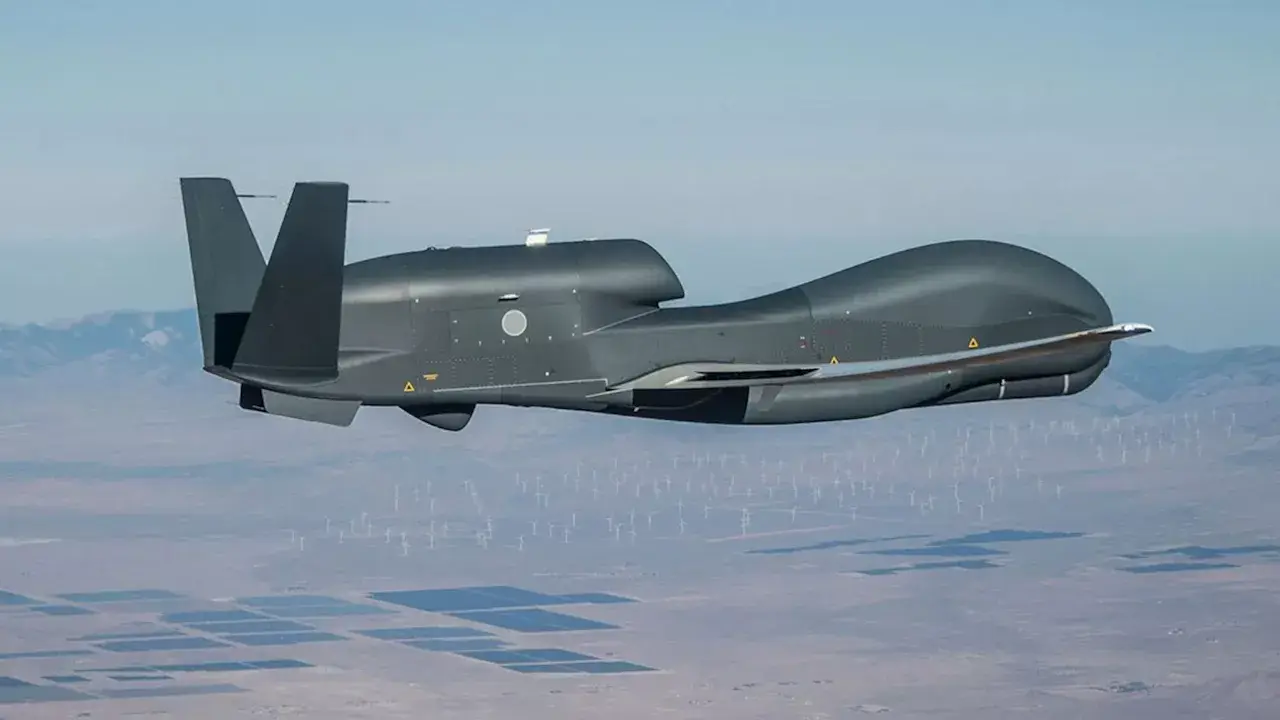
The United States Air Force has executed a permanent relocation of three RQ-4B Global Hawk Block 40 surveillance drones from Andersen Air Force Base in Guam to Yokota Air Base near Tokyo, Japan. The move, which was officially announced by the U.S. Air Force on June 15, marks a significant structural change in the distribution of long-endurance intelligence assets within the region. This decision fundamentally alters the operational posture of these critical unmanned aerial systems, transitioning from a rotational presence to a fixed strategic deployment.
The RQ-4B Global Hawk, manufactured by Northrop Grumman, is renowned for its exceptional endurance and advanced sensor capabilities, rather than offensive firepower. This high-altitude, long-endurance (HALE) unmanned aircraft is capable of conducting continuous surveillance operations for more than 24 hours without requiring a landing. The Block 40 variants involved in this transfer are equipped with sophisticated sensors, including the AN/ZPY-2 Multi-Platform Radar Technology Insertion Program (MP-RTIP), providing wide-area motion imagery (WAMI) and signals intelligence (SIGINT). These capabilities enable persistent monitoring of vast areas, collecting crucial data over prolonged periods essential for comprehensive intelligence gathering.
According to official statements, this decision transforms what had previously operated as a seasonal deployment schedule into a permanent basing arrangement. This shift is designed to provide greater stability and continuous availability for intelligence, surveillance, and reconnaissance (ISR) missions. The relocation is specifically aimed at strengthening the U.S. ISR presence across the Indo-Pacific, a region of paramount strategic importance for global security and economic stability, and to provide more persistent ISR support for American forces and allied nations.
Operational Resilience and Weather Considerations
A primary and critical factor cited for the permanent relocation is the substantial improvement of weather resilience for these vital intelligence assets. Guam, where the drones were previously stationed at Andersen Air Force Base, experiences a distinct and often severe typhoon season. These powerful storms can significantly disrupt flight operations, necessitate the relocation of aircraft to safer areas, and complicate ground maintenance schedules, thereby impacting the continuous availability of ISR capabilities.
Moving the aircraft to Yokota Air Base near Tokyo directly addresses these environmental challenges. Japan's climate offers a more stable operational environment less prone to the extreme weather events that characterize Guam's typhoon season. The U.S. Air Force stated that the permanent basing in Japan allows for more reliable operational readiness by mitigating the risks associated with these severe seasonal weather patterns in the western Pacific. This strategic shift ensures that long-endurance surveillance capabilities remain consistent and uninterrupted, regardless of typhoon activity, thereby enhancing the overall effectiveness and reliability of U.S. and allied intelligence efforts.
Bolstering Regional Intelligence and Allied Support
The decision to permanently base the RQ-4B Global Hawk drones in Japan underscores the evolving strategic landscape of the Indo-Pacific. This vast region, encompassing critical shipping lanes, major global economies, and diverse geopolitical interests, demands constant and reliable intelligence gathering. The U.S. and its allies rely on robust ISR capabilities to monitor developments, assess potential threats, and ensure regional stability. The Global Hawk's ability to provide continuous, high-fidelity data over extended periods is a cornerstone of this strategy, ensuring that these advanced surveillance assets are consistently available to support a wide range of missions.
Yokota Air Base, located near Tokyo, serves as a key hub for U.S. forces in the region, offering established infrastructure for maintenance, logistical support, and command and control. Its strategic location provides efficient access to various operational areas within the Indo-Pacific, facilitating quicker deployment and response times for surveillance missions. By moving the RQ-4B Global Hawks from Guam to Japan, the U.S. Air Force is consolidating long-endurance ISR assets in a location that offers distinct strategic advantages, including improved proximity to potential areas of interest and significantly reduced exposure to specific weather-related disruptions.
Prior to this announcement, the Global Hawks operated under a seasonal deployment model, typically rotating to Japan during Guam's typhoon season. While this provided temporary relief from adverse weather, it also introduced logistical complexities and potential gaps in continuous coverage. The permanent basing at Yokota Air Base eliminates these rotational cycles, establishing a fixed and dedicated support infrastructure. This transition ensures that the drones are always ready for deployment, reducing transit times and the administrative overhead associated with temporary assignments, fostering greater efficiency in maintenance, training, and mission planning.
Ensuring Uninterrupted Surveillance Capabilities
While the geographic location of these high-value assets has changed, their fundamental operational mandate remains steadfastly focused on intelligence gathering and reconnaissance. The U.S. Air Force emphasized that the relocation is intended to enhance the overall effectiveness and reliability of ISR missions across the Indo-Pacific. The permanent nature of the deployment ensures that this critical capability is not subject to the periodic rotation schedules that previously governed its presence in Guam, thereby guaranteeing a more consistent and predictable availability.
This adjustment reflects a broader trend in U.S. military logistics and strategic planning, where assets are positioned to maximize resilience, operational continuity, and responsiveness. The decision to permanently base these advanced drones in Japan underscores the paramount importance placed on maintaining uninterrupted surveillance coverage in a region of profound strategic significance for American security interests and those of its key allies. This move reinforces the U.S. commitment to regional stability through enhanced intelligence capabilities.