

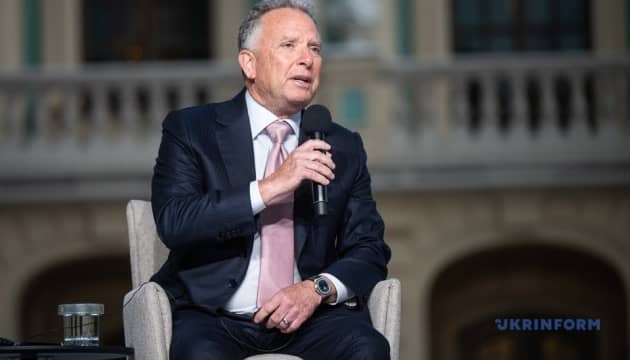

Witkoff Reports Substantive Progress in Peace Negotiations
U.S. Special Envoy Steve Witkoff stated on Tuesday that significant progress has been achieved in efforts to end Russia’s war against Ukraine. The comments followed a meeting between Witkoff and Ukrainian President Volodymyr Zelensky, marking a renewed diplomatic push to resolve the ongoing conflict.
Witkoff indicated that the advancements made during recent discussions include preparations for the next round of trilateral talks. These negotiations are intended to involve representatives from the United States, Ukraine, and Russia, with the goal of establishing a framework for peace.
The envoy’s assessment suggests a shift in momentum within the diplomatic channels dedicated to halting hostilities. According to reports from Ukrinform, Witkoff characterized the developments as substantive, implying that concrete steps have been taken toward a potential resolution, although specific details of the preparations were not immediately detailed in the initial release.
Diplomatic Engagement in Kyiv
The meeting between the U.S. envoy and President Zelensky took place in Kyiv as part of a broader strategy to restart high-level dialogue. The Nightly reported that U.S. envoys held talks with President Volodymyr Zelenskiy, describing the engagement as part of a renewed effort to end the war.
During these discussions, diplomatic officials focused on the logistics and parameters required for the upcoming trilateral negotiations. The emphasis on "preparations" suggests that technical or procedural agreements are being finalized before the parties convene at the negotiating table.
Zelensky’s administration has previously emphasized the necessity of direct involvement in any peace process concerning Ukrainian sovereignty. The presence of U.S. envoys in Kyiv underscores Washington’s continued role as a central mediator in the conflict, which began with Russia’s full-scale invasion in 2022.
Context of Ongoing Conflict
The diplomatic efforts occur against a backdrop of continuous military activity on the ground. As of September 8, 2026, Ukrainian media reported that the injury toll from a Russian attack on Kyiv had risen to 26, with three fatalities confirmed.
Further reports indicated that Russian forces continued to target infrastructure and civilian areas. In the Kherson region, approximately 95 children remained in mandatory evacuation zones, while a pharmacy warehouse storing hundreds of tons of medicines was destroyed by Russian attacks.
Military movements were also reported in other sectors. Press officers noted that Russian forces restricted the use of military equipment in the Oleksandrivka sector due to Ukrainian FPV drone activity. Additionally, a Russian drone struck a marketplace in Kherson, injuring one person, and Russian forces attacked an industrial enterprise in Zaporizhzhia, resulting in one injury.
International Support and Military Aid
While diplomatic channels explore peace options, military support for Ukraine continues to intensify from international partners. The European Union approved the purchase of Patriot missiles for Ukraine using funds from the Ukraine Support Loan, signaling sustained commitment to Kyiv’s defense capabilities.
Germany also announced plans to boost Ukraine’s air defenses with additional missiles, as stated by German Defense Minister Boris Pistorius. These actions align with the broader Western strategy of supporting Ukrainian sovereignty while simultaneously pursuing diplomatic off-ramps for the conflict.
Zelensky on Russian Mobilization Plans
President Zelensky provided updates on Russia’s internal military preparations during the period of diplomatic talks. He stated that Russia plans to mobilize an additional 300,000 people following its recent elections.
This disclosure highlights the ongoing escalation of manpower by Moscow despite the parallel diplomatic efforts led by U.S. envoys. The juxtaposition of increased Russian mobilization and U.S. claims of substantive progress in peace talks illustrates the complex dynamics currently shaping the trajectory of the war.
Implications for Trilateral Talks
The announcement of progress toward trilateral talks comes as both sides face significant pressures. For Ukraine, the continued need for air defense systems and ammunition underscores the reliance on Western support. For Russia, the reported mobilization plans suggest an intent to sustain its military campaign.
Witkoff’s statement that preparations are underway for the next round of talks indicates that diplomatic mechanisms are being activated. However, the success of these trilateral negotiations will depend on the willingness of all parties to engage in good faith and the ability to bridge significant geopolitical divides.
As of the latest reports, no date has been set for the commencement of the trilateral talks. The focus remains on finalizing the preparatory steps necessary to facilitate a potential negotiation framework between Kyiv, Moscow, and Washington.