

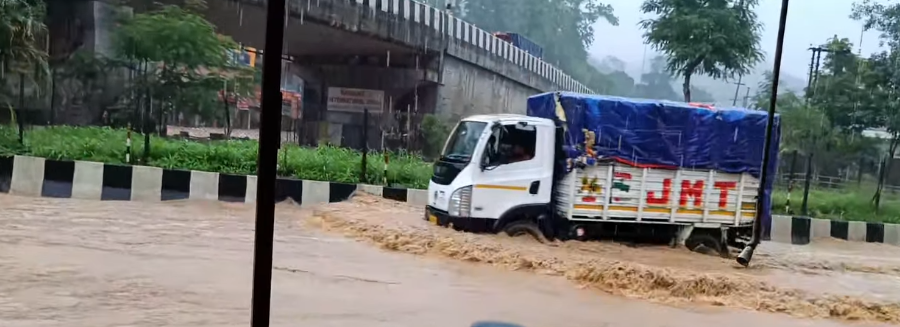

Commuters Face Gridlock as Waterlogging Paralyzes Jorabat
The Jorabat area in Guwahati has experienced significant waterlogging that has severely disrupted traffic flow across the region. The accumulation of standing water has created a bottleneck that affects daily movement for thousands of residents and commuters who rely on this corridor for transit, particularly impacting those traveling between Guwahati and other parts of Assam, as well as neighboring states.
According to reports from The Assam Tribune, the situation has led to stranded vehicles along the roads in the affected zone. Drivers and passengers have been left helpless as the water depth prevents normal vehicular movement. The congestion has extended beyond mere delays, with some vehicles becoming completely immobilized in the flooded stretches. This has affected not only private cars but also public transport buses and commercial trucks, creating extensive queues and prolonged waiting times.
In addition to the standing water, landslides have occurred in the vicinity, further complicating the situation for those attempting to navigate the area. These geological events have added physical barriers to the already compromised road infrastructure, making passage difficult or impossible for many travelers. The landslides, often exacerbated by saturated soil conditions due to heavy rainfall, pose additional safety risks and require specialized clearance operations.
Daily Life and Commerce Severely Affected
The extensive traffic gridlock in Jorabat has had immediate and far-reaching consequences for daily life and the local economy. Commuters attempting to reach their workplaces, schools, or other essential appointments have faced hours of delays, leading to lost productivity and missed opportunities. The unpredictability of travel times due to the waterlogging has forced many individuals to alter their schedules, seek alternative, often longer and less convenient routes, or cancel their plans altogether.
Businesses operating along the affected routes have reported reduced access for customers and suppliers, leading to significant commercial losses. Supply chains have been disrupted, impacting the timely delivery of goods and services across the region. The inability of emergency services to navigate the choked roads efficiently also raises concerns about public safety and rapid response capabilities during critical situations.
Political Leaders Trade Blame Over Regional Infrastructure
The disruption has sparked a sharp political criticism and blame game among leaders in the region. As the traffic gridlock persisted and public frustration mounted, political figures began exchanging accusations regarding the underlying causes of the waterlogging and the subsequent infrastructure failure. This discourse has highlighted long-standing issues concerning urban planning and environmental management.
A central point of contention in this political dispute is the issue of hill cutting activities. Political leaders have attributed the problem to hill cutting activities in Meghalaya, suggesting that environmental changes in the neighboring state have contributed significantly to the flooding in Guwahati. This attribution has become a focal point for criticism directed at cross-border environmental management and the perceived lack of coordinated efforts to mitigate such impacts.
The accusations highlight tensions between the two states regarding land use and its impact on shared water systems. Leaders opposing the current administration or those seeking to criticize regional governance have used the incident to question the effectiveness of flood control measures, urban drainage systems, and inter-state cooperation on environmental policies.
Calls for Accountability and Governance
The political rhetoric surrounding the Jorabat waterlogging has intensified calls for greater accountability from government bodies. Critics have pointed to what they describe as a failure of municipal planning and emergency response protocols, demanding concrete actions to prevent future occurrences. The incident has been framed by some as a symptom of inadequate infrastructure development and a lack of foresight in addressing the environmental consequences of regional development.
The debate has also extended to the broader responsibilities of state governments in ensuring robust infrastructure that can withstand increasingly frequent and intense weather events. The focus on hill cutting in Meghalaya shifts the narrative from purely local drainage issues to a more complex regional environmental challenge, potentially influencing future policy debates and inter-state dialogues on resource management and ecological preservation.
Environmental Factors Fueling Regional Flooding
The Destructive Cycle of Hill Cutting
The practice of hill cutting, particularly in the upstream areas of Meghalaya, has been identified by political leaders as a primary environmental factor contributing to the waterlogging in downstream regions like Guwahati. This activity involves the removal of earth and vegetation from hillsides, which has several detrimental ecological consequences. Deforestation and the alteration of natural slopes significantly reduce the soil's capacity to absorb rainwater. This leads to accelerated surface runoff, where water flows rapidly down the hills instead of percolating into the ground.
The increased runoff carries vast amounts of eroded soil and silt, which are then deposited into rivers and drainage systems in lower-lying areas. Over time, this siltation reduces the carrying capacity of canals and rivers, making them more prone to overflowing during heavy rainfall. The destabilization of soil also increases the likelihood of landslides, further compounding the challenges faced by infrastructure and communities in the region.
Cross-Border Challenges in Resource Management
The Jorabat incident underscores the complex relationship between Assam and its northeastern neighbor regarding environmental policy and resource management. The ecological impacts of activities in one state, such as hill cutting in Meghalaya, can directly affect the environmental stability and infrastructure of another, like Assam. This interconnectedness necessitates a coordinated approach to environmental governance that transcends administrative boundaries.
The lack of a unified regional strategy for managing shared watersheds and addressing practices like hill cutting creates vulnerabilities for communities on both sides of the border. The current crisis serves as a stark reminder of the urgent need for inter-state dialogue, collaborative planning, and the implementation of sustainable environmental practices to mitigate the risks of natural disasters and ensure the long-term resilience of the region's infrastructure.
Ongoing Challenges and Public Frustration
Delayed Resolution and Public Discontent
While the waterlogging continues to choke traffic in Jorabat, specific details regarding the timeline for clearance or the extent of relief operations remain tied to the ongoing political discourse. The primary reported facts confirm that the area remains affected by standing water and landslides, with no immediate resolution clearly indicated in the available reports. This prolonged state of disruption has fueled widespread public discontent and frustration among residents and commuters.
The public's perception is that the incident represents a significant failure of municipal planning and emergency response. The lack of swift action and clear communication regarding the mitigation efforts has exacerbated feelings of helplessness among those affected. The incident serves as a critical case study in how environmental factors can intersect with infrastructure reliability and political accountability, highlighting the need for robust, proactive measures rather than reactive responses.
As traffic conditions slowly improve or remain stagnant, the debate over responsibility for the Jorabat waterlogging is likely to persist among political stakeholders in both Assam and Meghalaya, underscoring the broader challenges of urban resilience and inter-state environmental cooperation in the face of changing climatic patterns.