

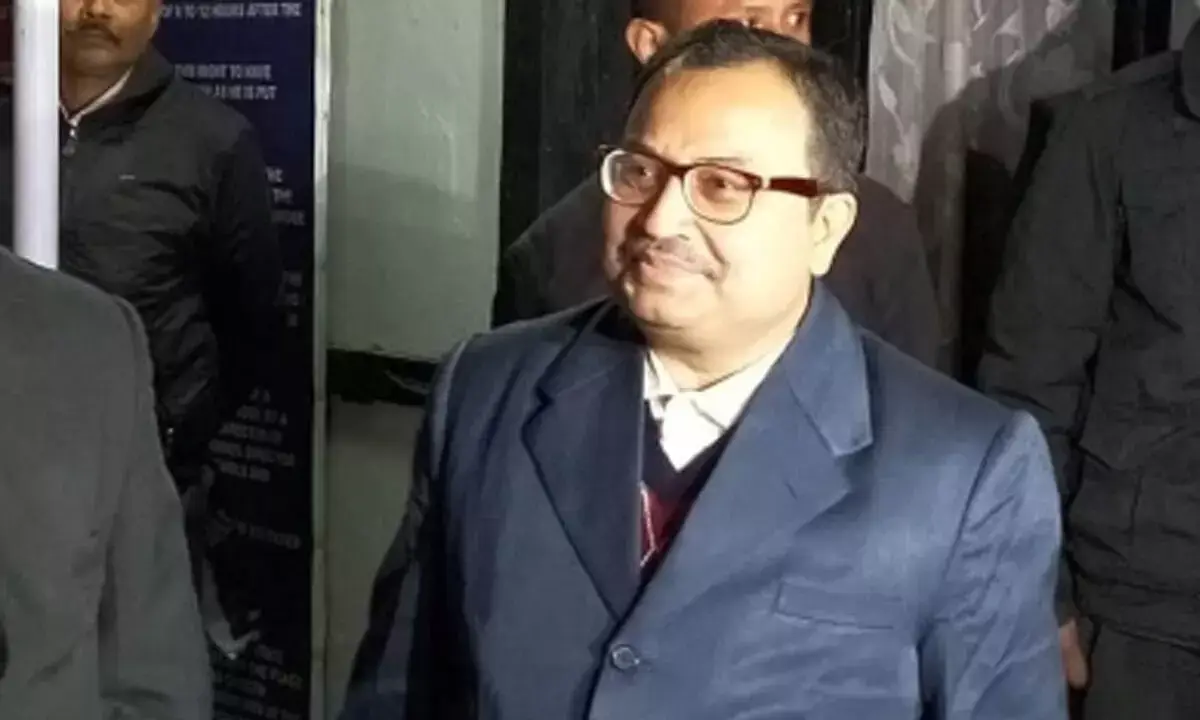

Visual Symbolism Triggers Immediate Media Scrutiny
A prominent legislator from the ruling party in the West Bengal Assembly, Kunal Ghosh, was observed on Wednesday wearing a saffron-colored scarf during a session at the legislative complex. The specific choice of attire, characterized by its distinct orange hue, immediately drew the attention of media personnel present in the chamber and political observers monitoring the proceedings. The presence of the garment on a member of the ruling coalition has become the focal point of intense discussion across the state's political circles.
The saffron scarf is widely recognized in Indian politics as a symbol associated with the Bharatiya Janata Party (BJP) and its affiliated organizations, which form the core of the national ruling alliance. Its appearance on a legislator belonging to a different party within the state's ruling coalition has raised questions among observers about the internal dynamics of the political front. Media outlets have highlighted the visual nature of the incident, noting that such symbolic gestures often carry weight in the high-stakes environment of Indian legislative politics.
Witnesses at the assembly noted that the scarf was worn visibly during the session, ensuring it could not be overlooked by fellow legislators or journalists documenting the day's events. The incident has been reported as an unusual occurrence given the typical dress codes and political signaling strategies employed by members of the ruling alliance in West Bengal. Political analysts have pointed out that color symbolism plays a significant role in the state's electoral politics, where distinct visual markers are often used to denote allegiance or protest.
Speculation Mounts Over Coalition Dynamics
The visibility of the saffron-colored accessory has ignited intense discussions regarding whether a potential shift is occurring within the political alignment of the state. According to reports, the incident has led to widespread speculation about the stability and ideological cohesion of the ruling party's position in West Bengal. Observers are debating whether the attire indicates a personal choice, a subtle signal of alignment with national allies, or a broader strategic move by the legislator.
Political commentators have suggested that such incidents often serve as barometers for underlying tensions or realignments within multi-party coalitions. The West Bengal Assembly, known for its vibrant and often contentious political environment, has seen various instances where symbolic gestures have sparked debates about party loyalty. In this specific case, the saffron scarf has become a subject of scrutiny because it represents a visual departure from the traditional symbols typically associated with the ruling party's identity in the state.
The timing of the incident adds to the speculation, as political observers look for patterns in the behavior of ruling party members. Some reports indicate that the discussion is not limited to the chamber but has spread to social media platforms and local news networks, where users are sharing images and analyzing the implications of the legislator's choice. The lack of an immediate official statement from the legislator or his party has further fueled the debate, leaving room for various interpretations.
Implications for Regional Political Narrative
The reaction to the saffron scarf incident highlights the sensitivity surrounding political symbolism in West Bengal. The state has historically been a stronghold for regional parties that have often positioned themselves in contrast to national political forces. Consequently, any perceived alignment with the symbols of the BJP or its allies is closely monitored by both supporters and critics.
Media coverage of the event has focused on the potential impact on public perception. Analysts note that in an era where visual media dominates political communication, a single item of clothing can generate significant discourse. The incident underscores the importance of image management for politicians in West Bengal, where every public appearance is scrutinized for signs of strategic positioning.
As discussions continue, the focus remains on whether this event marks a isolated incident or a precursor to broader changes in the political landscape. Ruling party members and opposition figures alike are watching closely to see if further actions by Kunal Ghosh or other coalition partners will confirm or deny the speculation surrounding his political affiliations. The assembly session where the scarf was worn has become a reference point for ongoing debates about unity and direction within the ruling front.