

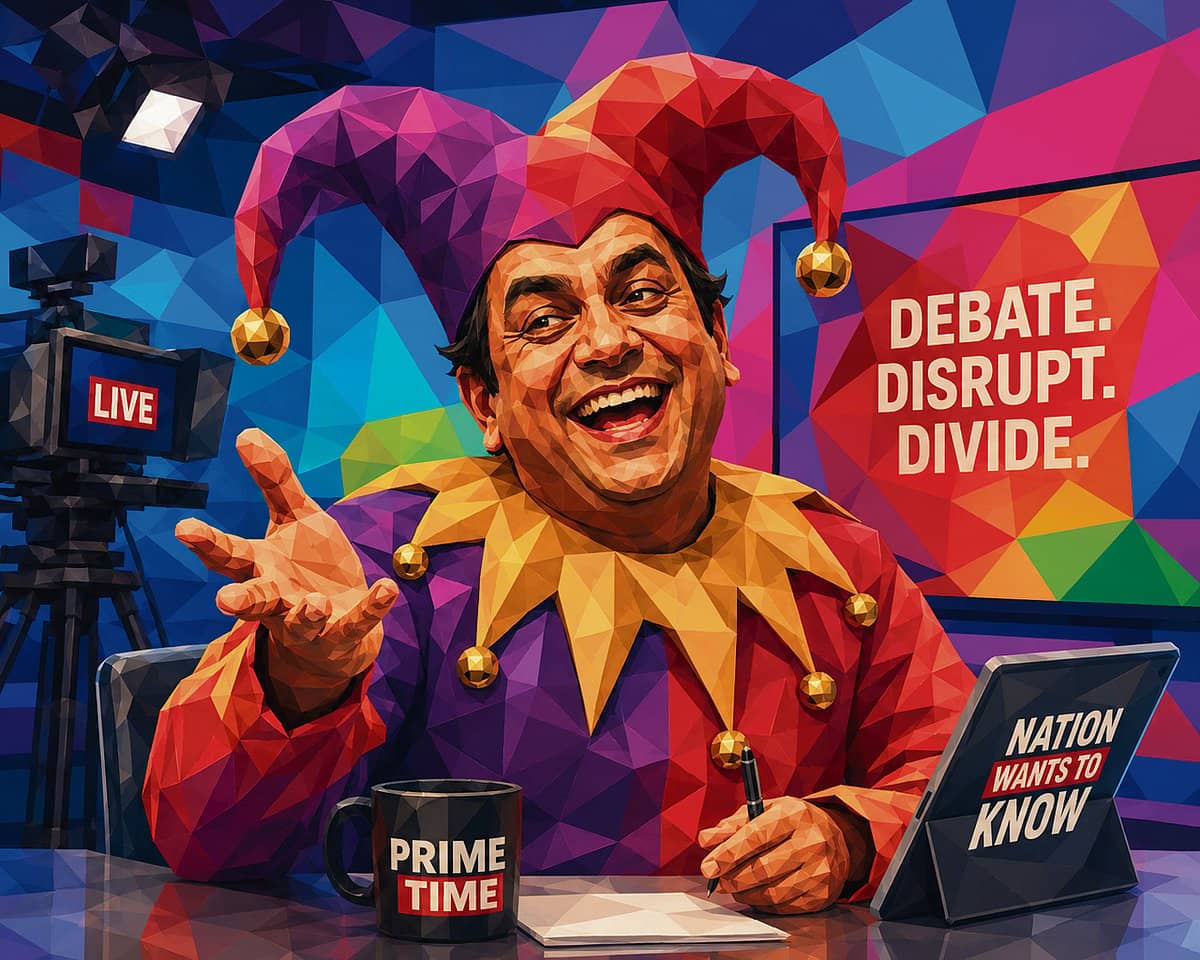

How Mainstream Media Lost Out to Main Scream Media
The Decline of Television News Influence
The Indian television news media, once considered indispensable to democracy during the 1990s, has seen a significant decline in its influence. This transformation did not happen overnight.
For decades, what every Indian political party saw as its top priority was camera coverage that brought intimacy and recall with voters and the accompanying talking heads who became pompous, much desired guests in private drawing rooms. Protest leaders and party spokesmen waited anxiously for OB vans at every venue to give their byte of the pie.
A prime-time debate represented validation of a position. But not anymore. The most striking images from Jantar Mantar were not the Gen Z crowds, the slogans, the abuse, the songs or dances. They were the moments when television reporters were booed, mocked, and in some places chased away by young demonstrators who regarded them as hostile participants.
These demonstrations referred to the media outlets as godi media. The unexpected is long expected according to an ironical truth in politics found within this context. The irreversible casualty of the Cockroach Janata Party's unexpectedly successful campaign was not identified as the BJP, but rather it was an institution that once regarded itself and was respected as indispensable to Indian democracy.
Historic Press Practices And Proximity To Power
India once had a press that angered governments with undesirable coverage and exposes of corruption in high places. Newspapers unearthed scandals, TV correspondents questioned ministers, and editors regarded proximity to power as a necessary evil according to the historical record provided.
The media landscape shifted from challenging governments through critical coverage to a different dynamic where reporters are now perceived differently by public groups at specific venues like Jantar Mantar. The article notes that this shift in public perception occurred over time rather than suddenly, contrasting the past era of scandal exposure with current interactions between demonstrators and press representatives.
During the earlier period described, editors viewed their close relationship with those holding power as a necessary aspect of their work. This stance allowed correspondents to question ministers directly and for newspapers to bring information about corruption into public view without immediate government suppression being cited in these specific historical notes.
The Impact Of Recent Protests On Media Relations
Recent protests have seen television reporters facing direct hostility from demonstrators. In some places, they were chased away by young demonstrators who regarded them as hostile participants. This behavior marks a departure from the era when political parties prioritized coverage for voter engagement and validation.
The article states that the most striking images captured during these recent events at Jantar Mantar involved the treatment of journalists rather than the content of their reporting or the nature of the crowds themselves. The Gen Z crowd, slogans, abuse, songs, and dances were noted as less significant in the visual record compared to the rejection of reporters.
Protest leaders previously waited for OB vans at every venue. Now, the dynamic has inverted where demonstrators actively mock and boo these same professionals who once sought their presence on camera. The term godi media is used by young demonstrators to describe the outlets they view as aligned with power rather than serving the public interest.
The decline in influence of this media sector is described as significant but gradual, not sudden. It represents a shift from an institution respected for its role in democracy during the 1990s to one that faces active rejection at protest sites like Jantar Mantar today. The Cockroach Janata Party's campaign success was noted as having caused casualties beyond just political opponents.
Prime-time debates once served a function of validating positions held by politicians or parties involved in the discourse. That specific utility has reportedly changed alongside public sentiment toward television news organizations. The article suggests that while camera coverage remains sought after, its nature and reception have fundamentally altered since the time when talking heads were guests in private drawing rooms.
The text provided does not offer a conclusion on why this shift occurred beyond stating it did not happen overnight or attributing specific actions like booing to demonstrators. It preserves the distinction between verified historical roles of the press—exposing corruption and questioning ministers—and current reported behaviors at protest sites where reporters are chased away.
Updates regarding these events were recorded on 02 Aug 2026, indicating a timeline for when this analysis was published or updated. The content draws from an article titled How Mainstream Media Lost Out to Main Scream Media which includes sections labeled INDIA WORLD STATES CITIES OPINION EXPLAINER BUSINESS SPORTS GOOD NEWS MOVIES VIDEOS.
The publisher identified as The New Indian Express released the piece with a 3 min read duration noted. An illustration for representation by Ravi Shankar accompanies the text, though no specific details regarding that image are provided beyond its existence in the source material.