

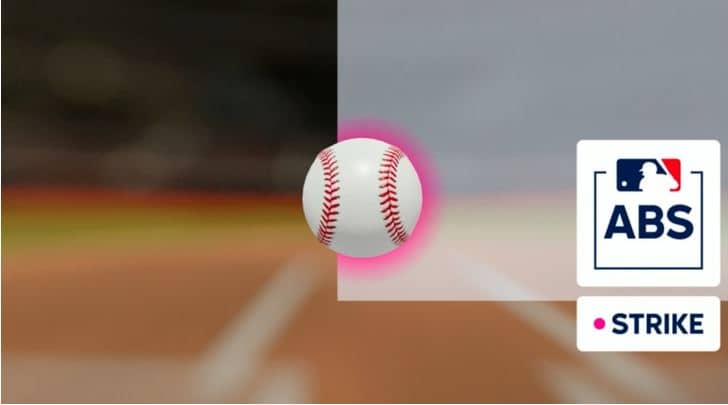

Umpiring Accuracy Under Scrutiny Ahead of Yankees-Padres Series
The New York Yankees and Major League Baseball umpires are traveling to PETCO Park for an upcoming series against the San Diego Padres. As the current MLB playoff picture reaches its final stretch, questions regarding the precision of officiating have resurfaced among fans and observers, particularly concerning the consistency of ball and strike calls.
JW August, writing for the OB Rag, has sought comprehensive data on the success rate of Major League umpires when their calls on balls and strikes are challenged. The author expressed particular sensitivity to the quality of umpires assigned to games in San Diego, especially those involving the Yankees, given a contentious history between the two teams and officiating decisions.
This renewed focus on officiating standards comes as teams approach a critical phase of the season, where every pitch and every call can significantly impact playoff aspirations. August noted that the upcoming series has prompted a review of past incidents where umpiring decisions were perceived to have had significant impacts on game outcomes and historical narratives, underscoring the long-lasting memory of fans regarding pivotal moments.
San Diego's Heightened Scrutiny of Officiating
The concern among San Diego fans and commentators like August is rooted in a desire for fair play and accountability, especially when a high-profile team like the Yankees comes to town. The request for data on challenged calls reflects a broader public interest in understanding the accuracy metrics of MLB umpires. This transparency is seen as crucial for maintaining confidence in the integrity of the game, particularly as technology provides ever-more precise ways to analyze every pitch.
Recalling the 1998 World Series Controversy
The discussion regarding umpiring quality is often linked to a specific, deeply ingrained incident from October 20, 1998. This date marks Game 1 of the World Series, a pivotal contest played at Yankee Stadium between the San Diego Padres and the New York Yankees.
According to August’s reporting, the game was tied in the crucial seventh inning. Padres reliever Mark Langston delivered a changeup that, to many observers and subsequent analyses, appeared to be a clear strike. The author stated that the pitch traveled right down the middle and should have been called a strike three against Yankees batter Tino Martinez, which would have ended the inning.
Instead, the umpire issued a no-strike call, extending Martinez's at-bat. This decision proved catastrophic for the Padres, as Martinez subsequently hit a three-run home run. August suggested that this sequence of events possibly changed the course of baseball history, as it gave the Yankees a significant lead in a game they ultimately won, setting the tone for a series that the Yankees swept. For Padres fans, this particular call has been a source of distress and lingering frustration since that time, symbolizing a missed opportunity on the grandest stage.
The author noted that most Padres fans likely watched the game unfold on television, witnessing the controversial call live. According to an AI assistant cited by August, the event occurred at approximately 8 p.m. Pacific Time on Tuesday, Oct. 20, 1998, embedding the moment firmly in the collective memory of the San Diego baseball community.
Umpire Admission and Blame
Umpire Rich Garcia was the official involved in making the contentious call during the seventh inning of Game 1. In the aftermath, Garcia later admitted that he had 'blown' the call on the pitch to Martinez, a rare admission of error from a high-ranking umpire in such a significant context.
However, Garcia did not take full responsibility for the error. He attributed the missed strike call to the Padres' catcher, Carlos Hernandez, claiming that Hernandez framed the pitch too aggressively. This explanation implied that the catcher’s technique, rather than solely the umpire's judgment, contributed to the crucial missed strike call, shifting some of the blame onto a player.
Data Requests and Historical Context
In light of these historical events and the current playoff implications for all MLB teams, August has formally requested comprehensive data on umpire performance. The specific focus is on statistics regarding how often umpires are correct when their ball and strike calls are challenged, providing a quantitative measure of accuracy.
The article highlights the ongoing debate over officiating consistency and accountability in Major League Baseball. By referencing the 1998 World Series incident, the piece underscores how individual umpiring decisions, particularly in high-stakes games, can remain part of the public discourse and fan memory for decades later, shaping narratives and even team legacies.
As the Yankees and Padres prepare to face each other at PETCO Park, the intersection of current gameplay and historical memory continues to draw significant attention. The series serves as a focal point for discussions on the accuracy and accountability of umpires in high-stakes MLB games, with fans and commentators alike hoping for transparent and consistent officiating.