

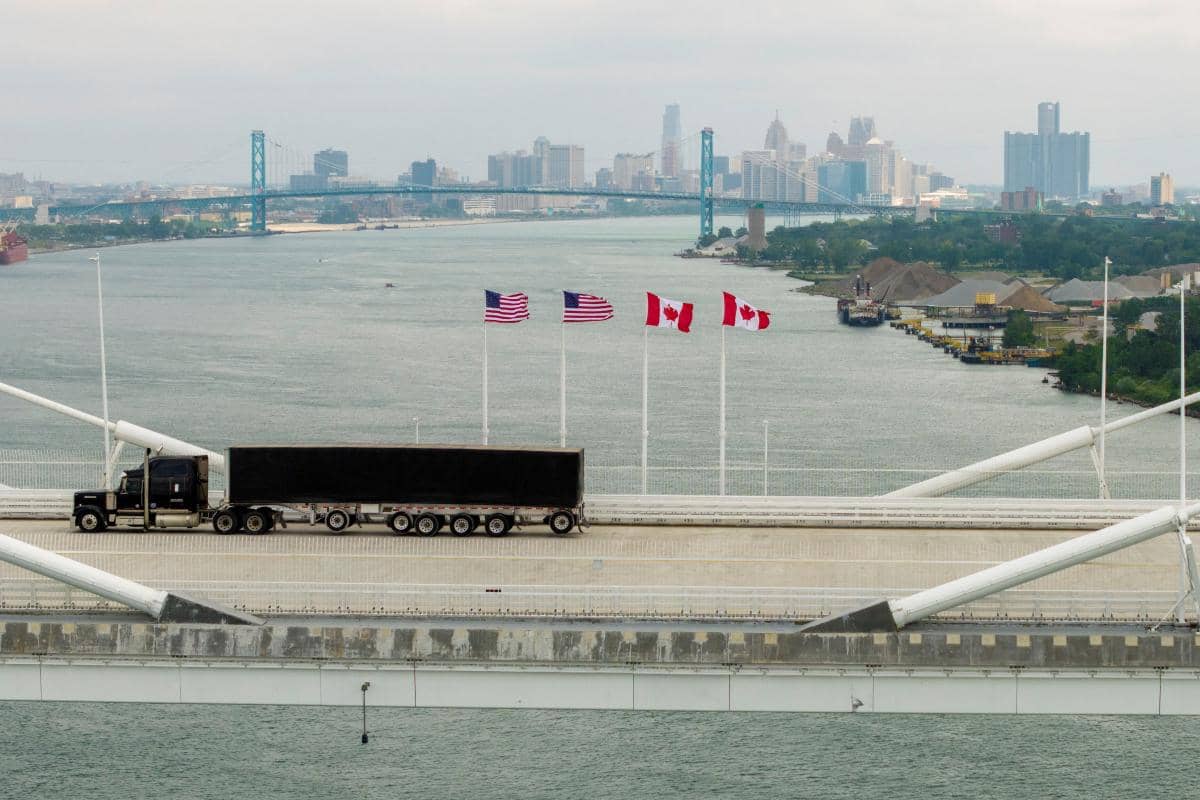

The Erosion of a Strategic Advantage
Robert Zoellick, a former U.S. trade representative and World Bank president, argues in a recent Foreign Affairs article that President Donald Trump’s antagonism toward Canada and Mexico is destroying the economic and security partnership that enables the United States to project power globally.
Zoellick asserts that the Trump administration’s approach toward its two southern and northern neighbors is cracking the foundation of the United States’ global power. The article, titled "Trump Is Gutting America’s Core Geopolitical Advantage: The Strategic Costs of Antagonizing Canada and Mexico," was published on October 9, 2026.
According to Zoellick, Canadians perceive President Donald Trump’s high tariffs and belittling comments as direct assaults on Canada’s economy and independence. In Mexico, the administration’s economic coercion and threats of military intervention have revived historical anxieties about U.S. hegemony.
Geographic Privilege and Regional Security
Zoellick contrasts the current diplomatic climate with historical perspectives on continental security. He notes that Ronald Reagan stated in 1979 that the key to future security lay in Canada and Mexico becoming stronger, arguing it was time to stop treating neighbors as foreigners.
The article highlights the unique geographic position of the United States compared to other global powers. The U.S. borders two benign neighbors and enjoys open sailing on two vast oceans. In contrast, China and Russia manage relationships with 14 neighbors each, while India deals with six.
Zoellick writes that close cooperation with Canada and Mexico enhances homeland security, attracts investment, promotes innovation, and creates a large market. This partnership also helps all three countries deal with criminal networks, illegal immigration, and environmental threats.
Historical Precedents for Continental Control
The article draws on historical examples to illustrate the long-standing U.S. focus on continental dominance. William Seward, who served as U.S. secretary of state from 1861 to 1869, asserted that controlling the continent was essential to being the controlling interest in the world.
During negotiations for the purchase of Alaska in 1867, Seward observed that Alaska and the Aleutian Islands extended a friendly hand to Asia. Seward also attempted to buy Greenland, Iceland, the Hawaiian Islands, and Caribbean islands to secure U.S. oceanic approaches.
Zoellick notes that after the U.S. Civil War in 1865, Seward prevented Generals Ulysses S. Grant and Philip Sheridan from invading Mexico to depose the French-installed Habsburg archduke. These historical actions underscore the strategic importance placed on regional stability and expansion by previous administrations.