

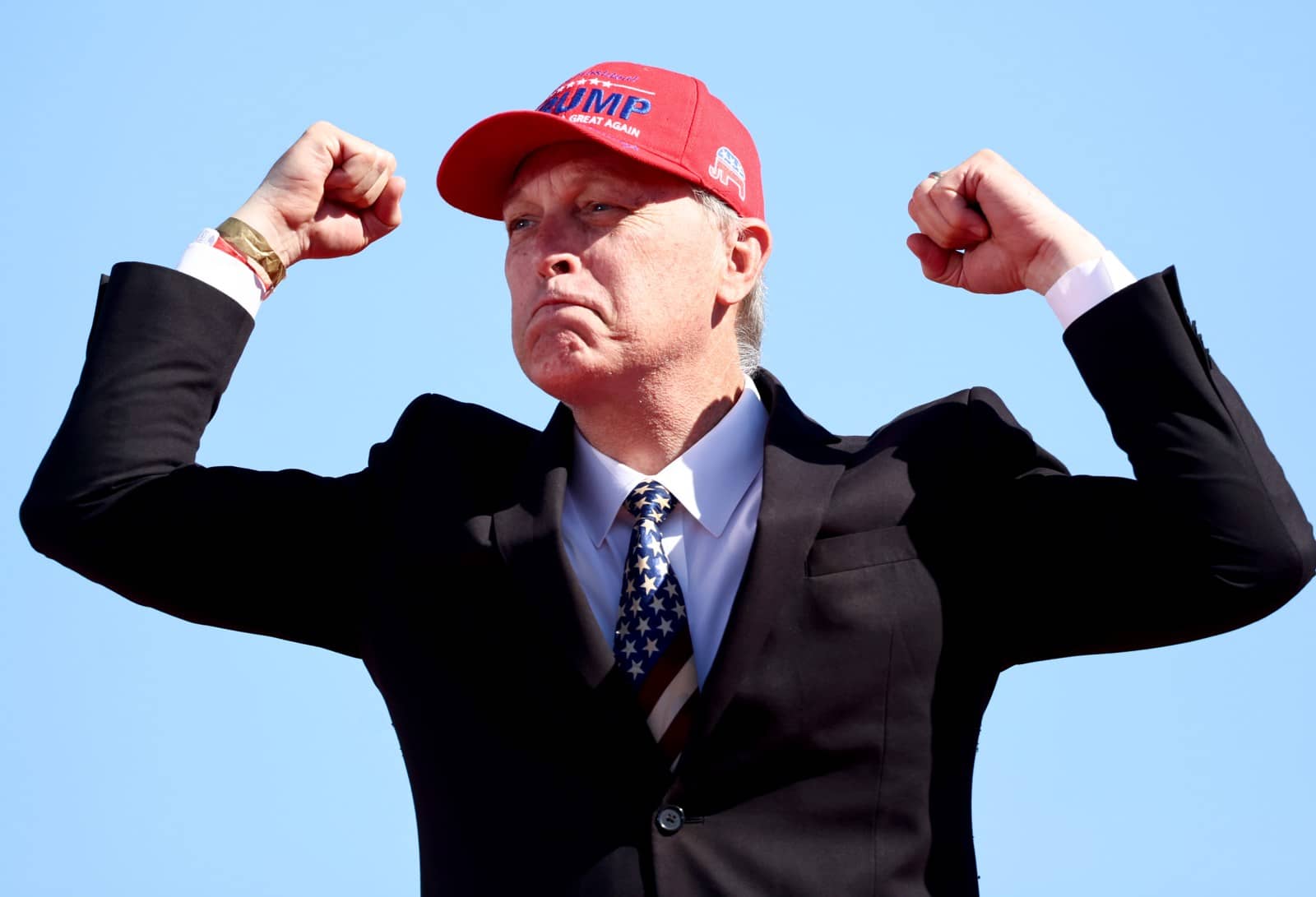

Polling Data Reveals Gap Between Gubernatorial Candidates
Republican gubernatorial nominee Andy Biggs is currently trailing Democratic Governor Katie Hobbs in the race for the Arizona governorship, according to recent polling data. The latest figures from Quantus Insights indicate that Biggs faces a significant challenge in a critical battleground state as voters prepare for November’s elections.
The poll results highlight a disparity between the two major party candidates, suggesting Hobbs holds an advantage in current voter sentiment. While specific vote percentages for the gubernatorial race were not detailed in the provided research notes, the overall trend points to an uphill battle for Biggs in a state frequently at the forefront of national political discourse.
Trump's Approval Ratings Among Arizona Voters
A significant portion of the polling focus has centered on the approval ratings of former President Donald Trump within the state. The Quantus Insights poll found that 55.4 percent of Arizona respondents disapprove of Trump, while 43.4 percent approve of his performance. These numbers reveal a notable gap, with disapproval outweighing approval by 12 percentage points among those surveyed.
These figures suggest that a majority of the surveyed population holds a negative view of the former president. The data point represents a specific snapshot of public opinion in Arizona, a state that frequently draws attention in national political cycles due to its swing-state status and its pivotal role in recent presidential elections. For any candidate closely aligned with the former president, these approval ratings present a complex political landscape to navigate.
Biggs's Association With Former President
Andy Biggs is identified as a strong supporter of Donald Trump and has received the former president's endorsement for his gubernatorial campaign. This alignment with Trump places Biggs in close proximity to the former president's political brand and public approval ratings. The endorsement from a prominent national figure like Trump can be a double-edged sword, energizing a segment of the base while potentially alienating others.
The research notes indicate that Biggs’s status as a fierce supporter of Trump, coupled with the official endorsement, creates a direct link between his campaign and the former president's public image. Political analysts often examine such associations when evaluating how national figures impact down-ballot races in specific regions, particularly in states known for their electoral volatility. The strength of this connection means that voter sentiment towards Trump can, directly or indirectly, influence perceptions of Biggs.
Assessing the Connection Between Candidate Deficit and National Figures
The Quantus Insights findings do not definitively prove that Trump’s unpopularity is the direct cause of Biggs’s deficit in the polls. Polling data often reveals correlations between different voter sentiments, but establishing direct causation requires more extensive analysis, accounting for numerous other factors that influence voter choice.
However, the poll strongly suggests a potential connection between the two issues. Quantus noted that Trump’s unpopularity could present a problem for Biggs. The implication is that voters who disapprove of Trump may be less inclined to support a candidate who is closely aligned with him, regardless of Biggs's individual policy positions or campaign messaging. This dynamic is particularly relevant in a swing state like Arizona, where independent and moderate voters often play a decisive role in election outcomes.
Implications for the November Election
The polling data comes as Arizona prepares for a high-stakes election in November. Governor Katie Hobbs, the Democratic incumbent, is facing a challenge from Biggs in what is described as a critical battleground race. The outcome of this gubernatorial contest will not only determine the state's leadership but could also reflect broader political trends and voter sentiment ahead of future national elections.
The 55.4 percent disapproval rating for Trump stands in contrast to the 43.4 percent approval rating. This split indicates that while a clear majority of respondents in the poll have a negative view of the former president, a substantial minority still holds a positive view. Biggs’s campaign must navigate this complex landscape where his strongest political ally is viewed unfavorably by more than half of the surveyed population.
Campaign Strategy Amidst Divergent Public Opinion
The endorsement from Trump provides significant support from one faction of the Republican base, potentially boosting turnout among his most loyal supporters. However, the broader disapproval ratings may pose obstacles in reaching independent or moderate voters, who often decide close elections in Arizona. Biggs’s campaign strategy will likely need to balance energizing his base with appealing to a wider electorate that may harbor reservations about the former president.
The challenge for Biggs lies in convincing voters who disapprove of Trump that he is the right choice for Arizona, while simultaneously leveraging the enthusiasm of Trump's supporters. This requires careful messaging and a nuanced approach to campaigning in a state known for its political diversity and closely contested elections.
Polling Methodology and Scope
The Quantus Insights poll serves as the primary source for the approval numbers cited. The survey captured responses from Arizona residents regarding their views on Trump and the current political climate. While the data does not offer a complete picture of the entire electorate, it provides measurable indicators of voter sentiment that are crucial for understanding the dynamics of the upcoming election.
The 12-point gap in disapproval versus approval for Trump highlights the polarized nature of political opinion in the state. As the election approaches, the relationship between Biggs’s polling numbers and Trump’s approval ratings remains a central point of analysis for political observers. The current data shows Biggs trailing Hobbs, with Trump’s unpopularity hanging over the Republican nominee’s campaign efforts as a significant factor to contend with.