

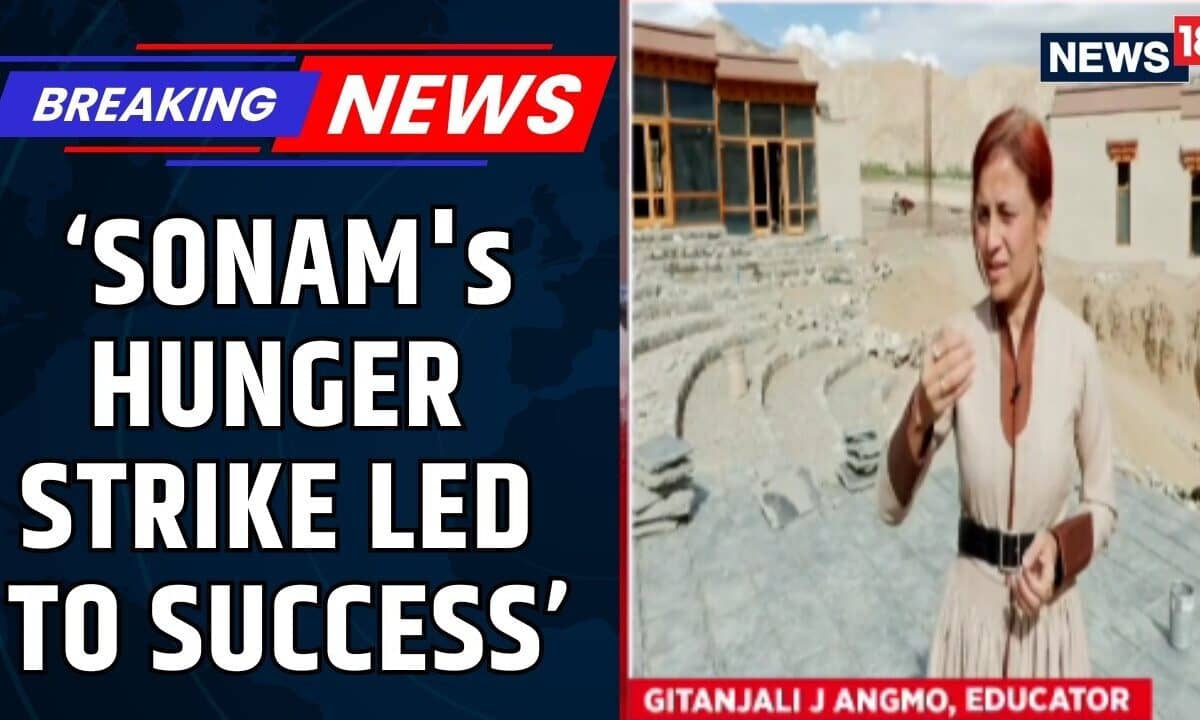

Wangchuk’s Protest Galvanizes Student Aspirations
In an exclusive conversation with News18, Gitanjali Angmo offered profound insights into the activism of Sonam Wangchuk, specifically highlighting the transformative impact his hunger strike had on student-led protests. Angmo unequivocally stated that Wangchuk’s actions served as a powerful catalyst for student action, effectively helping to amplify voices that might otherwise have struggled to gain traction or remained unheard within the broader political discourse.
Angmo lauded Wangchuk’s fearless approach to activism, characterizing it as a testament to his unwavering commitment. According to her assessment, this bold and uncompromising stance was instrumental in drawing significantly greater attention to the pressing concerns and long-held aspirations of students. The hunger strike, therefore, is perceived not merely as an isolated act of individual dissent but as a pivotal moment that fundamentally shifted public and political focus toward the specific demands and hopes of the student community, providing a clear and undeniable focal point for their grievances.
The discussion with Angmo underscores how Wangchuk’s chosen method of protest deeply resonated with younger demographics. By engaging in a fast, a form of protest that inherently commands attention and signifies profound commitment, Wangchuk effectively created a central rallying point for a multitude of grievances that had been accumulating among students. Angmo’s comments suggest that this particular form of activism proved remarkably effective in bridging the gap between individual expressions of dissent and the formation of a cohesive, collective student identity, empowering many to join a unified movement.
Calls for Accountability Intensify Amid Protest
Sonam Wangchuk’s protest has rapidly ascended to become a central and unavoidable talking point amidst burgeoning demands for meaningful dialogue, robust accountability, and decisive action from relevant stakeholders. The sheer intensity and duration of the hunger strike have strategically positioned the underlying issues at the very core of public debate, compelling various parties to acknowledge and address the systemic problems that initially sparked the widespread unrest.
Pressure for Meaningful Dialogue and Concrete Steps
The significant escalation of attention surrounding Wangchuk’s fast has directly coincided with increased and sustained pressure on authorities to engage in substantive and meaningful dialogue with the protesting students and their supporters. Angmo observed that the protest has transcended mere symbolic gestures, evolving into a potent force that has created an environment where accountability is no longer a discretionary option but an absolute prerequisite for any viable resolution. This shift signifies a critical turning point, where the onus is firmly placed on those in power to respond with transparency and responsibility.
Students and their growing base of supporters are strategically leveraging the considerable momentum generated by Wangchuk’s courageous actions to push for tangible, concrete steps rather than settling for vague promises or indefinite commitments. The explicit demand for immediate action is now directly linked to the unparalleled visibility provided by the hunger strike, which has successfully kept the issue prominently in the public eye for an extended and impactful period. This sustained visibility ensures that the issues cannot be easily dismissed or allowed to fade from public consciousness, thereby maintaining constant pressure for resolution.
Wangchuk’s Activism Shapes Student Movements
The profound influence of Sonam Wangchuk’s activism extends deeply into both the organizational structure and the collective morale of student-led protests. Angmo indicated that his fearless approach to advocacy provided a clear and compelling template for other aspiring activists, actively encouraging them to articulate their own demands with a similar degree of clarity, conviction, and unwavering resolve. This leadership by example has fostered a new generation of assertive student voices.
As Wangchuk’s protest continues to garner widespread attention and support, it has solidified its position as a powerful unifying symbol for students across diverse regions who share common concerns and aspirations. The compelling narrative of Wangchuk’s personal sacrifice and his unwavering commitment to their cause is being strategically utilized to galvanize further participation and commitment in ongoing student-led initiatives. This narrative acts as a powerful motivator, drawing more individuals into the movement and strengthening its collective resolve.
The ongoing discourse surrounding the protest reflects a broader and more significant shift in how student grievances are perceived, understood, and ultimately addressed by society and political structures. By meticulously framing the entire issue through the poignant and highly visible lens of Wangchuk’s hunger strike, advocates are ensuring that the specific aspirations and legitimate concerns of students remain firmly at the forefront of political conversations and policy considerations. This strategic framing prevents the issues from being marginalized and ensures their central importance in the public debate.