

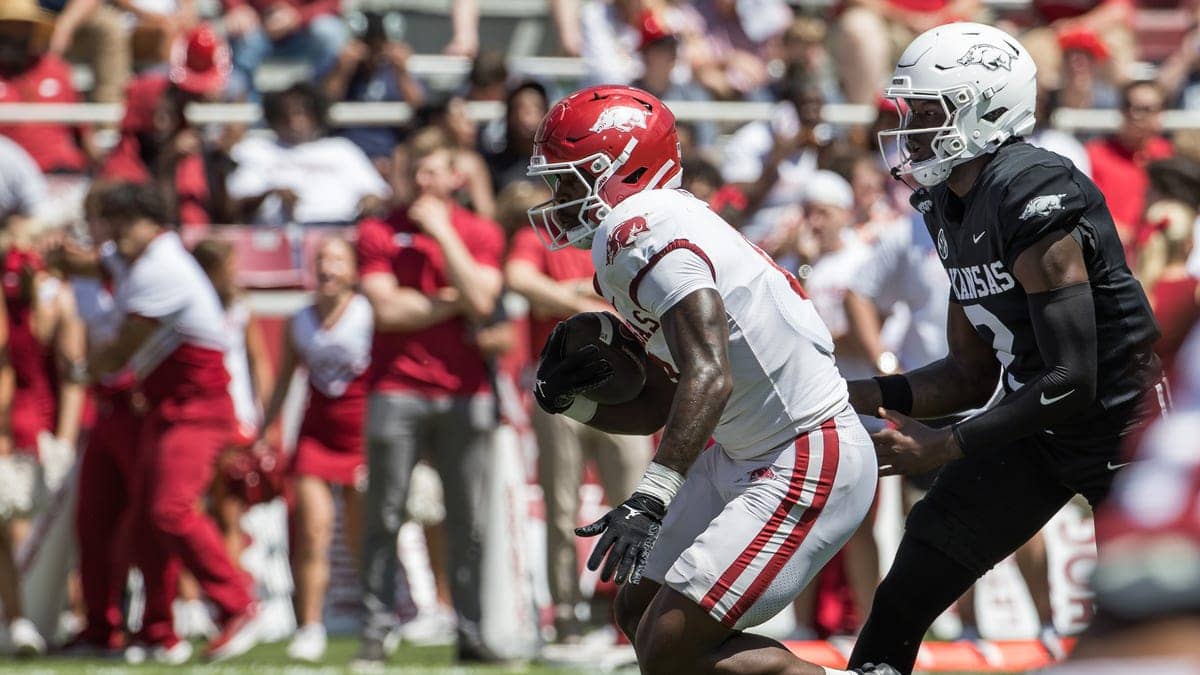

Razorbacks Resume Preseason Drills After Scrimmage
The Arkansas Razorbacks football team returned to the practice fields on Tuesday, August 18, signaling the continuation of their rigorous fall camp schedule. This session marked the 11th day of preseason preparations, bringing the squad back to the familiar grounds outside the Walker Pavilion in Fayetteville. The return to action followed a crucial scheduled break on Monday, a period typically used for player recovery and coaching staff review after intense periods of training.
This brief respite was particularly significant as it came on the heels of the team's first scrimmage of the month, conducted over the preceding weekend. Scrimmages are vital components of preseason, allowing coaches to evaluate players in game-like scenarios and assess the effectiveness of offensive and defensive schemes. With academic classes having also resumed for students across campus, the Razorbacks are now deeply immersed in the latter stages of fall camp, meticulously refining their strategies and personnel as they finalize preparations for the highly anticipated upcoming season.
Offensive Coordinator's Core Plays Emerge
During the media-viewing segment of Tuesday's practice, a clear and consistent pattern in the Arkansas offensive playbook became evident to observers. Throughout the early weeks of fall camp, two specific types of plays have repeatedly stood out: the quick-hitting bubble screen and targeted passes to running backs out of the backfield. These formations were not isolated incidents but were executed by multiple offensive units during the open practice session, suggesting their foundational role in the team's scheme.
These particular plays are considered a staple of the offense, indicating they are fundamental components designed for consistent execution and strategic advantage. Their persistent presence strongly suggests they may feature heavily in the game plans orchestrated by offensive coordinator Tim Cramsey. The emphasis on these plays could point to a strategy focused on quick reads, getting the ball to playmakers in space, and utilizing the versatility of the running back position as both a runner and a receiver.
First-Team Offense Showcases Quick-Hitters
The first-team offense, under the watchful eyes of the media, provided a clear demonstration of these core concepts during the limited period of 11-on-11 action. Quarterbacks efficiently targeted wide receiver Jamari Hawkins on two separate bubble screens. These plays, designed for quick throws and immediate yardage, resulted in short but effective gains, highlighting the offense's ability to move the chains with precision. Furthermore, the first-team unit showcased its ability to create explosive plays by completing a well-executed pass to running back Braylen Russell. Emerging from the backfield, Russell secured the reception and turned it into an approximate 20-yard touchdown, demonstrating the potential for significant yardage and scoring opportunities when utilizing running backs in the passing game.
Depth Chart Units Reinforce Playbook Fundamentals
The consistent application of these plays was not exclusive to the starting lineup, underscoring their importance across the entire depth chart. The second-team offense also incorporated the bubble screen into its repertoire, with Donovan Faupel being the target of one such play. This execution by the second unit further solidifies the notion that these plays are fundamental teaching points for all offensive personnel. Similarly, the third-team unit placed a significant emphasis on involving its running backs in the passing game, throwing three distinct passes to Markeylin Batton during their designated period of play. This widespread implementation across all three offensive units reinforces the idea that bubble screens and running back passes are not merely situational calls but integral parts of the Razorbacks' offensive identity under Coordinator Cramsey.
Strategic Playbook Deployment in Open Practice
The consistent and visible emphasis on bubble screens and passes to running backs during the media-viewing portion of practice has naturally drawn considerable attention from those covering the Arkansas football team. This deliberate repetition raises questions about the coaching staff's strategy regarding playbook visibility. While it is common for teams to limit what they reveal during open practices to maintain an element of surprise for opponents, the sheer frequency with which these two play types were run across all units suggests a deeper significance. It implies that, despite any efforts to conceal a larger, more complex portion of the playbook, these specific formations are not just practice drills but could indeed feature prominently as foundational elements in offensive coordinator Tim Cramsey’s overarching game plans for the upcoming season.
Practice vs. Scrimmage: A Tale of Two Playbooks?
A notable divergence has emerged between what was observed in the open practice sessions and reports from the team's recent scrimmage performances. While Tuesday's media-viewing period showcased a methodical approach with an emphasis on short gains and controlled passing, earlier reports from the first scrimmage of the month painted a different picture. During that game-like scenario, the offense reportedly generated numerous explosive plays, demonstrating a capacity for significant yardage and big-play threats that were not frequently observed during the more structured and perhaps more conservative open practice on Tuesday. This contrast could indicate a strategic decision by the coaching staff to focus on fundamental execution and specific play types during public viewing, while reserving more complex or explosive schemes for closed-door sessions and actual game situations, thus keeping potential opponents guessing about the full breadth of the Razorbacks' offensive capabilities.