


Ancient Roots of Geopolitical Balancing
Armenia's enduring geopolitical reality, characterized by its position between larger imperial powers, is a theme that resonates from antiquity to the present day. This historical struggle for sovereignty and the necessity of strategic maneuvering are vividly illustrated through ancient artifacts, offering a window into the nation's long-standing challenges.
The Coin as a Historical Beacon
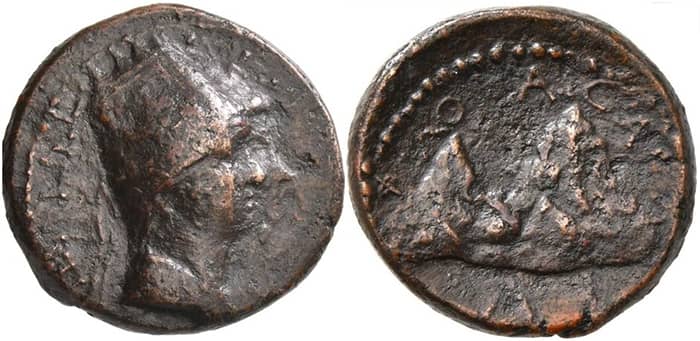
A recent analysis published by MassisPost delves into this historical positioning, utilizing an ancient Armenian coin from the Kingdom of Greater Armenia as a potent symbol. This specific artifact, a bronze dichalkon, was minted in Artashat (also known as Artaxata), a significant capital of the era, and dates from approximately 2 BC to AD 1. The coin serves as tangible numismatic evidence of Armenia's statehood and its efforts to maintain independence amidst powerful neighbors like the Roman and Parthian Empires.
The obverse side of the coin proudly displays the jugate portraits of King Tigranes IV and Queen Erato, rulers whose reign marked a period of complex diplomacy and intermittent conflict. Their depiction on the coinage underscores the continuity of Armenian royal authority during a turbulent period. On the reverse, the coin features a detailed depiction of Mount Ararat, as observed from Artashat, showcasing both Greater Ararat and Little Ararat in the landscape. This imagery is not merely decorative; it intrinsically links Armenian geographic identity and its sacred mountains with the nation’s historical sovereignty and cultural heritage, asserting a deep connection to the land even in the face of external pressures.
A Continuous Quest for Sovereignty
The title of the MassisPost article, “Armenia Between Empires, Then and Now: The Art of Creating Options,” encapsulates a recurring theme throughout Armenian history: the imperative of strategic maneuvering for survival and the preservation of sovereignty. This historical perspective provides a crucial lens through which to understand contemporary diplomatic and military developments involving Armenia, highlighting a consistent national approach to navigating complex international relations.
From ancient kings balancing the might of Rome and Parthia to modern leaders engaging with global powers, Armenia has consistently sought to forge alliances and develop capabilities that secure its national interests. This 'art of creating options' involves a delicate balance of maintaining existing relationships while actively exploring new partnerships, often in response to evolving regional and global dynamics. The current geopolitical landscape presents Armenia with similar challenges, necessitating agile and diversified strategies to ensure its security and stability.
Navigating Contemporary Alliances and Partnerships
In the present day, Armenia continues to demonstrate this strategic adaptability through its engagement with various international actors. Recent developments underscore a proactive approach to enhancing national security and diversifying its defense posture, reflecting the historical imperative to create options.
Deepening Defense Ties with India
In a significant move reported by MassisPost, Armenia has formalized an agreement with India to jointly develop defense technologies. This partnership extends beyond mere procurement, signaling a deeper collaboration aimed at building Armenia's indigenous defense capabilities and technological base. India, a rising global power and a non-traditional defense partner for Armenia, represents a strategic avenue for diversifying military cooperation and reducing reliance on established alliances. This collaboration is poised to enhance Armenia’s national security capabilities through shared expertise and technological advancement, providing a new dimension to its defense strategy.
The CSTO Dilemma and Border Recognition
Simultaneously, Armenia's status within the Collective Security Treaty Organization (CSTO) remains a subject of active discussion and considerable diplomatic complexity. The CSTO, a military alliance comprising several post-Soviet states, is designed to provide collective security to its members. However, according to reports cited in the article, an Armenian Member of Parliament has publicly stated that the CSTO has yet to formally recognize Armenia’s borders as part of the organization's collective security framework. This lack of explicit recognition poses a significant challenge to the principle of collective defense, particularly given ongoing border security concerns faced by Armenia.
The article further notes that the CSTO is actively pressing Yerevan for a definitive decision regarding its membership status. This political pressure from a key security organization stands in stark contrast to Armenia's independent defense technology agreement with India. The situation highlights the intricate and often challenging diplomatic environment in which Armenia operates, where it must balance existing commitments with the imperative to secure its borders and interests through diversified partnerships and strategic autonomy. This dual approach exemplifies the modern manifestation of Armenia's historical 'art of creating options' in a complex and evolving world.