

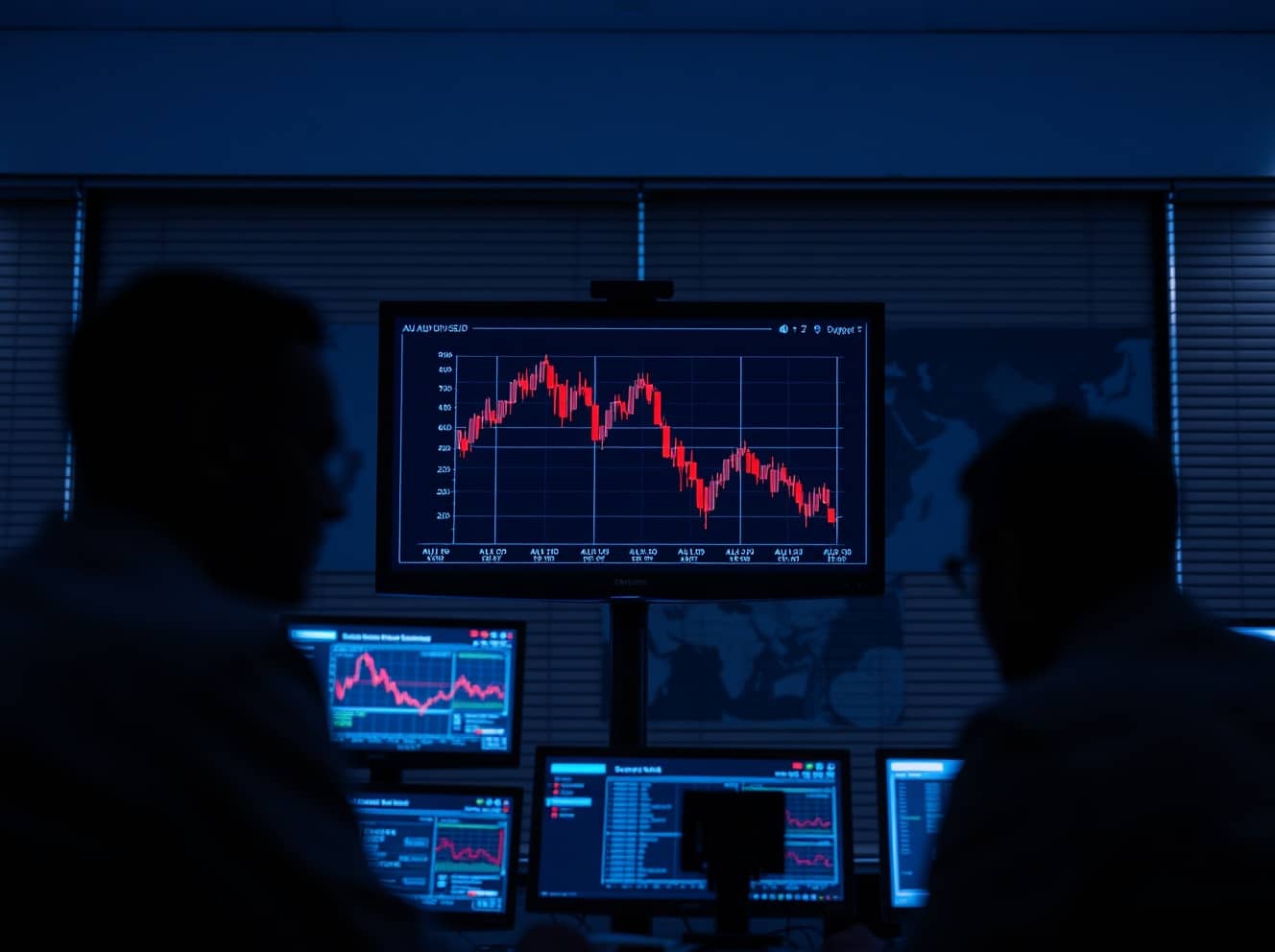

Australian Dollar Slips Amid Geopolitical Tensions
The Australian Dollar (AUD) weakened against its major counterparts on Monday, a movement observed shortly after the United States confirmed it had conducted self-defense strikes on military targets located in southern Iran. This geopolitical development introduced a new layer of uncertainty into global markets, contributing to a shift in investor sentiment towards assets traditionally considered safe havens.
The US Department of Defense confirmed the strikes, stating they were carried out in self-defense against specific military targets. This action follows a period characterized by a series of escalating incidents in the broader region, which have progressively heightened geopolitical tensions. The confirmation of these strikes by a major global power immediately resonated across financial markets, particularly in currency trading.
Market Reaction and Currency Movements
The news of the US strikes rattled currency markets, leading to increased volatility. The AUD/USD pair, a widely watched indicator of the Australian dollar's strength against the US dollar, reflected this sentiment by trending downwards. This depreciation of the Australian dollar is consistent with historical patterns where global risk aversion tends to weigh on currencies perceived as more sensitive to global economic growth and stability.
Investors, reacting to the heightened geopolitical risk, began reallocating capital from assets considered riskier or more growth-sensitive to those perceived as more secure during times of uncertainty. This flight to safety is a common response to unexpected geopolitical events that could potentially disrupt global trade, energy supplies, or economic stability.
The Australian Dollar as a Risk Proxy
The Australian Dollar is often regarded by market participants as a proxy for global risk sentiment. Australia's economy is significantly influenced by commodity exports, particularly to Asian markets. Consequently, the AUD tends to perform well during periods of strong global economic growth and high risk appetite, but it often depreciates when global uncertainties rise or risk aversion dominates. Geopolitical events that threaten global stability or trade routes can directly impact the outlook for commodity demand and, by extension, the value of the Australian dollar.
Furthermore, Australia's strong trade ties with the broader Asia-Pacific region mean that any instability in key global shipping lanes or heightened tensions in the Middle East can indirectly affect supply chains and economic confidence, which in turn influences the AUD. The confirmed US strikes in southern Iran, a region critical for global energy supplies and maritime trade, contributed to this perception of increased risk.
Demand for Safe-Haven Assets
In contrast to the Australian dollar's performance, traditional safe-haven assets experienced an uptick in demand. The US Dollar (USD) is a primary beneficiary during periods of global uncertainty due to its status as the world's reserve currency, the liquidity of US financial markets, and the perceived stability of the US economy. Other assets that typically attract capital during risk-off environments include the Japanese Yen (JPY), the Swiss Franc (CHF), and gold.
The appeal of these safe havens stems from their perceived ability to retain value or even appreciate when other assets are declining. Investors seek the relative security and liquidity offered by these instruments as a hedge against potential losses from more volatile or growth-dependent investments. The immediate market response following the US strikes illustrated this classic capital flow from risk-sensitive currencies to safe-haven alternatives.
Broader Implications of Regional Tensions
The US strikes in southern Iran underscore the ongoing volatility in the Middle East, a region with significant implications for global energy markets and international trade. Persistent geopolitical tensions in such critical areas can have far-reaching effects on investor confidence, supply chains, and inflation expectations worldwide. While the immediate impact was observed in currency markets, sustained instability could influence broader economic forecasts and investment strategies.
The confirmed actions by the United States add another dimension to the complex geopolitical landscape. Market participants continue to monitor developments closely for any further escalation or de-escalation that could influence global economic stability and, consequently, asset valuations across various financial sectors.