

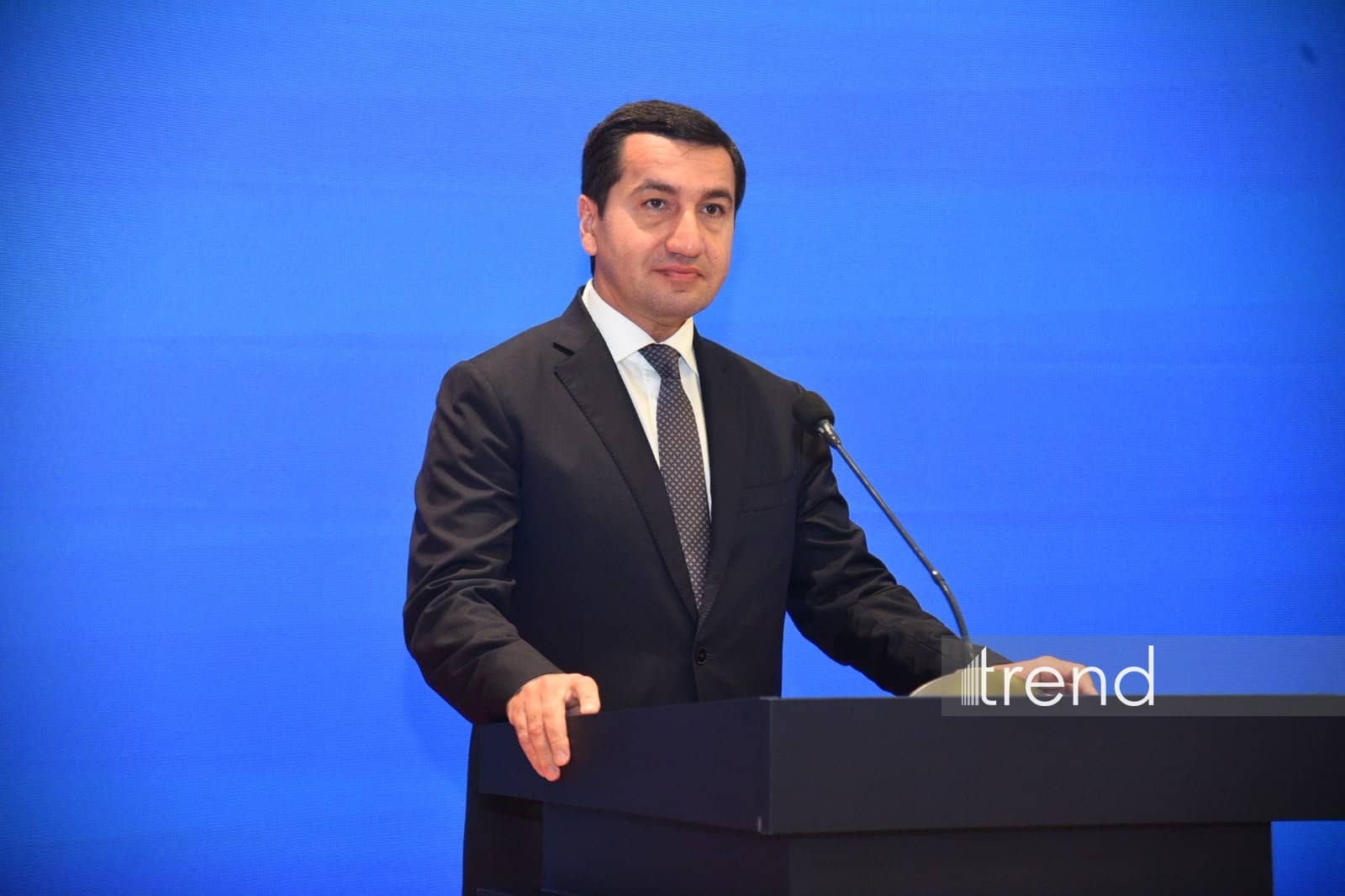

Official Denial of Reported Statements
Hikmet Hajiyev, who serves as the Assistant to the President of Azerbaijan and Head of the Foreign Policy Affairs Department of the Presidential Administration, has issued a formal denial regarding remarks attributed to him in Turkish media. The controversy stems from a report published by the Turkish newspaper Türkiye Gazetesi on August 5, 2026. This high-ranking official's public correction underscores the sensitivity and importance Azerbaijan places on accurate reporting, particularly concerning its foreign policy.
In a statement shared on his official X social media account, Hajiyev addressed the discrepancies between his actual comments and the published article. He acknowledged that he had engaged in discussions with journalists from Turkey during their visit to Azerbaijan but contested the accuracy of the subsequent reporting. The use of a direct social media platform highlights the immediate nature of the official's response to correct the public record.
High-Ranking Official Addresses Media Report
As Assistant to the President and Head of the Foreign Policy Affairs Department, Hikmet Hajiyev occupies a pivotal role in shaping and communicating Azerbaijan's international posture. His statements are widely regarded as reflecting the official position of the Azerbaijani government. Therefore, any misrepresentation of his remarks, especially in foreign media, carries significant weight and potential implications for diplomatic relations and public perception.
Hajiyev's engagement with Turkish media representatives was part of standard diplomatic outreach, designed to foster understanding and provide insights into Azerbaijan's perspectives. Such meetings are crucial for transparent communication between nations, making the subsequent distortion of his comments a matter requiring swift and authoritative clarification from the Azerbaijani side.
Specific Rebuttals to Journalist's Report
Hajiyev specifically identified the source of the disputed information as a report written by journalist Yılmaz Bilgen for Türkiye Gazetesi. In his post, he expressed regret that certain statements attributed to him in Bilgen’s article were presented in what he described as a “distorted and incorrect manner.” This phrasing indicates a significant deviation from his actual words, suggesting a misinterpretation or misrepresentation rather than a minor factual error.
While Hajiyev characterized the meeting with Turkish media representatives as “interesting,” implying a constructive dialogue, he clarified that the final published account did not accurately reflect his words. He stated, “A number of statements attributed to me in that article are incorrect,” thereby rejecting the validity of the claims made in the publication. This direct refutation aims to prevent any misunderstandings that might arise from the erroneous reporting.
Azerbaijan's Stance on Foreign Policy
Beyond correcting the record regarding specific quotes, Hajiyev used the platform to reaffirm Azerbaijan’s diplomatic stance. He emphasized that the Republic of Azerbaijan maintains a foreign policy that is both independent and principled. This assertion is a cornerstone of Azerbaijan's international identity, stressing its sovereignty and self-determination in global affairs.
Reaffirming National Interests and Sovereignty
The official noted that this policy framework is strictly based on the nation's national interests. By reiterating this point, Hajiyev sought to distance the government’s official position from the allegations or interpretations presented in the Turkish press report, which might have suggested external influences or deviations from Baku's established foreign policy principles. Emphasizing national interests underscores that Azerbaijan's decisions are made autonomously, prioritizing its own strategic goals and security.
This reaffirmation serves to clarify Azerbaijan's consistent approach to international relations, signaling to both domestic and international audiences that its diplomatic actions are guided by a clear and unwavering commitment to its own priorities, irrespective of external narratives or misrepresentations in media reports.
The Role of Official Communication in Diplomacy
The incident highlights the evolving landscape of diplomatic communication, where social media platforms like X have become essential tools for high-ranking officials to directly address public discourse and correct misinformation. Hajiyev's choice to issue his denial via his official X account allowed for a rapid and widespread dissemination of his clarification, bypassing traditional media channels that might have perpetuated the initial inaccuracies.
Immediate Clarification via Social Media
The swiftness of Hajiyev's response underscores the importance placed on controlling the narrative, especially when it pertains to a nation's foreign policy. In an era of instant information, official denials and clarifications delivered through platforms like X can immediately counter potentially damaging reports, ensuring that the government's accurate position is communicated directly to the public and international observers. This direct channel minimizes the time for misinterpretations to take root and influence public opinion or diplomatic relations.
Timeline of the Disputed Report
The incident unfolded with the publication of the article in Türkiye Gazetesi on August 5, 2026. This date marks the point at which the disputed claims entered the public domain. The promptness of Hajiyev’s response, posted to his X account shortly after the report came to light, indicates the urgency with which the Azerbaijani administration viewed the need to correct the record.
The clarification serves as a direct rebuttal to the journalist's account, aiming to correct what the Azerbaijani official perceives as misinformation regarding Baku’s diplomatic engagements and internal policy discussions with visiting foreign press. The sequence of publication followed by an immediate official denial illustrates a proactive approach by Azerbaijan to manage its international image and ensure factual accuracy in reporting related to its governmental affairs.