


Great Powers Vie for Influence in Western Balkans
The Western Balkans region continues to be an arena where major global powers pursue distinct and often competing agendas. This dynamic has led to a shifting geopolitical landscape, with the traditional influence of the European Union appearing to be increasingly sidelined as other global actors intensify their engagement.
United States Issues New Strategy, Warns of Russian and Chinese Influence
The United States has recently unveiled a new strategy document that explicitly addresses its concerns regarding the Western Balkans. A central theme of this document is a warning about the growing influence of both China and Russia within the region. The strategy underscores Washington's view that the activities of these nations could potentially challenge democratic development, economic stability, and Euro-Atlantic integration pathways for the Western Balkan states.
The US document reportedly highlights various facets of this influence. For Russia, concerns often revolve around its historical ties, energy leverage, and efforts perceived as aimed at fostering political instability or undermining regional cohesion. For China, the focus is frequently on its expanding economic footprint, particularly through infrastructure investments and lending practices, which some analysts suggest could lead to increased economic dependency and strategic leverage.
Washington's renewed strategic focus indicates a commitment to counter what it identifies as malign foreign influence and to reinforce the region's alignment with Western democratic values and institutions. This approach signals a re-emphasis on the strategic importance of the Western Balkans for broader European security and stability.
China Strengthens Ties, Honors Serbian President
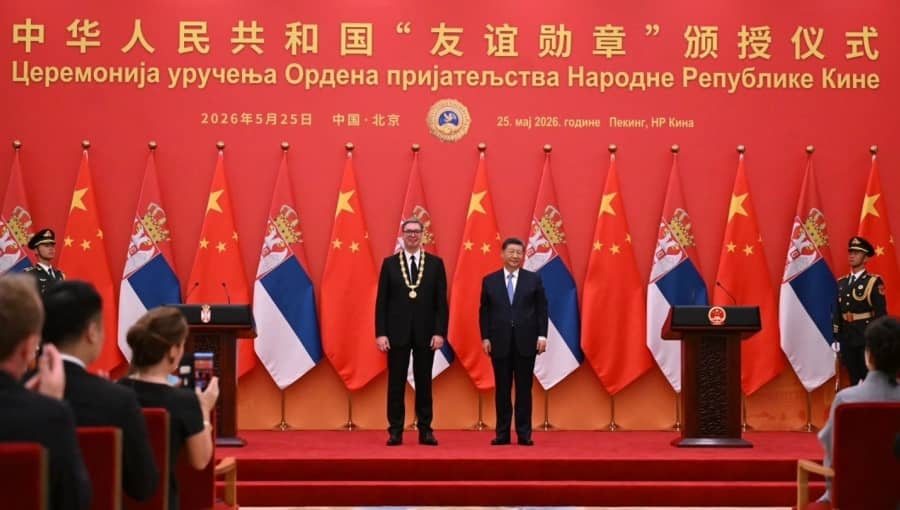
Concurrently with the US's strategic pronouncements, China has continued to deepen its engagement in the Western Balkans, particularly with Serbia. President Xi Jinping of China recently honored Serbia’s president during a high-profile visit to Beijing. This diplomatic gesture underscores the strengthening bilateral relationship between China and Serbia, a key partner for Beijing's Belt and Road Initiative (BRI) in Europe.
China's engagement in the Western Balkans is primarily characterized by significant economic investments, particularly in infrastructure projects such as roads, railways, and energy facilities. These investments are often accompanied by substantial loans, presenting both opportunities for development and questions regarding long-term economic sustainability and transparency. The high-level diplomatic recognition extended to Serbia's leader in Beijing serves to solidify political ties and reinforce China's strategic presence in the region.
Observers note that China's approach often emphasizes economic cooperation and non-interference in internal affairs, a strategy that has resonated with some regional leaders seeking alternative development pathways and investment sources beyond traditional Western partners.
Russia's Enduring Presence
Russia's influence in the Western Balkans, while distinct from China's economic-led approach, remains a significant factor. Historically and culturally connected to several states in the region, particularly Orthodox Slavic nations, Russia maintains a presence through energy supplies, cultural diplomacy, and political support for specific actors. The US strategy document's warning about Russian influence points to concerns over its potential to exacerbate ethnic tensions, support anti-Western narratives, and challenge the sovereignty of states through various means.
Moscow's objectives in the region are often perceived as aimed at preventing the full integration of Western Balkan states into Euro-Atlantic structures like NATO and the EU, thereby preserving a sphere of influence and challenging the unipolarity of the post-Cold War order.
European Union's Sidelined Role
Amidst the intensified engagement of the United States, China, and Russia, the European Union's role in the Western Balkans appears to be increasingly sidelined. The EU has long been the primary external actor in the region, offering the prospect of membership as a transformative incentive for reforms, stability, and economic development. However, the accession process has been protracted and complex, marked by internal EU divisions, slow reform progress in candidate countries, and a perceived lack of enthusiasm from some member states for further enlargement.
This perceived stagnation in the EU integration process has created a vacuum that other global powers have sought to fill. While the EU remains the largest donor, trade partner, and investor in the region, the allure of full membership has diminished for some, contributing to a sense of frustration and opening doors for alternative partnerships. The EU's focus has also been diverted by internal crises, such as Brexit, and other geopolitical challenges, potentially reducing its capacity to exert consistent and decisive influence in the Western Balkans.
The competition among great powers for influence in the Western Balkans underscores the region's strategic importance and the complex geopolitical dynamics at play. The actions and strategies of the United States, China, and Russia are actively shaping the future trajectory of these nations, while the European Union navigates its long-standing commitment to the region amidst evolving global interests.