


UNGA Speech Highlights Policy Rifts
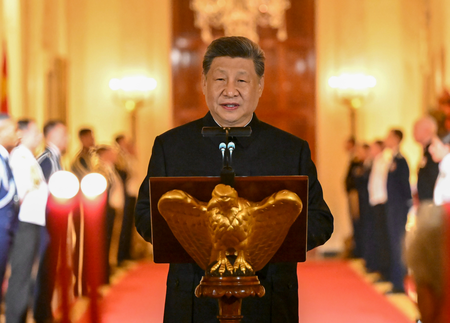
China’s Vice President Han Zheng presented Beijing’s stance on global trade, international security, and diplomatic engagement at the United Nations General Assembly on Saturday. The address occurred two days after a summit between U.S. President Donald Trump and Chinese President Xi Jinping.
During his speech, Han laid out differing worldviews without directly naming the United States, referring to it only as a “relevant authority.” He emphasized that countries' sovereignty and security in the Middle East, including the Gulf region, must be respected. This statement referenced a Gulf conflict initiated by Israel and the U.S. when they bombed Iran in February, which plunged the region into confrontation.
“We should settle differences and disputes through dialogue and consultation, and oppose unilateral military actions that violate the UN Charter and circumvent Security Council authorisation,” Han said.
Trade and Security Frameworks
Addressing economic tensions, Han responded to tariff wars and U.S. restrictions on trade by asserting the need to safeguard the WTO-centered, rules-based multilateral trading system. He called for an open world economy that jointly fosters new growth drivers, ensuring economic globalization is inclusive.
“Protectionism produces no winners,” he added. Han warned that decoupling and cutting off supply chains disrupt global industrial and supply chains and harm all parties.
On the topic of international security architecture, Han stated that the international system should be centered on the UN, with a vision of “common, comprehensive, cooperative and sustainable security.” This position contradicts Trump’s policies to downgrade and bypass the organization.
Diplomatic Ripostes
In a riposte to Trump’s threats, Han said condescension and the self-centered mindset have no place in interactions among different cultures.
On the issue of Cuba, Han urged the “relevant country” to stop using threats of force and lift the blockade and sanctions against Havana. This call for an end to isolation aligns with Beijing’s broader display of differences with Washington over trade, international organizations, Iran, and Cuba at the UN.
Contrasting Approaches to Global Power
The diplomatic exchanges underscored a sharp divergence in how the two nations view their roles on the world stage. While Trump gave Xi a personal airport reception during their recent summit, China held firm to its positions to project itself as another global power center.
Observers noted Beijing’s double standards regarding these principles of sovereignty and non-interference. Critics pointed to China's actions along the Line of Actual Control with India and in the South China Sea, where it has confrontations with the Philippines, Vietnam, and Malaysia.
Furthermore, observers highlighted that China lays claim to Taiwan and threatens it with military maneuvers, complicating its narrative of respecting national sovereignty elsewhere. Despite these criticisms, Beijing continued to emphasize its vision of a multipolar world order centered on multilateral institutions rather than unilateral actions.