

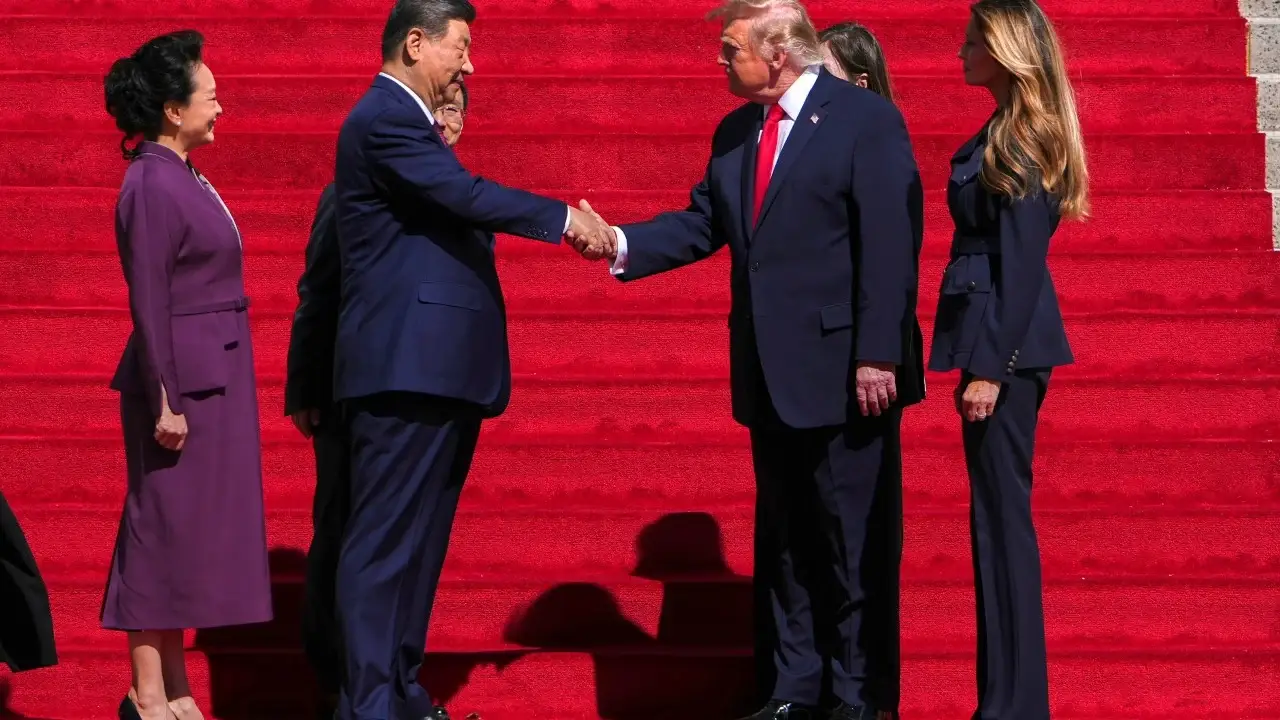

Host Leverage and Agenda Control in Shenzhen
\nWhen U.S. President Donald Trump arrives in Shenzhen for the November APEC Economic Leaders' Meeting, he will face Chinese President Xi Jinping in a setting that offers Beijing significantly greater diplomatic control than previous summits. Xi Jinping announced that China will host the 2026 APEC Economic Leaders' Meeting in Shenzhen, marking the country's third time hosting the summit.
\nChen Qi, director of the Centre for US-China Relations at Tsinghua University, stated that China possesses far more control over preparatory work and agenda-setting as the host than it did during the bilateral summit in Washington. \"As the Apec host, China will clearly possess far more autonomy in agenda-setting, topic selection, and preparatory work than it did during the Washington summit, where the US controlled the choreography while China held only participation and discussion rights,\" Chen said.
\nThe choice of Shenzhen provides Beijing with a platform to showcase its technological capabilities. The city is home to major technology firms including Huawei, BYD, and Tencent. Xi Jinping will have greater control over the agenda in Shenzhen, allowing him to highlight diplomatic achievements in ways that were not possible during a bilateral summit.
\n\nUpgraded Bilateral Framework and Recent Engagements
\nThe confidence attributed to Xi Jinping by experts stems from three primary factors: a newly upgraded bilateral framework seeking strategic stability, the tone of recent high-level visits, and China's position as host. The two leaders have met twice in 2026, first in Beijing in May and then at the White House in September.
\nDuring the Washington summit, which covered trade, investment, AI, the war with Iran, and Taiwan, deeper technological tensions regarding AI, cyber operations, export controls, and digital sovereignty remained unresolved. However, leaders were expected to discuss trade, AI, and the Iran war during their third in-person meeting in a year.
\nDuring the meeting in Washington, President Trump and President Xi Jinping agreed to support each other in hosting the APEC Economic Leaders' Meeting and the G20 summit. The two also reached an understanding to end the tariff war, which included reducing the US \"fentanyl tariff\" from 20% to 10% and lowering overall US tariffs on China from 57% to 47%.
\nThe agreement outlined specific actions for both nations. Chinese actions include lifting export controls on rare-earth metals and importing US soybeans. US actions involve lifting restrictions on semiconductor chip exports.
\n\nDiplomatic Trajectory and Future Visits
\nXi Jinping’s recent three-day state visit to Washington was described as heavy on pageantry but light on concrete deliverables, yet it established a warmer tone for future interactions. The bilateral relationship is now framed by a new joint arrangement seeking