


Political Defense of Institutional Dress Codes
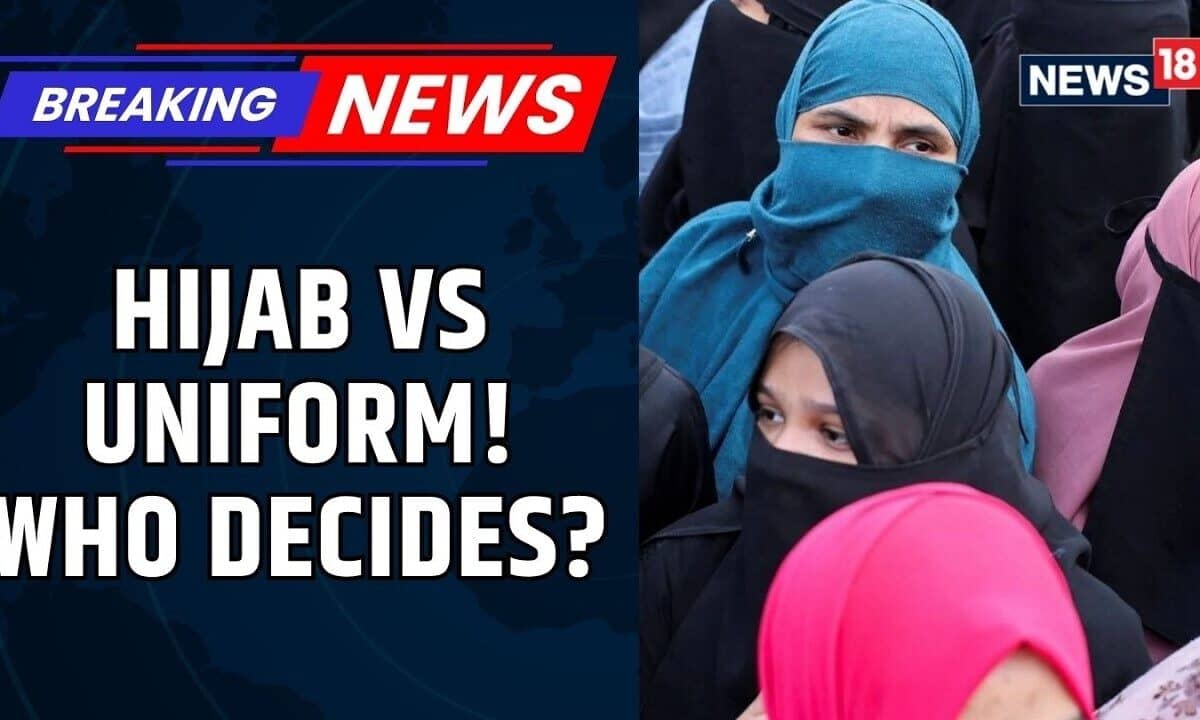
The Bharatiya Janata Party (BJP) has formally defended existing school uniform policies as the controversy surrounding the wearing of hijabs in educational settings continues to escalate. According to reports from CNN-News18, political leaders within the party have articulated a clear stance that common dress codes are not merely administrative preferences but essential components for maintaining order within academic environments.
BJP officials argue that the enforcement of prescribed school uniforms is critical for preserving uniformity among students. The party contends that such uniformity is directly linked to the maintenance of discipline, which they describe as a foundational element of the educational framework. Furthermore, BJP representatives have emphasized that these dress codes are intended to protect and uphold educational integrity, suggesting that standardized attire contributes to a focused learning environment.
The defense of these policies comes at a time when the debate over school dress codes is intensifying across various regions. Political leaders associated with the BJP have positioned their arguments in direct contrast to those offered by activists and other political figures who advocate for greater flexibility in individual rights within institutional rules. This divergence highlights the sharp differences in perspective regarding where the boundary between personal expression and institutional regulation should be drawn.
Legal Precedents and Supreme Court Scrutiny
In bolstering their position on mandatory dress codes, BJP leaders have explicitly referenced proceedings and rulings from the Supreme Court. By citing these legal authorities, party officials seek to validate the enforcement of prescribed school uniforms as a practice supported by higher judicial interpretation.
The reference to Supreme Court jurisprudence indicates that the BJP is attempting to ground its political stance in established legal frameworks rather than relying solely on ideological arguments. This strategy aligns with the party's broader effort to present the uniform policy as a matter of regulatory compliance and legal adherence rather than a purely cultural or religious imposition.
The ongoing scrutiny by the Supreme Court adds a layer of complexity to the dispute. As the highest judicial body in the country reviews cases related to hijab bans and dress code enforcement, the BJP's public defense serves to reinforce the government's position that institutional rules must be strictly applied. The party's reliance on court rulings suggests an expectation that legal outcomes may support the authority of educational institutions to dictate attire standards.
Conflicting Views on Rights and Rules
The current discourse reveals a significant polarization between competing viewpoints on student conduct in schools. Activists and opposing political voices argue that individual rights should take precedence or at least be accommodated within institutional rules, particularly concerning religious attire such as the hijab.
Conversely, the BJP maintains that the collective need for uniformity and discipline outweighs individual preferences in this context. This clash of perspectives has fueled a growing political row, with each side presenting distinct interpretations of how educational institutions should balance personal freedoms with administrative mandates. The intensity of this debate underscores the broader societal tensions regarding secularism, religious expression, and state authority in public education.
Implications for Educational Policy
The BJP's firm stance on uniform policies has immediate implications for school administrations across the country. By defending these codes as essential for educational integrity, the party signals continued support for strict adherence to established dress norms, even in the face of widespread criticism and legal challenges.
As the Supreme Court continues its proceedings, the outcome will likely influence not only current students but also future policy decisions regarding religious attire in public institutions. The BJP's argument that uniformity is synonymous with discipline remains a central pillar of their position, framing the issue as one of educational standards rather than merely a cultural dispute.
Observers note that the debate is no longer confined to local school boards but has entered the national political arena. The involvement of high-profile political figures and references to supreme judicial rulings indicate that the resolution of this controversy will require careful navigation of legal, social, and political factors. Until further court decisions are rendered, schools and students remain in a state of uncertainty regarding the enforcement of dress codes.