

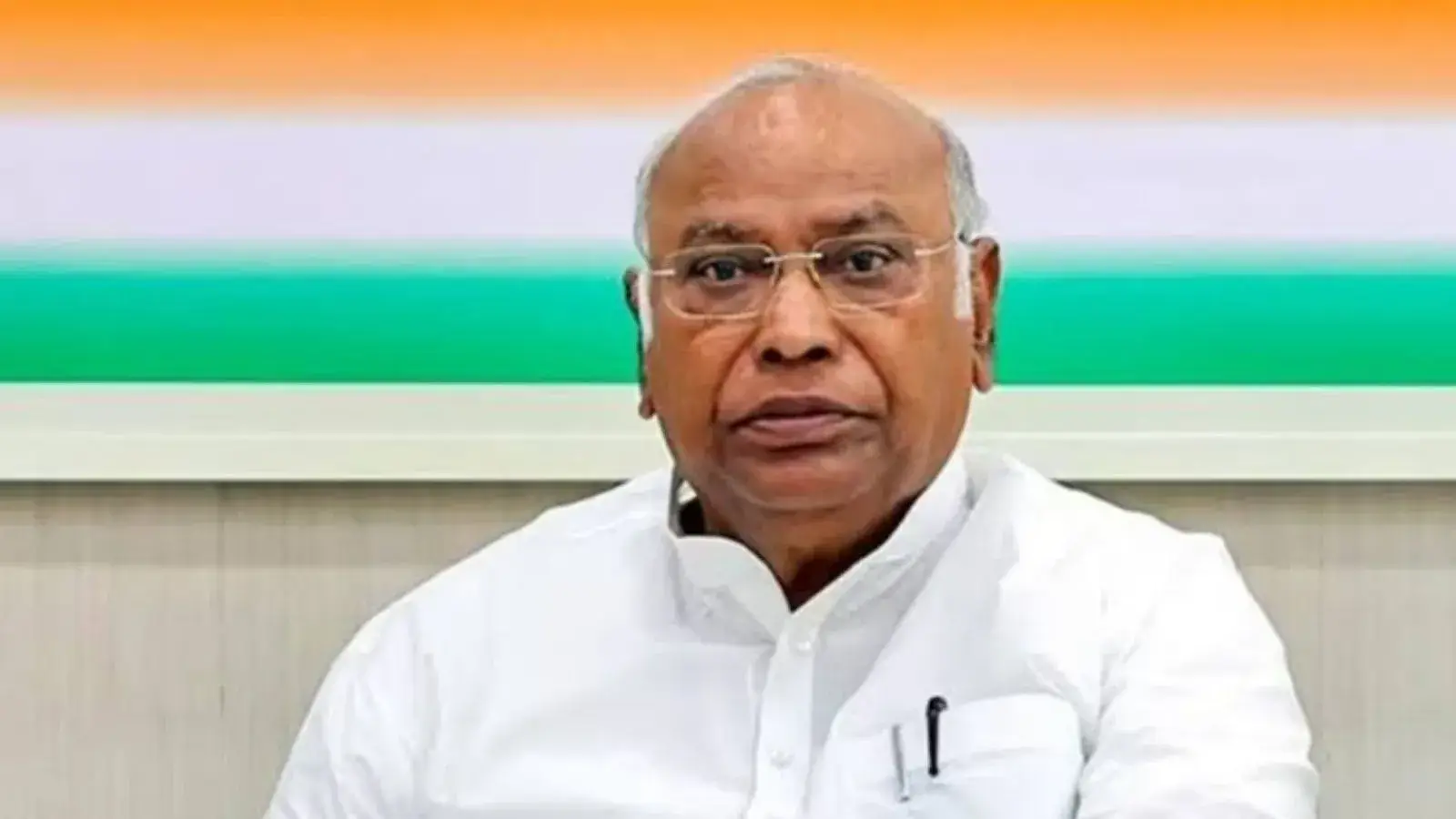

Kharge’s Diwali Greeting Sparks Political Firestorm
The Bharatiya Janata Party (BJP) has launched a scathing attack on Congress President Mallikarjun Kharge following his recent festival greetings, challenging the opposition leadership to demonstrate "equal courage" by referring to Eid as a "Diwali of joy." The controversy erupted on Saturday when Kharge extended holiday wishes to reporters ahead of the Diwali break, describing the Hindu festival of lights in unconventional terms that have since ignited a fierce political debate.
Kharge referred to Diwali as "khushiyon ka Eid" (Eid of happiness) while addressing the media. In his statement, he characterized the occasion as a major festival celebrated across the country and described it as an "Eid which goes on for a long time." The remark was intended as a gesture of inclusivity and shared joy, but it was quickly seized upon by BJP leaders as evidence of the Congress party's ideological alignment with minority vote banks at the expense of Hindu cultural identity.
BJP Demands Symmetry in Festival References
In response to Kharge’s comments, BJP national media co-incharge Pradeep Bhandari accused the Congress party of engaging in blatant vote bank politics on a Hindu festival. Bhandari labeled the opposition as "anti-Sanatani" and "anti-Hindu," citing what he described as a pattern of disrespect toward Hindu traditions. He pointed to past instances where the Congress remained silent when the term "Sanatan" was mocked, specifically referencing an incident where it was derisively called "Dengue Malaria Aid." Bhandari argued that this selective outrage highlights the party's true priorities.
The BJP’s national spokesperson Gaurav Bhatia questioned why Kharge had a problem calling Diwali by its real name. Bhatia asserted that while Eid holds its own significance, Diwali possesses its own distinct sanctity, traditions, and identity that should not be conflated with Islamic festivals. The party argued that the Congress leadership’s hesitation to acknowledge the specific identity of Hindu festivals stems from political calculations rather than genuine cultural appreciation.
BJP spokesperson Tuhin Sinha added another layer to the criticism, noting that Muslims celebrate Eid only twice a year. However, Sinha alleged that the Congress party wants to celebrate every Hindu festival as "Khushiyon ki Eid." This behavior, according to Sinha, explains why Prime Minister Narendra Modi refers to the Congress party as "MMC" (Maowadi Muslim League Cong), a term used to criticize the opposition for what he perceives as appeasement politics.
Accusations of Cultural Insensitivity and Vote-Bank Politics
BJP MP Tarun Chugh leveled serious accusations against Kharge, alleging that the Congress President was insulting Indian culture and hurting the sentiments of crores of Sanatanis. Chugh claimed that the party is hesitant to acknowledge the identity of Hindu festivals due to vote-bank politics, suggesting that the leadership prioritizes political gain over cultural respect. The MP’s statement reflected a broader sentiment within the BJP ranks that the Congress party has lost touch with the core values of Hindu nationalism.
The controversy has drawn sharp responses from both sides of the political divide. Senior Congress leader Rashid Alvi defended Kharge’s remark, stating that Eid is commonly used as a metaphor for happiness in Indian culture. Alvi argued that the term is similar to traditional idioms and should not be interpreted as an attempt to appropriate or diminish the significance of Diwali. He emphasized that the intent was to promote communal harmony and shared celebration rather than to erase cultural distinctions.
Broader Political Context and Ongoing Tensions
The dispute over Kharge’s Diwali greeting occurs against a backdrop of heightened political tensions between the BJP and the Congress party. Rahul Gandhi had previously issued a challenge for a debate covering critical issues like the NEET examination, unemployment, and inflation. However, Prime Minister Narendra Modi has chosen not to participate in such debates. Gandhi stated that their struggle is against PM Modi, Amit Shah, and the BJP, not against any other individual, framing the political conflict as a fundamental ideological battle rather than a personal dispute.
The incident underscores the deepening polarization in Indian politics, where festival greetings and cultural references have become flashpoints for broader ideological conflicts. The BJP’s aggressive response to Kharge’s remarks highlights its strategy of framing the Congress party as anti-Hindu, while the Congress defense emphasizes the importance of inclusive language and metaphorical usage in a diverse society. As Diwali approaches, the debate over cultural identity and political messaging continues to dominate the national discourse.