


Investigating Shifting Demographics in Philadelphia
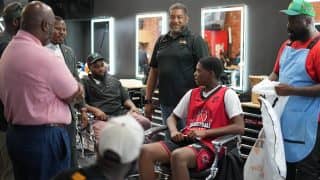
PHILADELPHIA — Inside a bustling barbershop in Philadelphia, a vibrant hub of community life, Black men are engaging in profound discussions regarding their political history and future outlook. These candid conversations are not merely casual exchanges; they form a critical component of a broader, nationwide effort led by political strategist Khalil Thompson to deeply understand evolving electoral trends among this vital demographic.
Thompson embarked on this extensive research journey two years ago, immediately following the presidential election where Democrat Kamala Harris was defeated by Donald Trump. His primary objective in traversing the country, engaging with Black men in various communities, is to meticulously determine the underlying reasons why a segment of Black men inched their support toward a white Republican candidate rather than aligning with a Black woman during that pivotal contest. This particular electoral outcome, pitting a Black woman against a white man, presents a unique and compelling case study for political analysts seeking to understand the complexities of voter behavior.
The choice of a local barbershop as the setting for these profound political debates is deliberate and culturally significant. Barbershops have long served as essential community forums within Black culture, functioning as trusted spaces for open dialogue, shared experiences, and the unvarnished exchange of ideas. Within these walls, discussions range from personal anecdotes to national policy, providing an authentic environment for Thompson's research. The interactions observed and recorded here highlight the ongoing, complex analysis of voter behavior and political consciousness within the community, offering insights that might not emerge in more formal survey settings.
Electoral Shifts and Strategic Analysis
Historically, Black men have constituted a cornerstone of the Democratic Party's base, voting overwhelmingly Democratic in presidential and local elections. This consistent pattern has made their collective support a predictable and powerful force in American politics. However, political observers and strategists, including Thompson, are acutely aware that even seemingly minor shifts in their support can carry profound significance, particularly in the tightly contested landscape of national elections.
The Impact of Marginal Voter Movement
In a political system often decided by narrow margins in swing states, a slight deviation from traditional voting patterns within a key demographic can alter the outcome of an entire election. For instance, if a small percentage of Black men, who typically vote Democratic, choose to support a Republican candidate, this shift can translate into thousands of votes in critical battleground states. Such movements, though numerically small in percentage terms, can be the difference between victory and defeat, especially given the high stakes of presidential races and the electoral college system.
Thompson’s intensive work is precisely focused on identifying and dissecting the multifaceted factors behind these minor but undeniably impactful changes in voting alignment. His travels across the nation are driven by an urgent need to comprehend the motivations and grievances that might lead this demographic away from traditional Democratic strongholds and toward Republican candidates. This inquiry seeks to move beyond surface-level assumptions to uncover deeper socio-economic, cultural, and political currents influencing these decisions.
Examining the Trump-Harris Election Dynamic
The recent election results, specifically where Donald Trump secured victory over Kamala Harris, have served as the catalyst for this specific and targeted line of inquiry. Thompson is meticulously examining the complex reasons behind the observed preference, however slight, for a white Republican over a Black woman in that particular race. This dynamic challenges conventional political wisdom and necessitates a thorough investigation into voter priorities, perceptions of candidates, and the efficacy of campaign messaging within the Black male community. Understanding this specific electoral moment is crucial for both parties seeking to engage and represent this demographic effectively in future elections.
The Broader Political Landscape and Future Implications
The phenomenon of even minor shifts in Black male voting patterns holds significant implications for both major political parties. For the Democratic Party, understanding why some Black men might gravitate away from their traditional base is crucial for retaining their support and preventing further erosion. This involves a deep dive into policy priorities, economic concerns, and social issues that resonate within the community, ensuring that the party's platform genuinely addresses their needs and aspirations.
Challenges for Democratic Engagement
The challenge for Democrats lies in not taking the Black male vote for granted, despite its historical reliability. Thompson's research implicitly suggests a need for renewed engagement and a tailored approach to communicate with this segment of the electorate. The specific dynamic of a Black woman candidate, Kamala Harris, failing to secure universal support from Black men against a white Republican, Donald Trump, signals that identity politics alone may not be the sole determinant of voting behavior. Economic policy, criminal justice reform, and other tangible issues often play a more decisive role for voters.
Opportunities for Republican Outreach
Conversely, for the Republican Party, any indication of increased support from Black men represents a potential avenue for expanding their coalition. While still a minority, the willingness of some Black men to consider Republican candidates suggests that traditional party lines are not entirely immutable. This opens opportunities for targeted outreach and messaging that could appeal to specific interests within the Black male community, potentially reshaping the electoral map in future contests. The insights gleaned from discussions in places like Philadelphia barbershops could inform strategies for both parties as they vie for critical votes.
Ultimately, the ongoing analysis of voter behavior among Black men, as exemplified by Khalil Thompson’s research, underscores the dynamic and evolving nature of American politics. It highlights that no demographic group is monolithic and that understanding the nuances of individual and community decision-making is paramount for effective political engagement and representation.