

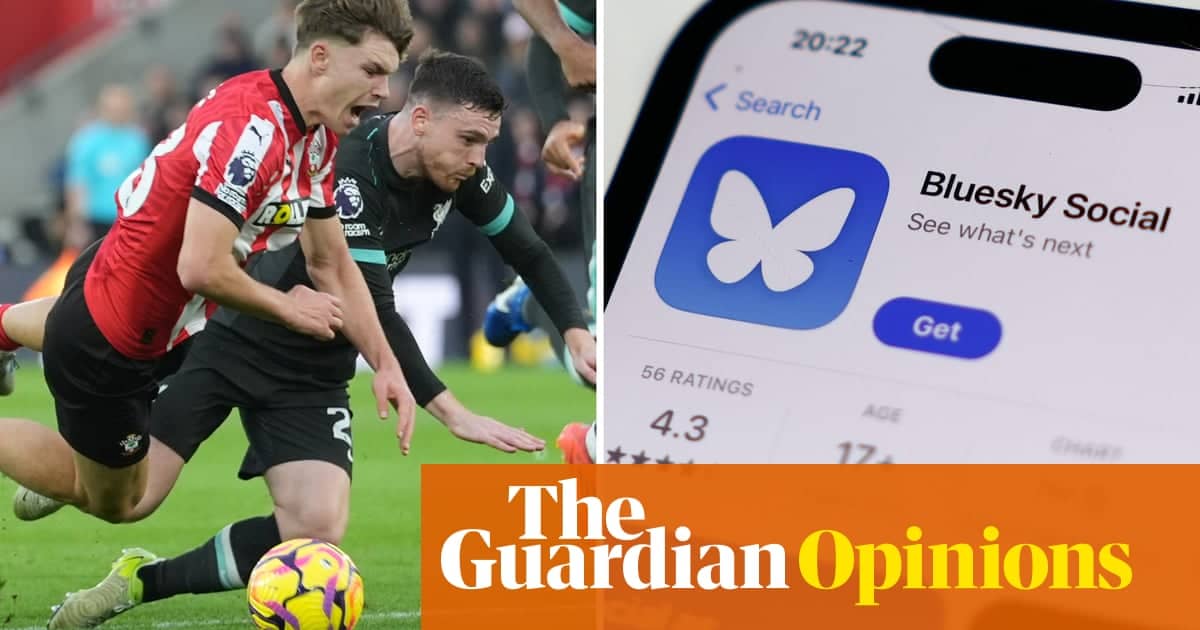

A New Venue for Football Discourse
The inaugural Premier League weekend on the social media platform Bluesky was characterized by a distinct lack of the toxicity often observed on other digital networks. According to reporting, the initial atmosphere on the platform was described as "nice and soft," offering users an environment that contrasted sharply with the heated exchanges typical of major sporting events online, particularly those seen on established platforms like X (formerly Twitter).
Observers noted that discourse on Bluesky during this period lacked the aggressive tone frequently associated with football fan interactions on other sites. This positive debut served as a significant test for Bluesky, which is positioned as a burgeoning alternative to X. Many users migrated to Bluesky due to profound dissatisfaction with the direction of X under its owner, Elon Musk, seeking a different kind of online interaction.
Seeking an Alternative to X's Shifting Landscape
The exodus from X to platforms like Bluesky was driven by a growing discontent among users regarding content moderation policies and the overall cultural shift on the platform. Users migrating to Bluesky specifically sought to escape content on X, including quotes from Elon Musk regarding controversial topics such as the Great Replacement Theory. This specific context highlights the political and social motivations behind the search for new digital spaces, positioning Bluesky not just as a technical alternative, but as a cultural refuge.
Algorithmic Differences and Platform Culture
Bluesky has been presented by its proponents as a space where the algorithm is not "jammed hard-right," a description attributed to user experiences and platform comparisons. This algorithmic distinction implies a different approach to content amplification and user feed curation, potentially fostering a more diverse range of viewpoints and reducing the echo chambers often criticized on other platforms. Furthermore, the self-policing mechanisms on Bluesky were described in reports as less aggressive than those found on competing platforms. This structural difference contributed significantly to the initial perception of a more civil environment for public debate, particularly during high-stakes events like a Premier League weekend.
Despite the positive start and the platform's stated intentions, there were indications that Bluesky might eventually develop similar issues regarding toxicity and polarization seen on other social media sites. The platform's ability to sustain this initial goodwill and maintain its distinct culture remains under close observation as it handles intense public scrutiny during high-profile events like the Premier League, which inherently draw passionate and sometimes contentious discourse.
The Premier League as Bluesky's Crucible
The decision to use a Premier League weekend as a benchmark for Bluesky’s capacity to handle public discourse was deliberate and strategic. Reports described the upcoming event as the "truest test" of the platform's infrastructure and community management. This assessment suggested that the raw emotional intensity generated by football matches, with their rapid-fire reactions, passionate rivalries, and immediate outcomes, could surpass even complex geopolitical issues or political debates involving figures like Donald Trump in terms of the sheer volume and intensity of user interaction.
The anticipation for this test was heightened by the preceding international break, which left fans with a low mood and an increased eagerness for the return of club football. This context set the stage for a weekend that would truly challenge the platform's moderation tools, user behavior norms, and its foundational architecture to prevent the kind of toxic dynamics that had driven many users away from X.
Early Warning Signs Amidst Positive Reception
While the debut was largely positive, reports highlighted specific instances that suggested potential future problems, serving as early warning signs for the platform's long-term trajectory. One such instance involved a user who listed the schools attended by others, an action described as strange and indicative of the types of intrusive behaviors that could emerge as the user base grows and the platform attracts a wider, more diverse, and potentially less self-regulating audience. This incident underscored the inherent challenges of scaling a social platform while trying to preserve a civil atmosphere.
The migration to Bluesky, driven by users seeking to escape the often-divisive and aggressive content on X, created a new community with a shared desire for a different online experience. However, the long-term sustainability of this community depends critically on whether the platform can prevent the re-emergence of the toxic dynamics it sought to avoid. The Premier League weekend, therefore, was not just a test of technical capacity but also a litmus test for the resilience of its nascent community culture.
Implications for the Future of Social Media
The smooth operation of Bluesky during its first major sporting event highlights a significant and persistent demand for alternative platforms among users who feel alienated by current trends on X and other established social media giants. This demand underscores a broader dissatisfaction with existing models of content moderation, algorithmic influence, and platform governance.
However, the presence of early warning signs, even amidst a largely positive debut, suggests that no platform is inherently immune to the challenges of managing large-scale public discourse. The complexities of human interaction, combined with the rapid dissemination of information and emotion online, inevitably lead to friction points, regardless of initial algorithmic design or community intentions.
As Bluesky continues to grow and attract more users, it will inevitably face the same pressures as other major social media sites. These include the delicate balancing act between upholding principles of free expression and ensuring community safety, managing the subtle yet powerful influence of algorithmic curation, and preventing the polarization that has characterized recent years in online political and cultural debates. The Premier League weekend served as a critical first step in this ongoing experiment, offering valuable insights into the potential and pitfalls of building a new digital public square.