


Weather and Roof Dynamics Define Game 2 Atmosphere
The environment at American Family Field played a pivotal role in the narrative of National League Division Series Game 2, with the stadium's retractable roof left open for the afternoon contest. According to reports from the Chicago Tribune, the decision was made on a sunny Sunday afternoon, creating a bright and clear setting for the matchup between the Milwaukee Brewers and the San Diego Padres.
The game-time temperature was recorded at 68 degrees, a condition that falls within the operational parameters for keeping the roof open. This weather setup is significant for the home team's historical performance metrics. The Brewers entered Sunday with a robust 30-13 record when the roof is open, compared to a 25-13 record when it is closed. While the difference in winning percentage is marginal, the volume of games played under open skies provides a substantial sample size for the home-field advantage argument.
The physical nature of playing under an open roof was highlighted by a unique incident during Game 1. In that contest, Padres’ Ty France hit a ball in the ninth inning that struck a cable on the roof structure before falling into Brewers left fielder Jackson Chourio’s glove to retire the hitter. The unusual trajectory drew attention from the dugout and the broadcast team alike.
Brewers manager Pat Murphy acknowledged the rarity of such an event during his post-game comments. “Eleven years here, I’ve never had a ricochet ball... Pretty incredible,” Murphy stated, emphasizing the novelty of the situation for both the coaching staff and the players who have spent their careers in the facility.
Starting Pitching Matchup: King’s Postseason Dominance vs. Henderson’s Home Record
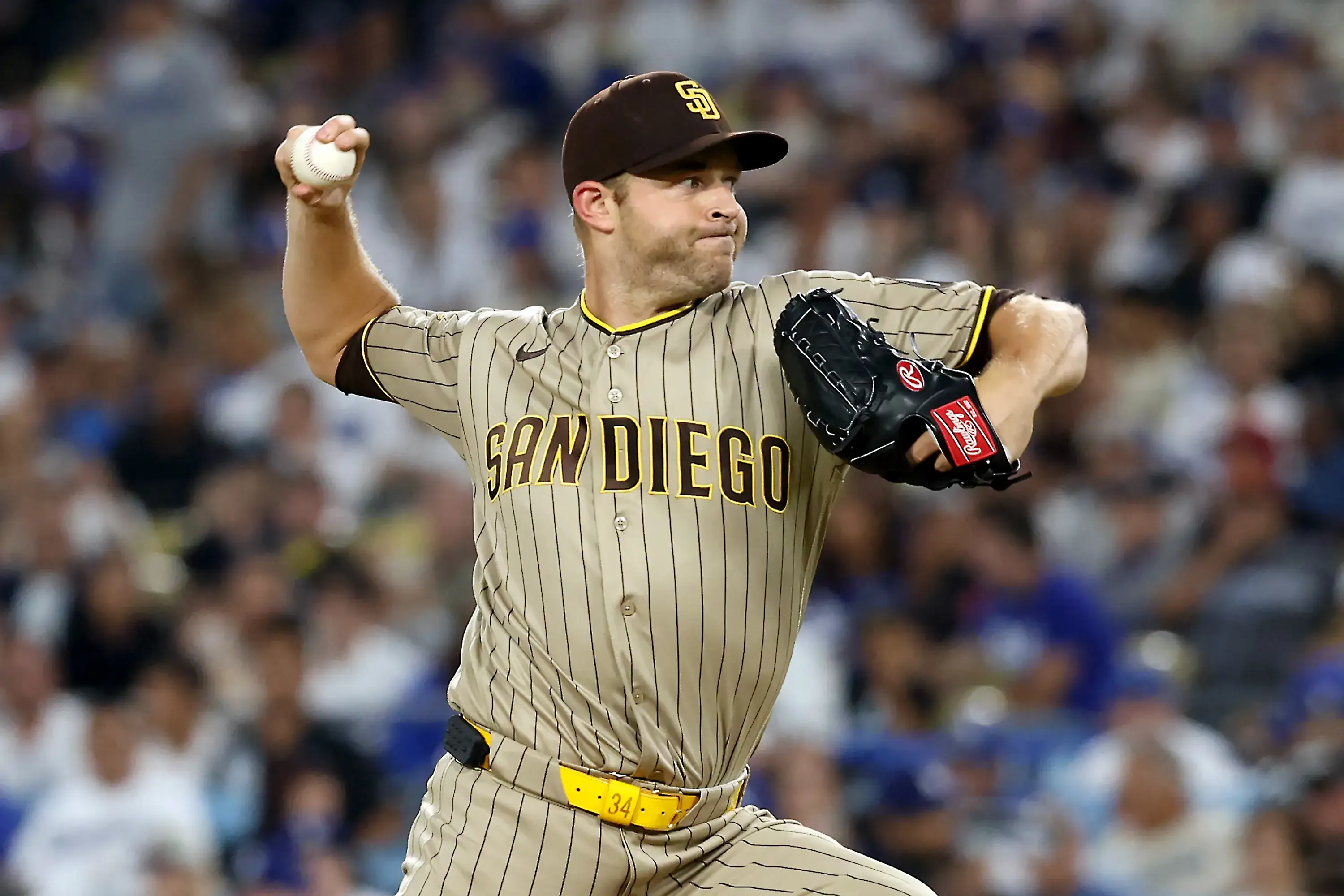
The pitching duel in Game 2 featured contrasting narratives for both starters, with Michael King representing the Padres’ offensive firepower and Logan Henderson embodying Milwaukee’s home-field reliability.
Michael King enters Game 2 with a formidable postseason resume. As reported by the New York Post, King is 3-0 in the playoffs after tossing a one-hitter against the Chicago Cubs in the wild-card round. His performance has been characterized by efficiency and dominance; he holds a 2.05 ERA and has recorded 27 strikeouts across five playoff appearances. The Padres will look to King to replicate his wild-card success, where he limited opposing batters to minimal contact while maintaining control over the game’s tempo.
On the other side of the mound, Milwaukee relies on Logan Henderson, who brings a strong home-field advantage to the start. Henderson is 6-0 at American Family Field, a statistic that underscores his comfort and effectiveness in front of the home crowd. He recently demonstrated this form by allowing just one run over five frames against the Philadelphia Phillies in the previous round.
Henderson’s regular-season performance further supports his selection. He finished the year with an 11-3 record and a 2.47 ERA, indicating a high level of consistency throughout the twelve-month campaign. The Brewers’ decision to start Henderson in Game 2 reflects a strategic choice to leverage his proven track record at home against a Padres offense that has shown vulnerability in high-leverage situations.
Betting Lines and Early Game Action
The betting markets reflected the Brewers' status as favorites, listing Milwaukee at -143 on the moneyline for Game 2. The Padres were listed at +152 in earlier odds, though some sportsbooks like bet365 offered them at +120, suggesting slight variations in market confidence across different platforms.
The over/under for the game was set at 7 runs on DraftKings Sportsbook, a line that suggests expectations for a moderate-scoring affair. This projection aligns with the pitching profiles of both King and Henderson, who have demonstrated the ability to limit damage in critical moments.
Early action in Game 2 tested these pitching assumptions. Ty France broke through against Henderson in the first inning, lining a two-out RBI single that provided the Padres with an early lead. This offensive burst contrasted with the defensive highlight from Game 1, where Jackson Chourio’s glove secured a rare out off a roof cable.
The Brewers’ starting pitcher in Game 1, Jacob Misiorowski, had been effective enough to secure a 3-2 victory for Milwaukee in the opener. However, Game 2 required a different approach, leading to Henderson’s start. The Padres’ ability to score early against Henderson sets up a tense contest, as Milwaukee must overcome an early deficit while relying on their home-field statistics and King’s postseason struggles to mount a comeback.
Strategic Implications of the Series
The outcome of Game 2 carries weight beyond the immediate standings. For the Padres, overcoming a -143 favorite in Milwaukee requires capitalizing on the early runs provided by players like France. King’s postseason record suggests he can keep the game close, but his inability to win a playoff game previously adds pressure to this start.
For the Brewers, maintaining their home-field dominance is crucial. Their 30-13 record with the roof open provides a statistical foundation for confidence, but the unique environmental factors, such as the cable incident in Game 1, remind observers that no two games are identical. The team’s ability to adjust to the physical realities of playing under an open roof, combined with Henderson’s home-field success, will be key to evening the series.
As the game progresses, the interplay between weather conditions, pitching performance, and early offensive output will define the trajectory of the NLDS. The Brewers’ historical data offers a framework for expectation, but the live action on the field, marked by Henderson’s home-field prowess and King’s postseason experience, will determine the actual outcome.