


BRICS's Evolving Global Stature Amidst Geopolitical Shifts
India recently hosted a BRICS summit that has been widely characterized by observers as a significant diplomatic success, particularly given the complex and often conflicted geopolitical landscape in which it occurred. The event underscored the growing importance of the BRICS grouping and its demonstrated ability to navigate and manage the inherent internal disparities among its diverse member nations.
Over the past two decades, BRICS has matured considerably, evolving from an initial economic concept into a formidable bloc that commands a substantial share of global economic and political influence. This evolution positions the grouping as an increasingly relevant actor on the world stage, capable of shaping international discourse and policy. Its rising stature is particularly notable in an era marked by shifting global power dynamics and heightened geopolitical tensions.
The successful convening of the summit, despite these prevailing global conditions, reinforced the perception of BRICS as a vital forum. Its continued cohesion and capacity for collective action signal a growing institutional weight, allowing it to project its influence without necessarily confronting established economic or military superpowers directly. Instead, BRICS appears to be carving out a distinct role, leveraging its collective strength to assert its position in global affairs while carefully managing its relationships with traditional powers.
India's Diplomatic Acumen Navigating Internal Divides
Prime Minister Modi's Personalized Approach
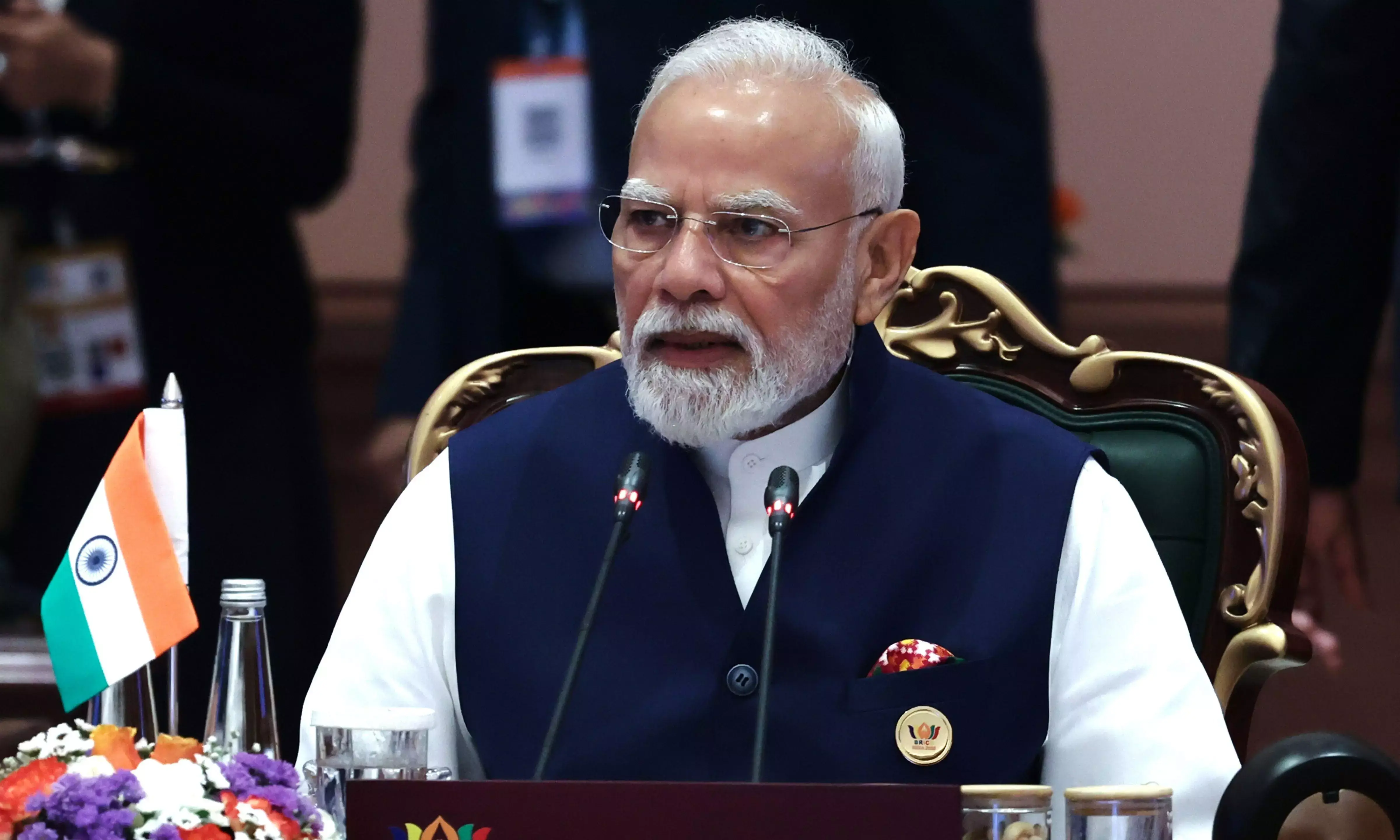
A key factor contributing to the summit's perceived success was the diplomatic strategy employed by India's Prime Minister, Narendra Modi. According to editorial commentary from the Deccan Chronicle, Prime Minister Modi utilized a personalized style of diplomacy specifically tailored to address and smooth over the various internal contradictions that naturally arise within such a diverse international bloc. This approach was instrumental in fostering an environment conducive to consensus-building.
Managing Conflicting Member Interests
These internal contradictions are particularly pronounced within BRICS, given its unique composition. The grouping includes nations that, in the current global climate, find themselves in roles as both victims and perpetrators of ongoing major wars. This complex dynamic presents significant challenges to achieving unified positions on critical international issues, making the task of maintaining cohesion exceptionally difficult. The Asian Age reported that despite these profound internal tensions, they were effectively managed during the summit, enabling the forum to present a united front.
The diplomatic efforts undertaken were crucial not only for the immediate success of the summit but also for the long-term cohesion of BRICS. Having matured over 20 years into a significant economic and political force, the bloc's ability to navigate such deep-seated geopolitical realities among its members is a testament to its evolving institutional strength and the effectiveness of its leadership in fostering common ground.
A Joint Declaration Forges Broader Alliances
A central and highly significant outcome of the recent BRICS summit was the signing of a comprehensive joint declaration. This pivotal document involved not only the core BRICS member nations but also an additional 10 partner countries, bringing the total number of signatories to 11 nations and 10 partner countries. The Deccan Chronicle characterized this extensive signing as a profound triumph of diplomacy, reflecting the grouping's burgeoning institutional weight and its capacity to rally broader international support.
The Asian Age further noted that BRICS has demonstrably evolved into a forum that commands a fair share of economic and political clout on the global stage. Crucially, the commentary indicated that the group has learned to strategically utilize this influence without necessarily infringing upon the interests or authority of any established super economic or military power. This nuanced approach allows the bloc to assert its collective position in global affairs, advocate for its members' interests, and contribute to multilateral discussions while carefully navigating its relationships with existing global hegemonies.
The strategic expansion of partnerships, vividly evidenced by the inclusion of 10 partner countries alongside the core members, underscores a deliberate and ambitious strategy by the grouping to build a broader and more inclusive coalition. This expansion is widely viewed as an integral part of BRICS's overarching effort to consolidate its role and influence within the Global South. By forging these wider alliances, BRICS aims to create a significant "wall of influence" that actively challenges and diversifies traditional geopolitical alignments, fostering a more multipolar world order.
Balancing Act: Conflict, Trade, and Unresolved Tensions
Declaration's Stance on Global Conflicts
Despite the notable diplomatic successes achieved during the summit, the joint declaration faced considerable scrutiny regarding its specific stance on ongoing global conflicts. A significant point of contention was the document's deliberate omission of an unequivocal condemnation of the wars currently impacting the world economy. This particular absence in the declaration's language is widely attributed to the presence and key membership of Russia within the BRICS grouping.
The Asian Age reported that Russian President Vladimir Putin was attending his first BRICS summit since the significant escalation of hostilities involving Russia. The commentary suggests that Russia's prominent membership and active participation likely played a decisive role in influencing the final language of the declaration. This influence, it is believed, prevented the inclusion of a strong, explicit condemnation of conflicts that continue to disrupt the free flow of essential resources such as oil, gas, goods, and commodities through regular sea routes to the east.
The implications of this omission are far-reaching, particularly for nations heavily dependent on these vital trade routes, which continue to be severely affected by the instability and disruptions caused by these wars. The lack of unequivocal condemnation in the joint declaration starkly highlights the inherent difficulty BRICS faces in presenting a unified moral or political stance when its diverse members hold conflicting interests or are directly involved in ongoing international conflicts.
Persistent Economic and Geopolitical Hurdles
While the summit undeniably showcased the grouping's enhanced diplomatic capabilities and its growing institutional maturity, significant challenges persist on both economic and geopolitical fronts. Primary among these are ongoing concerns related to China's economic influence, intra-bloc trade imbalances, and the critical issue of job creation within member states. The fundamental dynamic of the grouping, which includes nations that are simultaneously victims and perpetrators of major wars, further complicates the prospects for truly collective and decisive action on many global issues.
Editorial notes from the Deccan Chronicle underscore that despite the forum's maturity over two decades, these structural and geopolitical challenges remain deeply entrenched. The ability of BRICS to command substantial economic and political clout is consistently tempered by the imperative need to carefully balance the often-divergent interests of its members, especially those who are either directly engaged in or profoundly affected by major global conflicts. This delicate balancing act often necessitates compromises in collective statements and actions.