

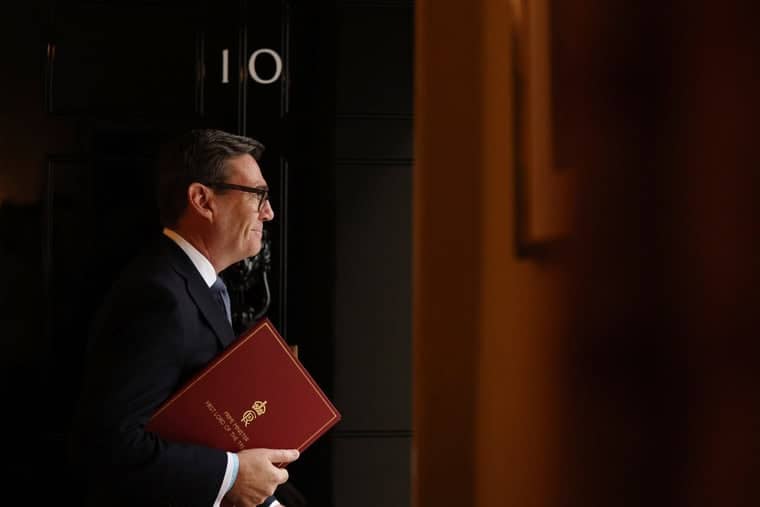

The Rhetorical Shift and Political Context
Alex Callinicos has argued that Andy Burnham’s speech at the Labour Party conference demonstrates a "dramatic change in tone" but results in "minimal change in reality." According to Callinicos, writing for Socialist Worker, the content of what Burnham seeks has "nothing to do with genuine socialist politics." The analysis suggests that Burnham’s address confirmed expectations set by his previous political maneuvers, specifically his "surgical removal of Keir Starmer."
Callinicos described Burnham as a "bold and intelligent politician" who understands the implications of the July 2024 general election result. In this view, Labour’s parliamentary majority is characterized not as a mandate for radical change, but as a "mirage" created by a fragmented five-party system operating under first-past-the-post voting rules.
Burnham’s speech included specific critiques of Margaret Thatcher’s neoliberal reconstruction. He positioned himself against Kemi Badenoch and her "Thatcherite Tory party." The address outlined three concrete proposals: the creation of a National Care Service comparable to the NHS, the establishment of a national commission on electoral reform, and an examination of Britain’s relationship with the EU, which could include rejoining.
Policy Proposals and Economic Implications
A central component of Burnham’s platform involves financing social care reform by amending the triple lock on state pensions. The proposal specifies that after April 2030, state pensions would no longer be linked tightly to earnings. This adjustment is intended to provide funding for the proposed National Care Service.
Green economist James Meadway criticized this financial mechanism. Meadway pointed out that the amendment constitutes a cut in expected pensions. He argued the policy is likely regressive, affecting individuals who do not own homes or never require care services.
Callinicos interpreted the move to break the Triple Lock as a signal to big business and institutions such as the BBC and the Institute of Fiscal Studies. The argument posits that this shift demonstrates Burnham’s willingness to be "tough" on welfare spending, thereby reassuring financial institutions of his fiscal discipline.
Political Strategy and Opposition Views
Robert Shrimsley of the Financial Times analyzed Burnham’s platform as a shrewd political strategy. Shrimsley suggested the approach aims to rebuild an electoral coalition on the left while driving voting reform to keep right-wing parties out of power. Shrimsley stated that "New Andy is unapologetically Old Labour" and wants to "wind back the clock." This characterization aligns with Callinicos’s assertion that Burnham understands the structural constraints of the current political landscape.
Callinicos noted that recent by-election victories by the Greens in Gorton and Denton demonstrated a progressive alternative to the far right is possible. However, he maintained that Burnham’s speech did not align with this progressive trajectory. Instead, the focus remains on rhetorical shifts rather than substantive policy changes that would constitute genuine socialist politics.
The debate over Burnham’s direction highlights tensions within the Labour Party regarding its post-election strategy. While Burnham emphasizes electoral viability and fiscal responsibility, critics like Callinicos and Meadway argue that these priorities undermine the party's traditional commitments to social welfare and progressive reform.