

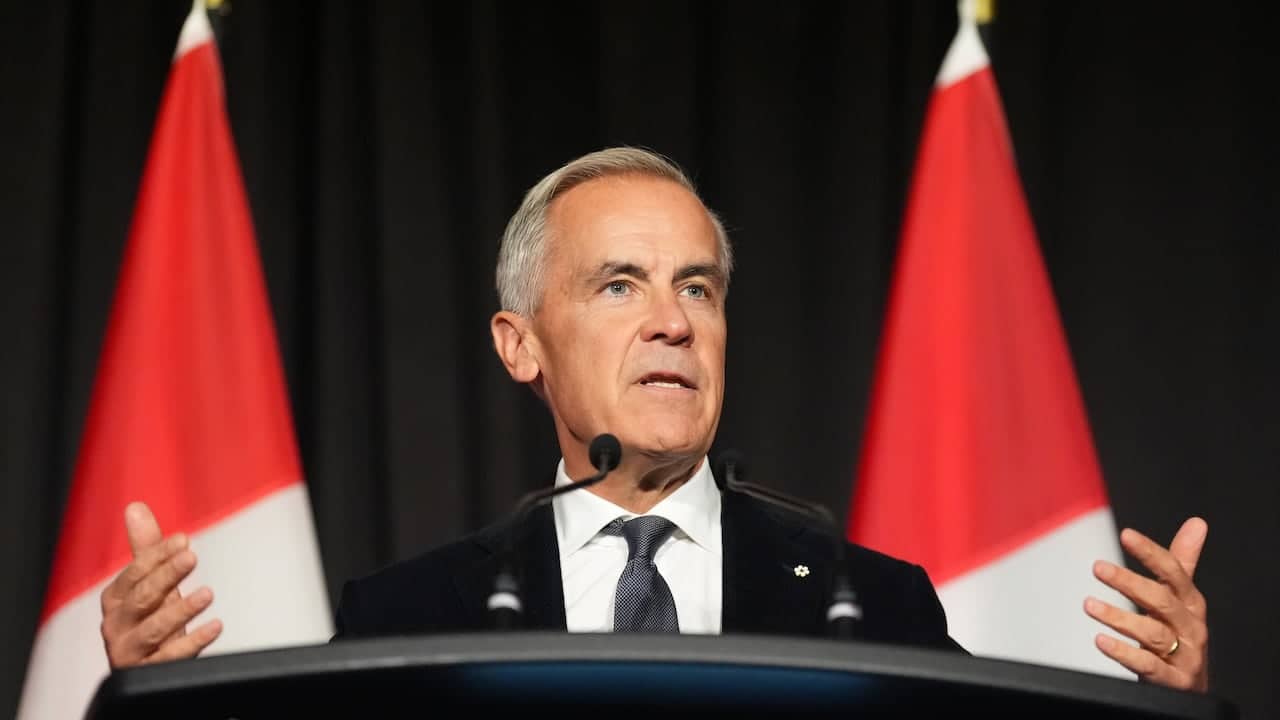

Forging a Distinct Partnership with the European Union
Prime Minister Mark Carney has confirmed that the Canadian government intends to begin formal discussions with the European Union regarding the establishment of a "unique alliance." This significant diplomatic initiative underscores Canada’s commitment to strengthening its international partnerships. In outlining the parameters of this potential relationship, Carney clarified that the proposed framework would explicitly not involve Canada seeking full membership in the bloc. This announcement comes as the Prime Minister prepares for a scheduled address to the European Parliament later this week in Strasbourg.
The distinction between an alliance and full membership is central to the government's current diplomatic strategy. By specifying that the discussions are limited to a "unique alliance" rather than accession, Carney has set clear boundaries for the negotiations from the outset. This approach suggests a focus on specific, mutually beneficial areas of cooperation or strategic alignment without the extensive political, legal, and economic integration required for full EU membership. Such a framework would allow Canada to maintain its sovereign decision-making while deepening ties with one of the world's largest economic and political entities.
Carney’s statement provides the first official confirmation from the Canadian leadership regarding the precise nature of these upcoming talks. The Prime Minister indicated that the goal is to explore a partnership model that distinguishes itself from existing relationships, both bilateral and multilateral. While specific details on the scope and mechanisms of this "unique" designation were not elaborated upon in the initial summary, the emphasis is clearly on crafting a bespoke arrangement tailored to the specific interests and capabilities of both Canada and the EU.
Navigating the Spectrum of EU External Relations
The European Union maintains a diverse array of relationships with non-member states, ranging from comprehensive free trade agreements to deeper strategic partnerships and association agreements. Canada's proposal for a "unique alliance" suggests an ambition to move beyond existing frameworks, such as the Comprehensive Economic and Trade Agreement (CETA) and the Strategic Partnership Agreement (SPA), which already form the bedrock of Canadian-EU relations. While these agreements are robust, the concept of a "unique alliance" implies a desire for a more integrated, yet non-membership, form of cooperation that could encompass areas not fully covered by current arrangements.
For Canada, ruling out full membership addresses several fundamental considerations. Geographically, Canada is a North American nation, separated by an ocean from the European continent. Politically, full EU membership would entail significant transfers of sovereignty, adherence to a vast body of EU law (the acquis communautaire), and participation in common policies that might not align with Canada's national interests or global commitments. The "unique alliance" model, therefore, seeks to harness the benefits of closer cooperation without these inherent structural changes, allowing Canada to preserve its distinct national identity and foreign policy autonomy.
Carney's Diplomatic Mission to Strasbourg
The announcement regarding the potential alliance coincides with Prime Minister Carney’s upcoming visit to Strasbourg, the seat of the European Parliament. He is scheduled to address members of the European Parliament during this trip, which is set to take place this week. The precise timing of this disclosure strongly suggests that the proposal for a "unique alliance" will be a central topic of discussion during his remarks to the legislators, setting the stage for future negotiations.
The European Parliament serves as the directly elected parliamentary institution of the EU, representing over 450 million citizens across its member states. It plays a crucial role as a co-legislator, sharing budgetary and legislative power with the Council of the European Union. An address by a foreign head of government to this body is a significant diplomatic event, often used to signal strategic priorities, build political will, and strengthen bilateral ties. Carney’s plan to speak directly to the Parliament underscores the profound importance Canada places on its relationship with the bloc and its democratic institutions.
While the specific agenda of the parliamentary session has not been fully detailed in available reports, the Prime Minister’s prior declaration frames the context for his speech. Carney’s intention to initiate these discussions marks a deliberate shift in diplomatic engagement, moving from general relations toward a more structured, albeit non-membership, partnership. His address will be an opportunity to articulate Canada's vision for this alliance, to explain its rationale to a diverse audience of MEPs representing various political groups and national interests, and to gauge initial reactions from key European stakeholders.
Clarifying the Non-Membership Stance
A critical component of Carney’s announcement was the explicit exclusion of full membership from the proposed alliance. The Prime Minister unequivocally stated that while Canada is interested in exploring a "unique alliance," it does not seek to join the European Union as a member state. This clear articulation serves to manage expectations and prevent any misinterpretation of Canada's long-term intentions regarding its relationship with the EU.
This clarification addresses potential speculation regarding Canada's geopolitical alignment or a fundamental shift in its national identity. By ruling out membership, Carney has clearly defined the limits of the partnership, ensuring that discussions will focus on innovative cooperative models rather than the complex and lengthy process of EU accession. The government’s position appears to be that a specialized alliance can offer substantial benefits and cooperative frameworks in areas such as trade, security, regulatory alignment, and research, without the extensive legal obligations and structural changes associated with full EU membership.
Canada's Evolving Role in Global Diplomacy
The move to pursue a "unique alliance" reflects a broader effort by the Carney administration to diversify and strengthen Canada’s international partnerships in an increasingly complex global landscape. Engaging directly with the European Union on this basis allows Canada to explore new avenues of cooperation that could yield significant mutual benefits. Such an alliance could enhance Canada's economic resilience, contribute to shared security objectives, and foster greater collaboration on global challenges like climate change, digital governance, and democratic resilience.
Carney’s approach distinguishes the Canadian model from other potential partners or existing frameworks, positioning Canada as an innovative and committed global actor. The term "unique" implies that the alliance may have characteristics not found in standard bilateral agreements or existing multilateral organizations, potentially pioneering a new form of international cooperation between a major North American nation and the European bloc. However, without further details from the Prime Minister or government officials, the specific mechanisms and operational scope of this alliance remain to be defined through the upcoming discussions.
The upcoming address to the European Parliament will therefore be a pivotal moment. It will likely provide more context on how Prime Minister Carney intends to present this ambitious proposal to European leaders and legislators, laying the groundwork for the formal negotiations to follow. The Prime Minister’s current statements establish the foundation for these talks, emphasizing a partnership that is distinct from membership while remaining firmly within the realm of deep diplomatic engagement and shared strategic interests.