

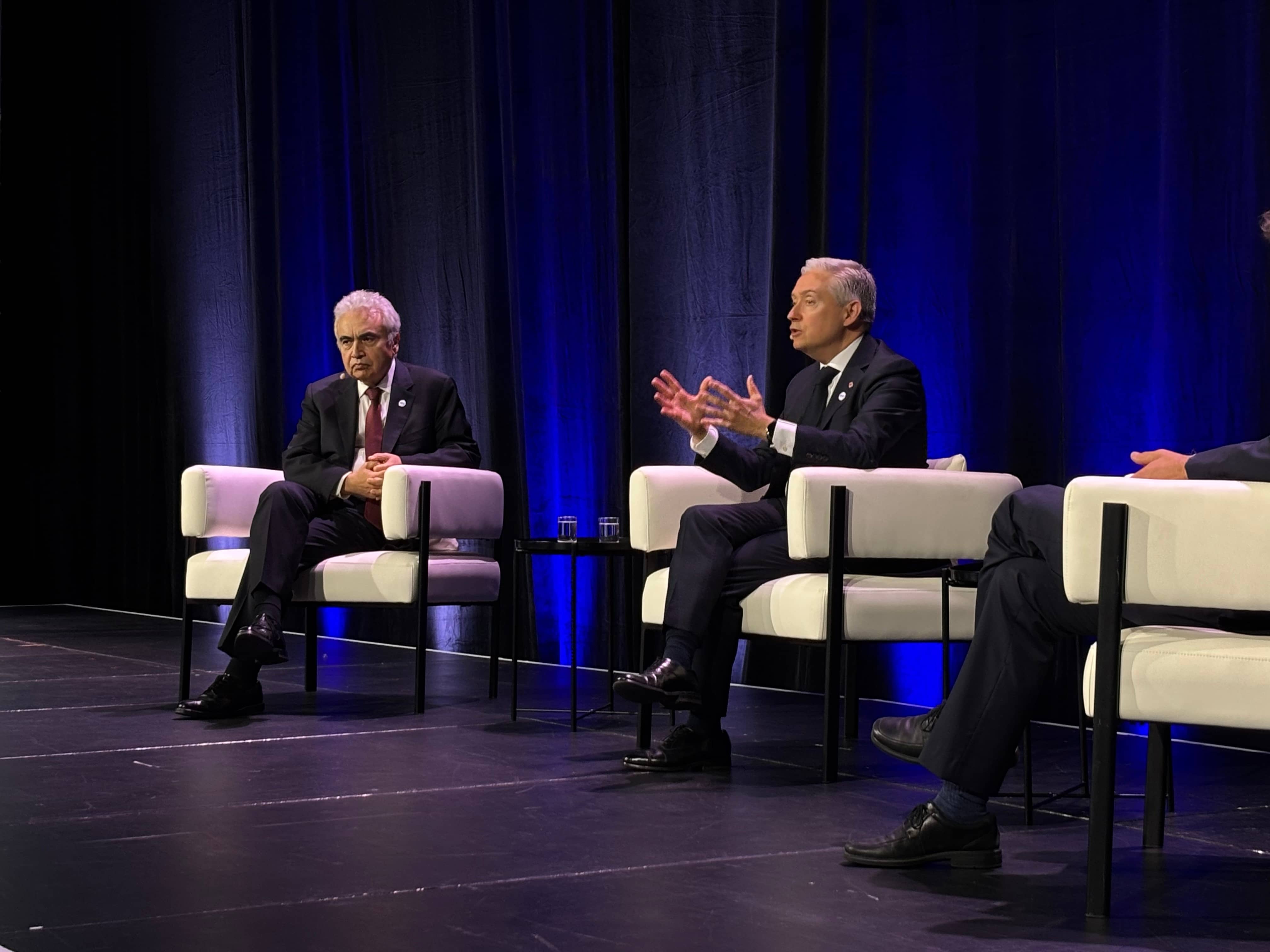

Minister Defends Dual Energy Strategy at IEA Conference
François-Philippe Champagne, Canada’s Minister of Innovation, Science and Industry, stated that the country is successfully striking a "right balance" between expanding its fossil fuel production capabilities and growing its clean economy. The comments were made during an address at an International Energy Agency (IEA) conference held in Montreal.
Champagne outlined the federal government’s position on energy policy, emphasizing that Canada can leverage ongoing global demand for oil and gas while simultaneously investing in low-carbon technologies. He indicated that fossil fuel demand is expected to persist "for decades" before decarbonization becomes the established global norm.
The minister’s remarks frame Canada’s current energy approach within the broader timeline of international climate goals. By acknowledging the longevity of fossil fuel usage, Champagne suggested that Canada has a strategic window to capitalize on existing markets while transitioning toward cleaner energy sources over a longer timeframe.
Global Decarbonization Timeline and Domestic Policy
The International Energy Agency conference in Montreal served as the platform for discussing the intersection of current energy realities and future climate targets. Champagne’s statements align with the view that the global shift away from fossil fuels is a gradual process rather than an immediate transition.
According to the minister, this prolonged timeline allows Canada to continue expanding its oil and gas sectors without compromising its long-term clean economy objectives. He argued that maintaining production levels during this interim period is compatible with the country’s broader environmental commitments, provided that investments in clean technology are also prioritized.
The government’s stance suggests a pragmatic approach to energy security and economic growth. By asserting that decarbonization will become the norm over a longer timeframe, Champagne implied that immediate cessation of fossil fuel expansion is neither feasible nor necessary for Canada’s current economic strategy.
Implications for Industry and Investment
Champagne’s comments carry implications for domestic energy producers and international investors. By validating the continued relevance of fossil fuels, the minister signaled that regulatory frameworks will likely support ongoing expansion in the oil and gas sector. This stance contrasts with calls from some environmental groups and political opponents who advocate for a more rapid phase-out of hydrocarbon production.
The minister did not provide specific quantitative data regarding production targets or clean energy investment figures during this segment of the conference. Instead, his focus remained on the philosophical and strategic alignment of dual-track energy policies. He maintained that Canada is positioned to benefit from both sectors as the global energy landscape evolves.
Contrasting Views on Energy Transition
While Champagne articulated the government’s position, other stakeholders at the IEA conference may hold differing perspectives on the pace of decarbonization. Environmental organizations and climate advocates often argue that relying on fossil fuel demand for "decades" contradicts the urgency required to meet international climate agreements.
Critics of Canada’s current energy policy frequently point to the need for accelerated investment in renewables and stricter regulations on emissions. However, no specific counter-arguments or responses from opposing parties were detailed in the available reports from the Montreal conference. The minister’s statements stand as the primary recorded position regarding the balance between fossil fuel expansion and clean economy growth.
The discussion at the IEA conference highlighted the complex challenges faced by energy-producing nations. Canada’s approach, as described by Champagne, seeks to navigate these challenges by maintaining revenue streams from traditional energy sources while building infrastructure for a low-carbon future. This strategy relies on the assumption that global markets will continue to require fossil fuels well into the future.
Future Outlook and Policy Continuity
The minister’s remarks suggest that policy continuity will be a key feature of Canada’s energy strategy in the coming years. By emphasizing the decades-long persistence of fossil fuel demand, Champagne indicated that abrupt shifts in production levels are not anticipated.
This perspective provides a stable outlook for the oil and gas industry, which has faced uncertainty due to fluctuating global energy prices and environmental regulations. The government’s assertion of a "right balance" implies that future policy decisions will aim to preserve this equilibrium, avoiding significant swings toward either extreme fossil fuel reliance or rapid decarbonization.
As the IEA conference in Montreal concluded, Champagne’s message reinforced the federal government’s commitment to a diversified energy portfolio. The stated goal remains to capitalize on current market demands for oil and gas while laying the groundwork for a clean economy that will dominate in the subsequent decades of global decarbonization.