

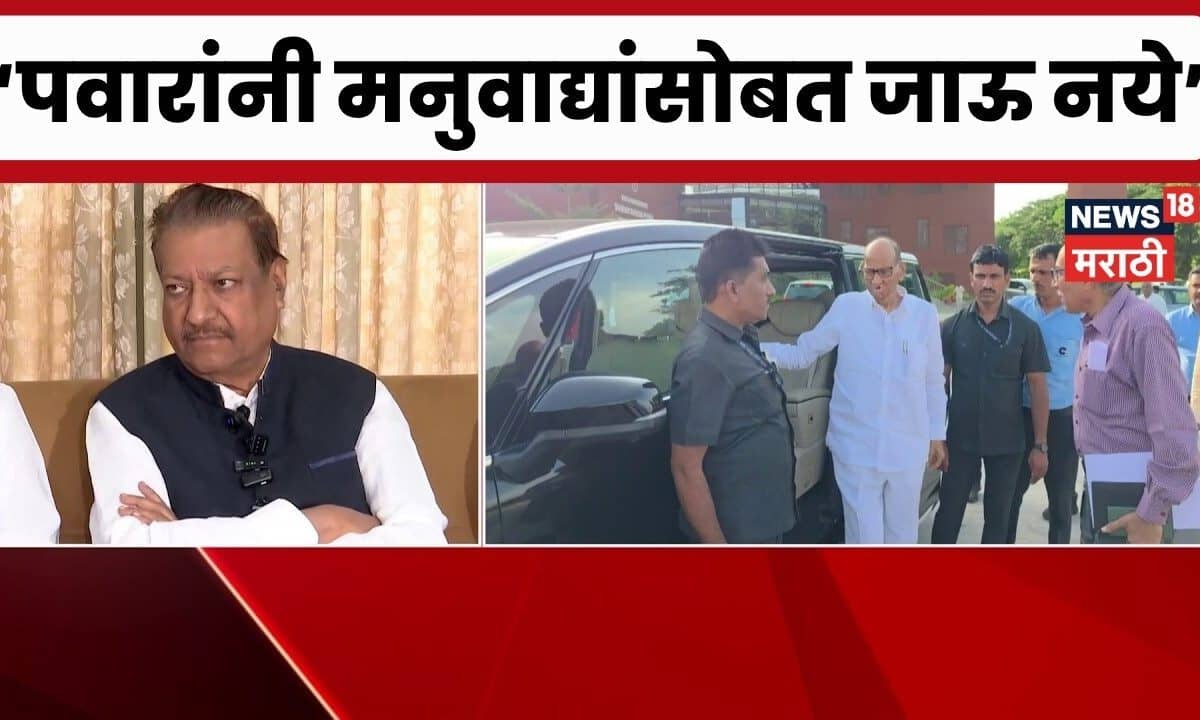

Chavan's Public Counsel to Sharad Pawar
Prithviraj Chavan, a seasoned political figure and former Chief Minister of Maharashtra, has publicly issued a significant appeal to veteran leader Sharad Pawar concerning his future political alignments. Reports from News18 Marathi indicate that Chavan specifically urged Pawar to refrain from joining the National Democratic Alliance (NDA), a prominent national coalition. This advice forms part of a broader commentary from Chavan on the strategic direction of Pawar's political career and the critical choices he faces regarding potential partnerships with national political entities.
Chavan's intervention carries considerable weight within Maharashtra's intricate political landscape. As a former state chief minister, his pronouncements are closely watched and often signal deeper discussions or strategic considerations within the broader political family to which both leaders are considered to belong. The explicit recommendation to avoid the NDA suggests a notable divergence in strategic outlook between Chavan and Pawar, highlighting differing visions for the future trajectory of their political influence and the state's representation at the national level.
A Call to Avoid the National Democratic Alliance
The National Democratic Alliance, led by the Bharatiya Janata Party, represents a major political force in India. Any decision by Sharad Pawar, a towering figure in Maharashtra politics and a key leader of the Nationalist Congress Party (NCP), to align with the NDA would undoubtedly trigger a significant realignment of political forces within the state and potentially impact national opposition dynamics. Chavan's counsel, therefore, is not merely a suggestion but a strategic warning, potentially aimed at preserving a particular ideological stance or political independence for Pawar and his party.
The advice underscores the ongoing internal deliberations and pressures within Maharashtra's political circles regarding coalition building. For a leader of Pawar's stature, decisions on national alliances are fraught with implications for his legacy, his party's future, and the broader political narrative of the state. Chavan's public statement brings these internal discussions into the open, framing the choice as a crucial juncture for Pawar's political journey.
Ideological Red Line: Warning Against 'Manuwadis'
Beyond the caution regarding the National Democratic Alliance, Chavan extended his critique to specific ideological alignments, appealing to Pawar not to associate with individuals or groups he characterized as "Manuwadis." The source material explicitly defines this term as referring to entities that Chavan identifies as casteists. This terminology introduces a sharp ideological dimension to Chavan's advice, moving beyond mere political strategy to fundamental principles.
The term "Manuwadis" is deeply charged in Indian socio-political discourse, often used to describe those who adhere to or advocate for the principles of Manusmriti, an ancient Hindu legal text historically associated with the justification and perpetuation of the caste system. By employing this term, Chavan draws a clear ideological boundary, distinguishing his own political stance from those he perceives as promoting or adhering to caste-based social hierarchies. This characterization serves as a potent justification for his strong warning against such potential alliances.
The Implications of Aligning with Casteist Elements
Chavan's remarks specifically targeted the inherent risks of associating with what he defines as casteist elements. The direct translation from the source text, "Pawar should not go with Manuwadis," underscores a categorical and principled rejection of such partnerships. This phrasing suggests that, in Chavan's view, an alliance with groups identified as "Manuwadis" would not merely be a tactical error but a profound ideological compromise, potentially detrimental to Pawar's political standing and his party's foundational values.
For a prominent political leader like Sharad Pawar, aligning with groups perceived as casteist could have significant and far-reaching ramifications. Such an association could undermine his secular credentials, alienate diverse voter bases that have historically supported progressive politics, and contradict the inclusive principles often espoused in modern Indian democracy. Chavan's warning implies that avoiding these alliances is a necessary step for Pawar to maintain his ideological consistency and ensure his political trajectory remains aligned with inclusive and progressive ideals.
Maharashtra's Shifting Political Landscape
The report detailing Chavan's advice originates from News18 Marathi, a reputable news channel known for its extensive coverage of Maharashtra's political developments. The publication date of the report, August 23, 2026, positions this commentary within a specific future political timeline, suggesting ongoing and forward-looking strategic deliberations within the state's political circles. The content primarily focuses on the intricate internal dynamics of political families and the ever-evolving nature of alliances within Maharashtra.
Chavan's comments are thus part of a wider, unfolding narrative concerning the future direction of Sharad Pawar's political party and its potential integration into broader national frameworks. His advice to shun both the NDA and specific casteist groups presents a clear, albeit unilateral, set of boundaries or an alternative path for Pawar's future political maneuvers. This public declaration serves to influence the discourse and potentially shape the strategic choices available to Pawar.
The Unilateral Nature of Chavan's Stance
It is notable that the provided source material does not include any direct response or counter-statement from Sharad Pawar regarding Chavan's public appeal. This absence means that the report stands as a unilateral statement of Chavan's position on these critical alliance decisions. This one-sided presentation leaves the political community and observers to speculate on Pawar's reaction and the potential impact of such a strong public admonition from a peer within the broader political family. The lack of an immediate response further emphasizes the weight and potential implications of Chavan's counsel in Maharashtra's complex political arena.