

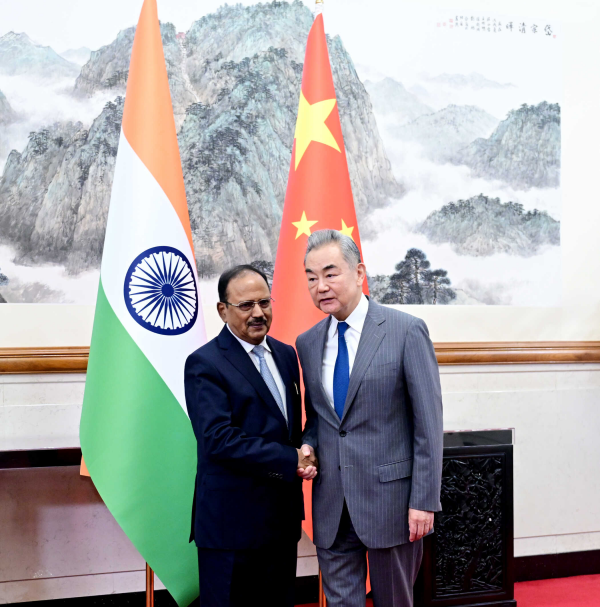

Special Representatives Convene in Beijing for Boundary Discussions
Beijing hosted the 25th meeting of the Special Representatives on the China-India Boundary Question on Tuesday, marking a continued diplomatic effort to address long-standing territorial disputes between the two Asian powers. During the proceedings, Chinese Foreign Minister Wang Yi and Indian National Security Advisor Ajit Doval engaged in comprehensive discussions regarding the boundary issue and broader bilateral relations.
The meeting took place in Beijing, where Wang Yi, who also serves as a Member of the Political Bureau of the Communist Party of China Central Committee and Director of the Office of the Central Foreign Affairs Commission, led the Chinese delegation. He met with Doval, the Indian Special Representative for the boundary talks. According to reports from the meeting, the two officials held discussions that were described as comprehensive, in-depth, friendly, and candid.
The primary focus of the gathering was to address the complex border situation that has periodically strained relations between New Delhi and Beijing. The dialogue aimed to establish a framework for managing differences while exploring avenues for broader cooperation. Both sides acknowledged the strategic importance of maintaining stable ties given their status as major developing nations.
Beijing Emphasizes Strategic Partnership and Global Significance
In statements released following the meeting, Chinese officials highlighted the broader geopolitical context of the relationship between New Delhi and Beijing. Wang Yi characterized China and India as important neighbors and representatives of major developing countries and emerging economies.
Wang Yi stated that the healthy and stable development of China-India relations is in the fundamental interests of both peoples. He further asserted that such stability meets the common aspirations of countries in the Global South and aligns with the trend of the times. According to the Chinese Ministry of Foreign Affairs, Wang Yi emphasized that China-India relations have transcended the bilateral scope and possess global and strategic significance.
The Chinese Foreign Minister articulated a goal of achieving "harmonious coexistence" between the two nations, often referred to metaphorically as the dragon and the elephant. This terminology was used to underscore the desire for peaceful interaction despite historical friction.
Wang Yi noted that China is willing to work with India to eliminate differences and overcome obstacles to be good neighbors and friends with New Delhi. He expressed a willingness to enhance understanding between the two nations, suggesting a proactive approach to diplomatic engagement rather than passive observation of tensions.
Leadership Consensus as Foundation for Relations
The discussions in Beijing referenced recent high-level engagements between the political leadership of both countries. Wang Yi pointed out that President Xi Jinping and Prime Minister Narendra Modi have met twice recently, specifically in Kazan and Tianjin. These meetings resulted in a series of important consensuses that, according to Beijing, have charted the course for the improvement and development of bilateral relations.
Wang Yi stated that China is prepared to strengthen communication and enhance understanding with India from a strategic and long-term perspective. This approach indicates an intent to view bilateral ties through a lens of sustained cooperation rather than short-term tactical adjustments.
The Chinese government’s position, as reported during the meeting, suggests a readiness to prioritize diplomatic channels in resolving disputes. By framing the relationship within the context of emerging economies and the Global South, Beijing aims to elevate the status of the bilateral tie beyond mere border management to include broader economic and political collaboration.
No immediate details were provided regarding specific territorial concessions or withdrawals during this round of talks. The focus remained on the diplomatic posture and the expressed willingness of both sides to maintain dialogue. The outcome of the 25th meeting contributes to the ongoing process of special representative consultations, which have been a primary mechanism for managing the boundary issue for decades.
The meeting concluded with both parties acknowledging the importance of their strategic partnership. While the specific mechanisms for eliminating differences were not detailed in the immediate reports, the emphasis on harmonious coexistence and long-term perspective signals a continued commitment to diplomatic engagement between New Delhi and Beijing.