

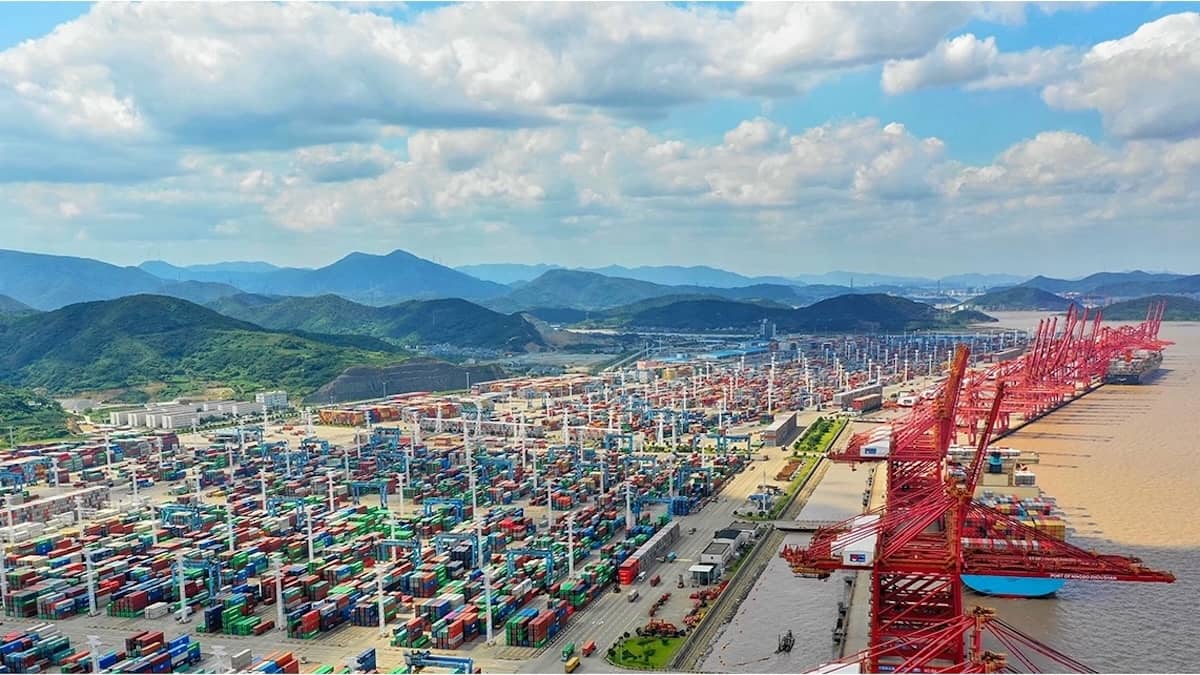

China's Ningbo-Zhoushan Port Ascends to Second Globally
In the first half of 2026, the port of Ningbo-Zhoushan in China achieved a significant milestone, rising to second place globally in container traffic. This ascent saw it surpass Singapore, a long-standing titan in the global shipping industry that has historically been a benchmark for maritime efficiency and connectivity. The shift, as reported by FreightWaves, marks a profound realignment within the international container-port hierarchy, a ranking system that reflects the sheer volume and strategic importance of global trade gateways. For the specified period, this expansive Chinese facility now stands directly behind only one other port in terms of sheer container volume, underscoring a pivotal moment in the ongoing evolution of global maritime logistics and China's growing influence within it.
The updated ranking serves as a clear indicator of the increasing capacity and formidable throughput of China's extensive maritime infrastructure, a result of decades of strategic investment and development. By overtaking Singapore, a port that has consistently held a prominent and often leading position in various global shipping metrics for decades, Ningbo-Zhoushan has solidified its reputation as an indispensable and increasingly dominant node in the intricate web of international trade logistics. While the precise container volumes for both ports were not detailed in the available reporting, the dramatic positional change itself communicates a significant redistribution of global cargo traffic and influence, reflecting shifts in manufacturing bases and trade routes.
Implications for Global Maritime Trade
This elevation of Ningbo-Zhoushan reflects broader trends in global manufacturing and supply chain dynamics, with a continued concentration of production and export activity in East Asia. The port's enhanced standing suggests a robust and expanding operational capability, capable of handling ever-larger volumes of goods destined for markets worldwide. Its strategic location along China's eastern coastline further positions it as a critical gateway for both domestic and international commerce, facilitating the movement of vast quantities of manufactured goods, raw materials, and other commodities across continents. The sustained growth of Chinese ports, exemplified by Ningbo-Zhoushan's rise, points to ongoing investments in state-of-the-art port infrastructure, advanced automation technologies, and optimized logistical efficiencies that are collectively reshaping the competitive landscape of global shipping and challenging established maritime powers.
Geopolitical Instability Reroutes Global Shipping Lanes
Beyond the competitive shifts observed in East Asia, geopolitical events have exerted a direct and substantial impact on global port rankings, creating disruptions that have reverberated across continents. Most notably, the ongoing Iran war has introduced measurable and profound effects on established shipping routes and port activities throughout the Middle East. These widespread disruptions have culminated in a significant consequence: a prominent Persian Gulf hub has fallen out of the top 10 globally in container traffic, a clear testament to the fragility of maritime logistics in the face of regional conflict and the immediate operational challenges it presents to international commerce.
The decline of this specific Gulf port from such an elite tier underscores with stark clarity how regional conflicts possess the power to fundamentally alter global supply chain dynamics. In a region vital for global energy and trade, a conflict like the Iran war can lead to increased security risks, higher insurance premiums for vessels traversing the area, and potential delays or outright rerouting of cargo. While the exact identity of the displaced port was not specified in the initial reports, its removal from the top echelon of container traffic volume vividly demonstrates the acute sensitivity of maritime logistics to geopolitical instability. The conflict has effectively necessitated a re-evaluation of traditional shipping pathways, compelling cargo vessels and logistics operators to seek alternative routes or ports, often at greater cost and longer transit times. This strategic shift has led to traditional hubs in the conflict-affected region losing significant ground due to a combination of operational constraints, heightened security risks, and the imperative for cargo to bypass zones of potential danger, thereby impacting global trade efficiency.
Trade Corridors Under Pressure in the Middle East
The fall of a major Persian Gulf hub from the top 10 rankings strongly suggests a considerable contraction in activity for that specific location relative to its global competitors. Under more stable circumstances, ports situated within this strategically vital region traditionally serve as indispensable connectors, bridging the vast manufacturing centers of Asia with the lucrative consumer markets of Europe and the Americas. The Persian Gulf, with its narrow choke points like the Strait of Hormuz, is a critical artery for a substantial portion of the world's seaborne trade. The current volatile geopolitical climate, however, has likely compelled a substantial number of shippers to actively seek out and utilize alternative routes or entirely different ports, even if less direct or more costly. This strategic rerouting, driven by concerns over safety, efficiency, and cost, has directly contributed to the observed volume loss and subsequent decline in ranking for the affected port, illustrating the profound and immediate economic consequences of sustained regional conflict on global trade infrastructure and the broader network of international commerce.
Los Angeles-Long Beach Maintains Steady Course Amidst Flux
In stark contrast to the dynamic shifts observed in the port rankings across Asia and the Middle East, the bustling port complex of Los Angeles-Long Beach in the United States maintained its established position at 9th globally during the identical reporting period of the first half of 2026. This remarkable stability, amidst broader geopolitical turbulence and significant changes elsewhere in the global maritime landscape, indicates that this crucial U.S. gateway has successfully retained its consistent volume levels, serving as a reliable and resilient artery for international trade, particularly across the Pacific.
The persistence of Los Angeles-Long Beach at the ninth spot highlights its enduring importance and fundamental resilience within trans-Pacific trade flows. This trade lane is a cornerstone of global commerce, facilitating the movement of a vast array of consumer goods, electronics, machinery, and raw materials between Asian manufacturing powerhouses and the immense North American consumer market. While other major global ports experienced notable rises or falls in their rankings due to specific geopolitical events or evolving trade patterns, the California complex held steadfast. This steady performance suggests a fundamental robustness in the cargo volumes consistently passing through this critical entry point for the American West Coast, reflecting sustained demand and well-established logistical networks that are less susceptible to immediate regional shocks.
North American Gateway's Resilience to Global Shocks
The maintenance of the 9th place ranking by Los Angeles-Long Beach offers a compelling point of comparison against the more volatile fluctuations witnessed in other parts of the world. While China's Ningbo-Zhoushan port climbed significantly in prominence and a key Persian Gulf port experienced a sharp decline due to conflict, the prominent U.S. hub remained static in its relative standing. This data point provides invaluable insight into the varying degrees of impact that global events, whether economic shifts or geopolitical conflicts, have on different regions and their respective trade infrastructures. It suggests that while some areas are highly susceptible to rapid and dramatic change, others, like the Los Angeles-Long Beach complex, appear to be anchored by consistent and deeply entrenched trade patterns, demonstrating a notable resilience to external shocks and disruptions. This stability underscores the continued strategic importance of the trans-Pacific corridor for global supply chains, even as other maritime routes face unprecedented challenges.