


Season Opener Results and Score
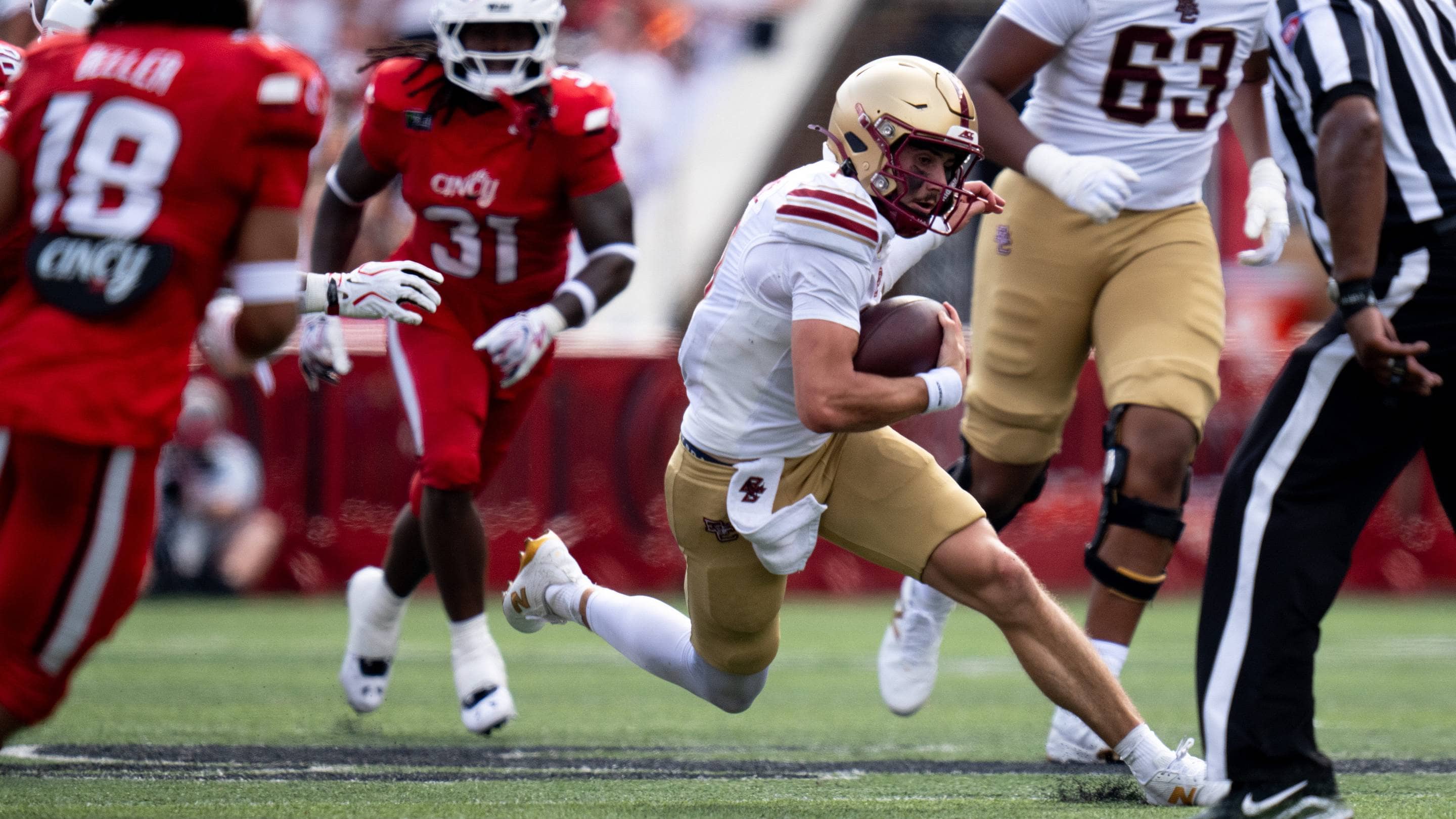
Boston College opened its 2026 football season with a 34-15 road loss to Cincinnati on Saturday. This defeat marks the beginning of a new era for the Eagles program, which underwent significant roster changes following a challenging 2-10 campaign in 2025. The outcome against Cincinnati immediately highlighted the hurdles facing a team in transition, as many of the same issues that plagued the Eagles in the previous season reportedly resurfaced.
Eagles' Roster and Coaching Overhaul
In an aggressive move to revitalize the program, the Boston College football team brought in over 20 players through the transfer portal. This extensive influx of new talent was complemented by a significant overhaul of the coaching staff, including the hiring of a new defensive coordinator and several new position coaches. These strategic personnel changes were intended to fundamentally alter the team's dynamic, inject new energy, and address the shortcomings that led to the disappointing 2025 season. The expectation was that these additions would provide a fresh start and a new direction for the Eagles, aiming to translate the roster and coaching upgrades into improved on-field performance.
However, according to observations from Sports Illustrated, the season opener against Cincinnati revealed that the integration of these new elements is still a work in progress. Despite the significant investment in new talent and leadership, the Eagles appeared to struggle with familiar problems, suggesting that a complete turnaround will require more than just personnel changes; it demands cohesive execution and a swift resolution of systemic issues.
McKenzie’s Performance in FBS Debut
Quarterback Mason McKenzie made his first-ever FBS start for Boston College in the challenging road environment. Despite the team's overall loss, McKenzie's individual statistics and demeanor were notable, providing a potential bright spot for the Eagles' future. He passed for 223 yards and recorded one touchdown, though he also threw one interception during the contest.
Beyond his aerial performance, McKenzie demonstrated his dual-threat capability by contributing 78 rushing yards on the ground. His performance was characterized by remarkable resilience; the source context notes that McKenzie never showed an ounce of quit during the game. He endured several brutal collisions, including impacts directly to the head, which could have led to more severe consequences. Despite these physical challenges, McKenzie continued to play, showcasing a toughness and determination that could be vital for a team in a rebuilding phase. His ability to stand firm under pressure and continue competing, even when facing significant physical punishment, underscored his commitment and potential as a leader for the Eagles.
Challenges in Execution
While McKenzie’s individual performance was described as commendable by Sports Illustrated, the team as a whole faced structural issues that significantly impacted the game's outcome. The Eagles dealt with a pervasive problem of pre-snap penalties throughout the contest. These penalties, which often result from a lack of communication, focus, or understanding of new schemes, consistently disrupted the team's rhythm, cost valuable yardage, and put the offense in unfavorable down-and-distance situations. Such errors are particularly detrimental for a team trying to establish new dynamics and build momentum.
Additionally, special teams execution was cited as another critical problem area. Issues in this phase of the game can directly affect field position, momentum, and scoring opportunities, making it difficult to gain an advantage or recover from deficits. A specific play at the end of the first half was highlighted as particularly costly: a no-touchdown call. This pivotal moment, which could have significantly altered the scoreline and the psychological landscape of the game heading into halftime, was identified as a key factor that contributed to the difficulty of overcoming Cincinnati’s lead. These collective faults—the persistent penalty issues, struggles in special teams, and critical missed opportunities—made it exceedingly difficult for Boston College to secure a win in the 34-15 loss, overshadowing individual efforts like McKenzie's.
Program Context and Expectations
The opening loss to Cincinnati comes at a pivotal time for Boston College, where expectations for the program may have shifted considerably due to the extensive roster turnover and coaching changes. The introduction of over 20 transfer portal players and a new coaching staff, including a defensive coordinator, had suggested a potential and much-needed shift in the team's trajectory after a difficult 2025 season. There was an implicit hope that these significant investments would translate into immediate improvements on the field, fostering a sense of renewed optimism among fans and stakeholders.
However, the result against Cincinnati indicates that translating roster changes and coaching adjustments into immediate on-field success remains a significant challenge. The re-emergence of familiar problems, as noted by Sports Illustrated, suggests that while the personnel may be new, the underlying issues of execution and discipline require deeper attention. As the Eagles move forward in the 2026 season, the immediate focus will undoubtedly be on addressing the pervasive issues of pre-snap penalties and shoring up special teams execution. While the resilient performance of quarterback Mason McKenzie provides a promising foundation for the passing game and a glimpse of individual potential, the team's collective ability to resolve the execution errors that plagued the opener against Cincinnati will be crucial for any hope of a successful campaign.