Full story
Current Legal Challenge to 1954 Tax Provision
The National Religious Broadcasters is challenging a federal tax restriction known as the Johnson Amendment, asserting that the law improperly limits the freedom of churches and pastors to speak from the pulpit. The organization argues that the current legal framework jeopardizes the tax-exempt status of religious institutions when their speech crosses into supporting or opposing a political candidate.
While churches remain free under current regulations to address public policy issues, the restriction specifically bars 501(c)3 nonprofit organizations, including churches, from participating in political campaigns by supporting or opposing candidates. The National Religious Broadcasters contends that this prohibition violates the ability of clergy to speak freely without fear of losing their tax-exempt standing.
Origins of the Tax Code Provision
The restriction at the center of the current legal battle originated in 1954 when Sen. Lyndon B. Johnson proposed changing the federal tax code. According to reports from TheBlaze, Johnson introduced an amendment to the federal tax code that barred tax-exempt charitable organizations from participating in political campaigns. The amendment passed without debate.
The proposal emerged during a period of political tension for Johnson. In 1954, he faced a primary challenge from Dudley Dougherty, a Texas politician whose anti-communism appealed to supporters of Sen. Joseph McCarthy. Although Johnson defeated Dougherty by more than 40 points in the Democratic primary, he remained concerned about Dougherty’s sympathizers within conservative organizations such as the Committee for Constitutional Government and Facts Forum.
Johnson asked his staff to investigate whether the Committee for Constitutional Government’s activities violated election laws or threatened its federal tax exemption. His investigation found no violation of the latter. Despite this finding, Johnson proposed changing the law in July 1954 by introducing the amendment that barred tax-exempt charitable organizations from participating in political campaigns.
Historical Context and Legislative Intent
TheBlaze reports that churches were covered by the new restriction despite playing no part in Johnson's dispute with Dougherty. The organization asserts that there was no sweeping national debate about churches corrupting elections or extensive hearings over whether the American pulpit had become dangerously partisan.
While Johnson claimed to be confronting communist nonprofit organizations, churches became a source of political opposition and were heavily affected by enforcement of the restriction. TheBlaze claims that the fight over the Johnson Amendment is often framed as churches seeking new political privilege, but argues they are asking the government to stop restricting an old right.
Pulpit Authority Before the Constitution
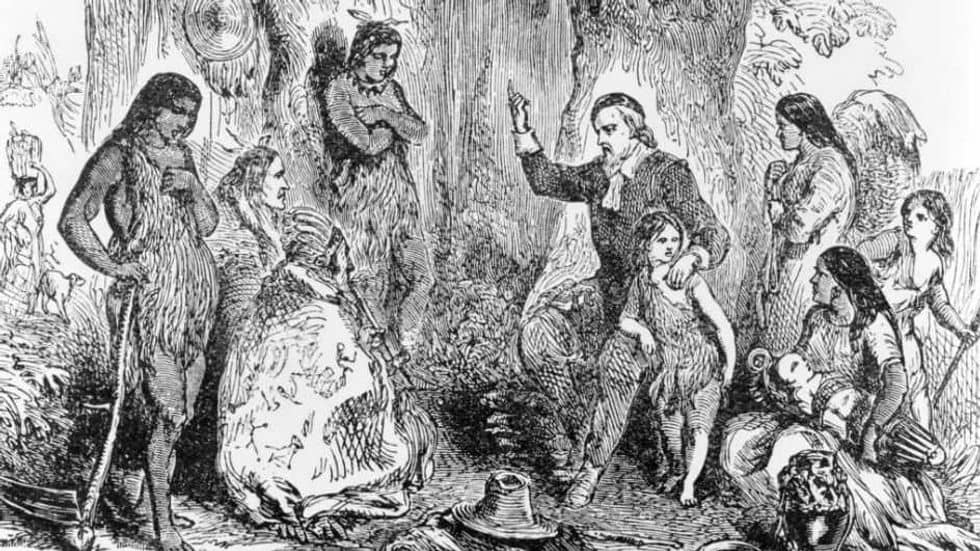
TheBlaze argues that before America had a Constitution, pulpits taught citizens about authority, duty, and government limits. Ministers associated with the “Black Robed Regiment” believed theology had consequences for all of life. For most of American history, pastors did not need state permission to speak on moral and political questions such as slavery, war, temperance, elections, and religious liberty because they viewed the pulpit as accountable first to God.
The organization claims that the modern expectation for pastors to separate biblical teaching from “political” issues would have been foreign to the American church that helped shape the country. The National Religious Broadcasters is challenging this restriction to protect the freedom of churches and pastors to speak from the pulpit without jeopardizing their tax-exempt status.