

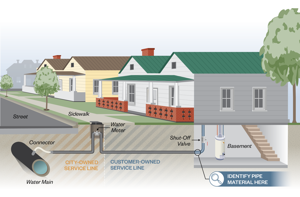

Contract crews have begun work in Danville with a specific mandate to locate and identify water lines. This operational activity is not an isolated municipal effort but is explicitly tied to a broader federal project aimed at addressing pipe identification across the region.
Federal Project Scope and Crew Deployment
The primary objective of these contract crews involves the systematic identification of pipes within Danville. The scope of this work centers on lead water lines, which are the specific target of the current investigation and mapping efforts. By focusing on these particular materials, federal contractors aim to provide a clear inventory of infrastructure that may require attention or replacement.
According to reports from local government sources in Danville, the presence of contract crews signifies an active phase of data collection regarding water distribution systems. The deployment of external personnel for this task indicates a reliance on specialized resources often associated with federal funding streams. These funds typically support infrastructure assessments that go beyond standard municipal capabilities.
The work being conducted is described as part of a larger initiative originating from the federal level. This connection suggests that local efforts in Danville are aligned with national priorities regarding water safety and pipe management. The involvement of contract crews implies a structured approach where specific tasks are assigned to external entities rather than relying solely on internal city departments.
Reports indicate that the identification process is ongoing within the city limits. Crews have been observed operating in various locations as they seek to map out the existing network. This mapping effort is critical for understanding which lines contain lead and which do not, a distinction essential for public health planning.
The Specific Focus on Lead Identification
Central to this federal project is the identification of lead pipes. The crews are tasked with distinguishing these materials from other types of piping within the municipal water system. This differentiation allows officials and engineers to prioritize areas where potential contamination risks may exist.
The focus on lead specifically addresses concerns regarding material composition in aging infrastructure. Lead service lines have historically been used but pose significant health challenges if they leach into drinking water sources. Identifying these specific pipes is the first step toward any subsequent remediation or replacement strategies that might be developed by local and federal authorities.
Contract crews working in Danville are executing this identification task with precision. Their work involves inspecting access points, reviewing historical records if available through their data systems, and physically locating lines where possible. This physical verification complements the administrative goal of creating a comprehensive ledger of pipe materials within the city boundaries.
The federal nature of the project adds a layer of oversight to these activities. It ensures that the identification process adheres to specific standards set by higher-level agencies. These standards are designed to guarantee accuracy in reporting and completeness in data collection across different municipalities participating in similar initiatives.
Implications for Local Infrastructure Management
The presence of contract crews working under federal auspices changes the dynamic of local infrastructure management in Danville. Instead of a purely reactive approach where issues are addressed only after complaints arise, this project represents a proactive measure to understand the current state of water lines.
Local officials have noted that having accurate data on pipe materials is essential for long-term planning. Without knowing exactly which pipes contain lead, resource allocation for repairs or replacements would be inefficient and potentially unsafe. The federal project provides the mechanism to acquire this necessary information without requiring immediate expenditure from local tax revenues alone.
The work being done in Danville serves as a model for how other cities might approach similar infrastructure challenges through partnership with federal programs. By utilizing contract crews, municipalities can leverage external expertise and funding to complete tasks that would otherwise be beyond their capacity.
Reports emphasize that the identification of lead pipes is just one component of a larger conversation about water quality and safety. The data gathered by these crews will likely inform future policy decisions regarding pipe replacement schedules, public health advisories, and infrastructure investment priorities in Danville.
Crews continue their work methodically through designated areas within the city. Their progress is tracked to ensure that all relevant zones are covered according to federal project requirements. This structured methodology helps prevent gaps in data collection that could leave certain neighborhoods without proper assessment of their water line materials.
The collaboration between contract crews and local government entities highlights a shared interest in resolving infrastructure issues efficiently. While the primary execution falls on the shoulders of outside contractors, the ultimate benefit is intended for residents who rely on safe drinking water supplied through these municipal lines.