


Trump Administration's Economic Offensive Against Iran
President Donald Trump is pursuing a rigorous strategy aimed at the "strangulation" of Iran's economy, a move intended to force the nation's leadership to abandon its ambition of developing nuclear weapons. This aggressive economic posture was detailed by Senator Dave McCormick (R-PA) during an interview with Breitbart News. McCormick characterized the Iranian government as "radical lunatics," underscoring the administration's view that such leadership necessitates extreme pressure to deter its nuclear program.
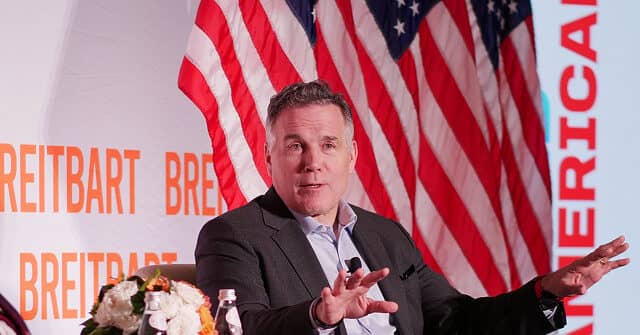
Senator McCormick elaborated on the specifics of this foreign policy approach during his discussion with Breitbart Editor-in-Chief Alex Marlow. The interview occurred at the 2026 Republican Jewish Coalition (RJC) National Leadership Summit, an influential gathering that took place on August 31. During the wide-ranging conversation, McCormick offered insight into the president's deliberate choice to prioritize economic warfare as the primary instrument of pressure against Tehran, rather than opting for a direct military intervention.
Marlow directly questioned McCormick about the rationale behind President Trump's decision "not to basically level Iran completely with bombs." In response, McCormick referenced a foundational directive from the president, stating that from his very first day in office, Trump asserted the administration would "use all the tools at our disposal." This comprehensive mandate encompasses both conventional military options and robust economic measures. While the administration maintains access to a full spectrum of tools, McCormick clarified that the prevailing focus has distinctly shifted towards applying intense financial pressure.
The Strategy of Economic Strangulation
The concept of "economic strangulation," as articulated by Senator McCormick, implies a comprehensive and sustained effort to severely impede Iran's financial capabilities and international trade. While specific mechanisms were not detailed by McCormick, such a strategy typically involves a broad application of sanctions, trade restrictions, and financial blockades designed to cut off revenue streams, disrupt banking operations, and limit the country's access to global markets. The overarching goal is to create such significant economic hardship that the Iranian regime is compelled to reassess and ultimately abandon its nuclear ambitions, viewing the economic cost as too high to bear.
This approach is designed to cripple the regime's financial infrastructure, thereby limiting its capacity to fund both its nuclear program and other regional activities deemed destabilizing by the United States. By targeting the economic lifeblood of the nation, the administration aims to achieve its strategic objectives without resorting to the direct military engagement that often carries immense human and geopolitical costs.
Prioritizing Financial Pressure Over Military Conflict
The strategy articulated by Senator McCormick signifies a distinct and deliberate shift in the Trump administration's approach to confronting the geopolitical threat emanating from Iran. Instead of launching a large-scale kinetic military operation, which involves direct combat and the use of military force, President Trump has chosen to wage an economic war. This non-kinetic conflict is specifically engineered to cripple the Iranian regime's financial infrastructure, aiming to undermine its capacity to function and pursue its nuclear ambitions.
McCormick explicitly stated that this economic strategy is designed to compel the "radical lunatics" currently governing Iran to permanently abandon any efforts to develop nuclear weapons. The senator presented economic strangulation as a more viable and preferred method when compared to the alternative of bombing Iranian facilities. Breitbart's Alex Marlow noted that a military strike on Iranian sites was indeed an option that the president had considered but ultimately decided against, highlighting the gravity of the choice made.
Weighing the Costs of Direct Intervention
The administration's prioritization of economic tools over military ones signals a fundamentally different approach to managing regional conflicts and achieving strategic objectives. McCormick's remarks suggest a belief within the administration that sustained financial pressure can effectively achieve the critical goal of preventing nuclear proliferation without incurring the immediate and substantial costs, risks, and potential for widespread destabilization associated with direct military combat. These costs typically include significant financial expenditure, potential loss of life for military personnel, and the risk of escalating conflicts into broader regional wars.
This strategic preference is rooted in the understanding that military interventions, while sometimes necessary, often carry unforeseen consequences and can lead to prolonged engagements. By opting for economic warfare, the administration aims to exert maximum leverage against Tehran, forcing a change in behavior through financial duress rather than through kinetic force. McCormick underscored that this is not an accidental outcome but a deliberate choice made by the president to achieve specific foreign policy objectives with a calculated risk profile.
Diplomatic Rhetoric and Strategic Messaging at the RJC Summit
Senator McCormick’s forthright description of the Iranian leadership as "radical lunatics" is indicative of the Trump administration's consistently harsh rhetoric directed at the regime in Tehran. This strong language serves to underscore the profound severity with which the United States views Iran's ongoing nuclear program and its broader regional activities. Such characterizations are often employed to justify aggressive policy stances, including the implementation of economic warfare, by framing the adversary as inherently irrational and dangerous, thereby necessitating decisive and uncompromising action.
The setting for these significant policy revelations, the 2026 Republican Jewish Coalition (RJC) National Leadership Summit, is particularly noteworthy. This annual event is a key forum dedicated to strengthening the bonds between the Republican Party and Jewish communities across the United States. It serves as a vital platform for discussing U.S. foreign policy, particularly concerning issues of national security, the Middle East, and the security of Israel. McCormick's decision to detail the administration's hardline stance on Iran at this summit highlights the strategic importance of this audience and the alignment of the economic pressure strategy with the concerns often voiced within these communities regarding regional stability and the threat of nuclear proliferation.
By presenting economic sanctions as a critical component of national security policy at the RJC Summit, McCormick reinforced the administration's commitment to protecting U.S. interests and allies in the region. The summit provided an ideal backdrop for articulating a strategy that aims to neutralize perceived threats without immediate military engagement, a position that resonates with many who seek robust but carefully considered foreign policy interventions.
Unanswered Specifics and International Reactions
While Senator McCormick provided a clear outline of the administration's strategic intent, he did not offer specific details regarding the precise mechanisms of the economic strangulation. This includes an absence of information on which particular sanctions or trade restrictions are currently being enforced or are slated for implementation. The lack of granular detail leaves open questions about the immediate practical implications of this broad economic offensive.
As of the available reporting, there has been no official response from Iranian officials regarding Senator McCormick's statements or the associated economic measures. The focus remains squarely on the Trump administration's declared intention to leverage financial pressure as the principal tool for achieving its foreign policy objectives in relation to Iran's nuclear program and regional influence.