

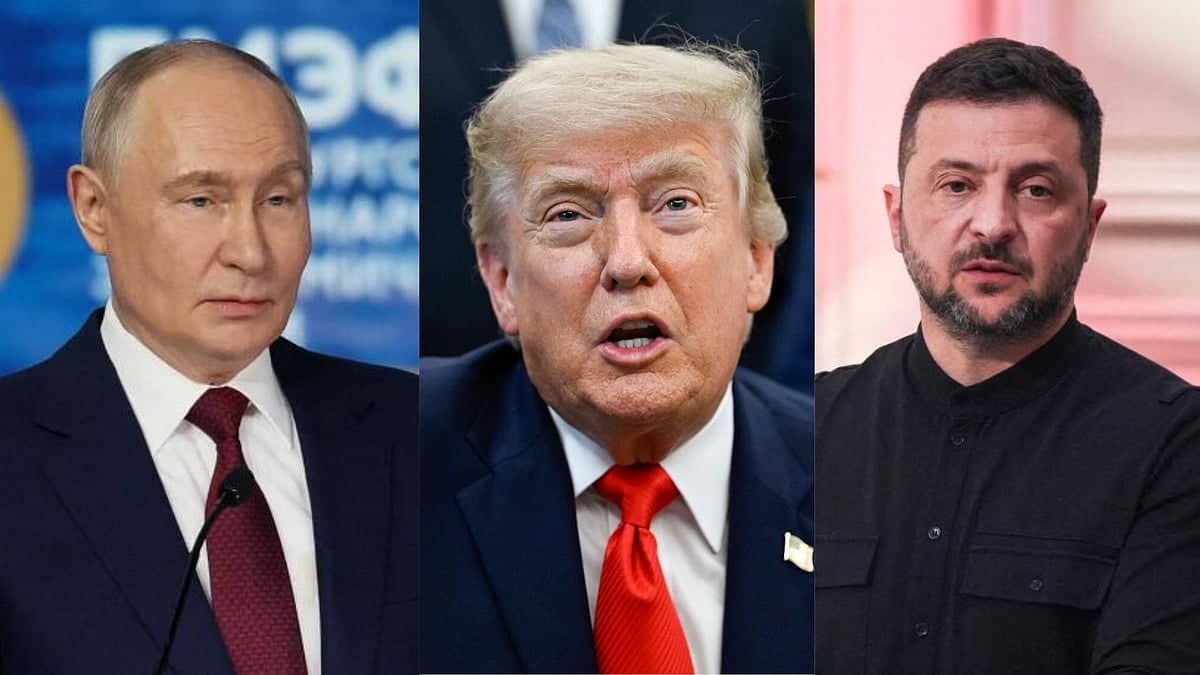

Divergent Strategies in Active Conflicts
The ongoing geopolitical landscape highlights contrasting approaches taken by leaders of major powers regarding wars they initiated. According to an article published by the International New York Times and reported by Deccan Herald on July 12, 2026, the current situation involves two distinct leadership styles that have resulted in similar outcomes: stagnation.
The report contrasts the ongoing conflict in Ukraine with past actions in Iran. It notes that while one leader sought an exit from the conflict, the other continued to advance. The article describes these as "two leaders of major powers struggling to find their ways out of wars of choice." This characterization suggests that despite different tactical implementations, both Vladimir Putin and Donald Trump face difficulties in concluding their respective engagements, having initiated them without external compulsion.
The text explicitly states that neither man has come close to achieving his goals. This assessment frames the current state of affairs not as a victory for either side, but as a mutual struggle with defined objectives remaining unfulfilled, underscoring a broader challenge in modern conflict resolution when leaders choose to engage.
The Implications of Chosen Conflicts
The concept of "wars of choice" is central to understanding the predicaments of both leaders. Unlike conflicts entered out of direct defense or international mandate, these engagements are initiated based on strategic calculations or perceived national interests by the leadership. This inherent choice implies a greater degree of control over initiation and, theoretically, termination. However, the current analysis by the International New York Times suggests that this control often diminishes once hostilities commence, leading to unforeseen entanglements and difficulties in disengagement.
For both Putin and Trump, their decisions to engage in Ukraine and Iran, respectively, were not dictated by an immediate, existential threat to their homelands. Instead, these were strategic decisions aimed at achieving specific geopolitical objectives, whether territorial expansion, regional influence, or a shift in power dynamics. The subsequent struggle to exit these conflicts highlights a complex interplay between initial strategic intent, the realities of military engagement, and the political costs of withdrawal.
Operational Differences: Relentless Advancement Versus Intermittent Pressure
The core of the contrast lies in the methods employed by each leader. The report details the "relentless killing by Putin's Russia in Ukraine." This description indicates a continuous and sustained military campaign aimed at territorial or strategic advancement without significant interruption. This approach typically involves a substantial commitment of resources, personnel, and a willingness to absorb significant casualties, driven by a clear objective of achieving decisive military gains and reshaping the geopolitical landscape of the region.
In direct opposition to this method, the article describes Trump's approach as involving "on-and-off bombing in Iran." This phrasing suggests an intermittent strategy characterized by periods of active engagement followed by pauses, rather than a constant push for ground control or continuous escalation. Such a strategy often aims to exert pressure, deter specific actions, or achieve limited objectives without committing to a full-scale, prolonged military occupation. The juxtaposition of "relentless" versus "on-and-off" serves to illustrate the fundamental difference in how each leader has managed the intensity and duration of their military operations, reflecting distinct philosophies of military engagement.
Challenges Posed by Divergent Tactics
The chosen operational tactics have directly influenced the nature of the challenges faced by each leader in seeking an exit. Putin's relentless campaign in Ukraine, marked by continuous military pressure and territorial claims, has led to a deeply entrenched conflict. The scale of the invasion and the commitment of Russian forces have made any form of withdrawal highly complex, potentially signaling a major political defeat and undermining the initial strategic rationale for the war. The continuous nature of the conflict also means an ongoing drain on resources and a sustained international condemnation, further complicating any path to disengagement.
Conversely, Trump's intermittent bombing campaigns in Iran, while avoiding the full-scale commitment seen in Ukraine, presented their own set of challenges. This "on-and-off" approach, often characterized by targeted strikes rather than broad military offensives, may have failed to achieve decisive outcomes or compel the desired behavioral changes from the Iranian leadership. Without a clear, sustained effort to achieve a defined military or political objective, these actions left the underlying issues unresolved, creating a prolonged state of tension without a clear path to resolution or withdrawal. The lack of continuous pressure meant that while immediate escalation might have been avoided, a definitive conclusion remained elusive, leaving the situation in a perpetual state of unresolved conflict.
The Shared Predicament: Leaders Stuck in Chosen Conflicts
Despite the operational differences, the report argues that both leaders are currently stuck. The article posits that the story is defined by these two leaders struggling to find their ways out of wars they chose to initiate. This suggests that the initial decision to engage in conflict, regardless of the tactical approach, has led to a situation where disengagement is difficult for both parties, highlighting a universal challenge in managing modern geopolitical conflicts.
The narrative implies that the strategies adopted have not facilitated an exit. For Putin, the "relentless" nature of the campaign in Ukraine may have entrenched the conflict, making withdrawal politically or militarily complex due to the significant investments made and the high stakes involved. The continuous nature of the fighting has solidified positions and created a protracted struggle where neither side can easily concede without significant loss. For Trump, the "on-and-off" bombing campaign in Iran appears to have failed to produce a decisive conclusion, leaving the situation unresolved and the initial objectives unfulfilled. This intermittent approach, while perhaps intended to limit engagement, ultimately prevented a clear resolution, leaving the United States in a state of ongoing, low-level confrontation without a definitive end point.
Current Status: A Mutual Stalemate
The report concludes that currently, neither side appears to have achieved their objectives. This assessment applies to both the conflict in Ukraine and the actions taken regarding Iran. The phrase "now both are stuck" underscores the lack of forward momentum or successful resolution for either leader, indicating a costly and prolonged stalemate.
The article does not provide specific details on the military capabilities or political pressures facing each leader at this exact moment, but it firmly establishes that the result of their respective strategies is a stalemate. The contrast in war tactics—Putin's continuous advance versus Trump's intermittent strikes—has led to a convergent outcome where both leaders are unable to move forward toward their goals. This shared predicament suggests that while the paths to engagement differed significantly, the ultimate challenge of achieving resolution and disengagement from "wars of choice" remains a formidable obstacle for even the most powerful global leaders.
The report attributes this analysis to the International New York Times, which published the piece on July 12, 2026. The Deccan Herald republished this content as part of its World news coverage, focusing on United States and international geopolitical developments involving Ukraine, Russia, Vladimir Putin, and Donald Trump, providing a critical perspective on the enduring challenges of modern warfare and leadership.