

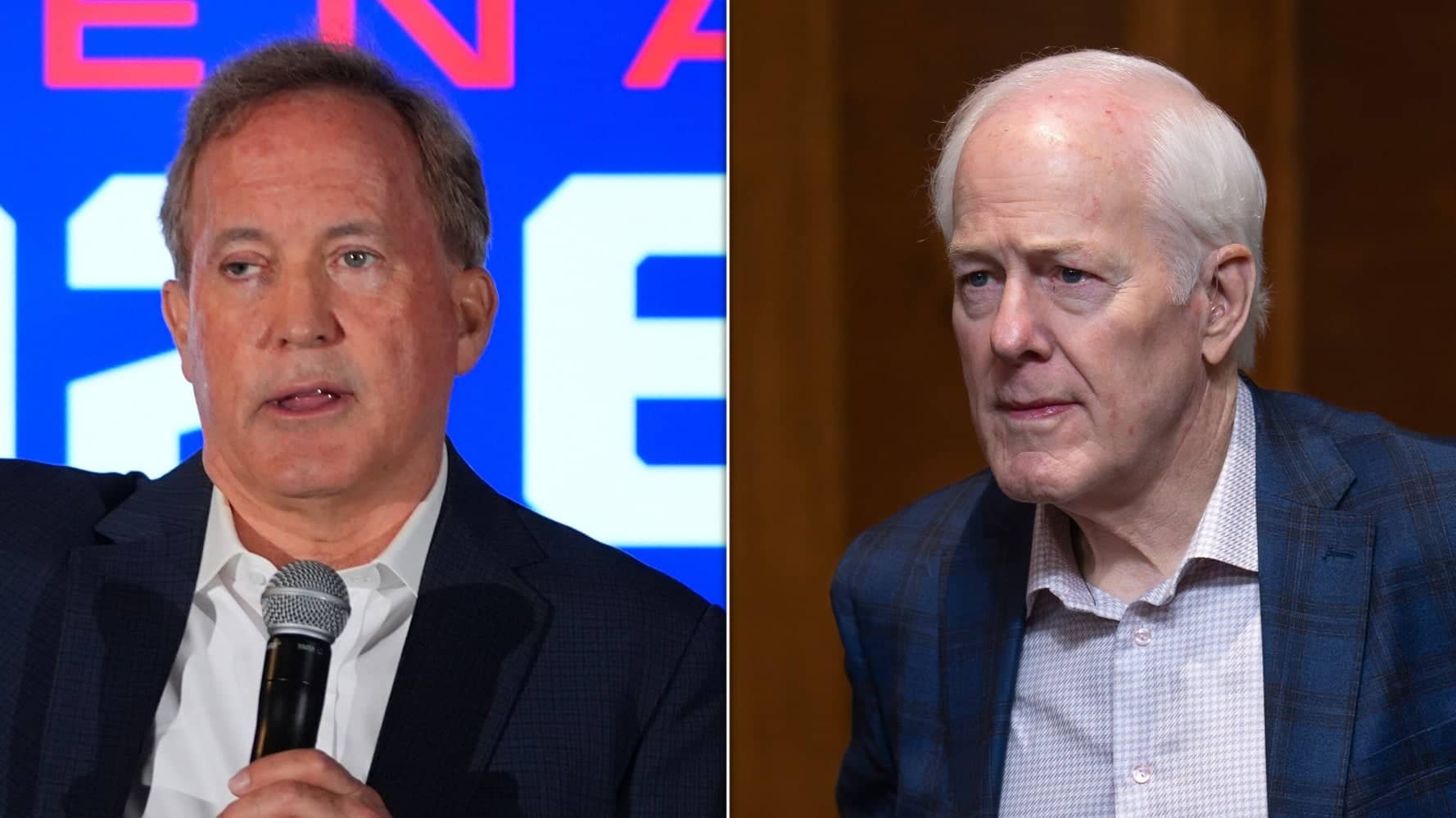

On the eve of the Texas Republican Senate runoff election, incumbent Senator John Cornyn and State Attorney General Ken Paxton adopted a distinct campaign strategy, eschewing traditional public events in favor of an intensive media blitz across the state. Both candidates dedicated their final pre-election efforts to "flooding Texas airwaves," a move indicative of the high stakes and broad geographic reach required to influence voters in a statewide runoff.
The decision by both campaigns to forgo rallies, town halls, or public appearances on the last day before polls opened marked a strategic pivot. Instead of direct voter interaction, the focus was placed squarely on mass communication channels, including television, radio, and digital advertising platforms. This approach aimed to deliver their final messages to the widest possible audience in the sprawling state of Texas, where direct, in-person campaigning across all major media markets can be logistically challenging in the final hours. The sheer size of Texas, with its numerous media markets spanning thousands of square miles, necessitates a robust and well-funded advertising strategy to ensure broad message penetration.
The Candidates and Their Campaigns
Senator John Cornyn's Emphasis on Experience
Senator John Cornyn, a prominent figure in Texas and national politics, entered the runoff emphasizing his extensive experience and legislative record. As a seasoned incumbent, Cornyn's campaign likely sought to highlight his established presence in Washington D.C. and his work on behalf of Texans over multiple terms. His messaging, disseminated through the airwaves, would have aimed to reinforce his qualifications, his understanding of federal legislative processes, and his ability to navigate the complexities of national policy-making. The "experience" narrative, a key theme identified in the broader Texas runoff landscape, was central to his appeal, suggesting stability and proven leadership in a challenging political environment.
Attorney General Ken Paxton's Call for Change
Conversely, State Attorney General Ken Paxton positioned himself as a candidate for change, a common theme among challengers seeking to unseat incumbents or challenge established political figures. Paxton's campaign, also heavily reliant on media advertisements, would have focused on differentiating his platform and vision from that of the incumbent. The "change" narrative often resonates with voters seeking new directions or a different approach to governance, and Paxton's airwave campaign would have worked to amplify this message across diverse demographics within the Republican electorate. This strategy aimed to tap into any desire for a fresh perspective or a more assertive stance on particular issues, framing the election as an opportunity for a new chapter in representation.
The Dynamics of Texas Runoff Elections
Texas election law mandates a runoff election when no candidate receives more than 50% of the vote in a primary election. This system often leads to a second, more focused campaign period where candidates must consolidate support from voters who initially backed other contenders. Runoffs typically see lower voter turnout compared to general elections or even initial primaries, making targeted and broad-reach communication strategies particularly crucial. In a runoff, the electorate is often more engaged but also smaller, requiring campaigns to be highly efficient in reaching their core supporters and persuading swing voters.
The vast geographic and demographic diversity of Texas further complicates campaign efforts. From the major metropolitan areas like Houston, Dallas-Fort Worth, San Antonio, and Austin, to the more rural regions of the Panhandle, West Texas, and the Rio Grande Valley, reaching voters effectively requires significant financial investment in media. "Flooding the airwaves" implies a substantial expenditure on advertising slots across various television, radio, and digital media markets, ensuring that campaign messages penetrate different communities simultaneously. This widespread advertising effort is designed to ensure that voters, regardless of their location within the state, are exposed to the candidates' final appeals.
The financial commitment required for such an extensive media campaign on the final day highlights the strategic importance placed on last-minute voter persuasion and mobilization. With no public events to capture media attention organically, paid advertising becomes the primary vehicle for message delivery, allowing campaigns to control the narrative and address specific voter concerns without the unpredictability of live interactions.
"Experience" Versus "Change" as a Dominant Theme
The contrast between "experience" and "change" was not unique to the Cornyn-Paxton Senate runoff but emerged as a recurring motif in several key Republican runoff elections across Texas. This thematic tension often reflects internal party debates about leadership, direction, and the desired characteristics of their representatives. In some races, voters might prioritize a candidate's established track record and ability to navigate complex political landscapes, while in others, a desire for fresh perspectives and a departure from the status quo might prevail. This overarching theme provided a clear framework for voters to evaluate candidates beyond individual policy positions, focusing instead on the broader philosophical approach to governance.
For the Senate runoff, this dichotomy presented Republican voters with a clear choice: to reaffirm a long-standing political career or to opt for a candidate promising a different approach. The final day's campaign strategy, centered on pervasive media presence rather than direct public engagement, underscored the candidates' belief that their respective messages of "experience" or "change" could be most effectively delivered through a saturation of broadcast and digital channels. This intensive advertising push served as the candidates' ultimate effort to define themselves and their opponents in the minds of the electorate before ballots were cast.
The absence of public campaign events on the final day allowed both Cornyn and Paxton to maximize their reach through paid media. This approach enabled them to control their messaging precisely and deliver it consistently to a broad electorate, aiming to sway undecided voters and mobilize their bases in the critical hours leading up to election day. The focus on airwaves ensured that their final arguments reached homes and devices across Texas, making a last appeal for votes without the logistical demands of physical appearances.