

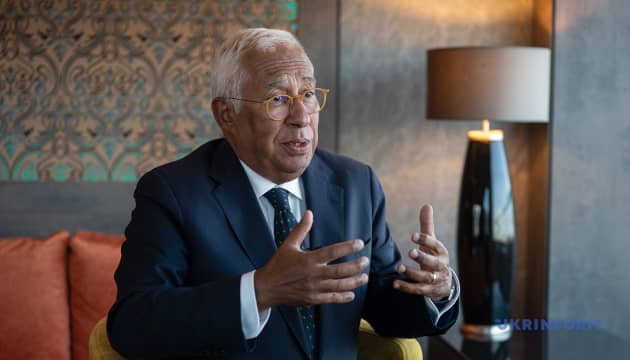

EU Pledges Escalated Pressure on Moscow
The European Union has announced plans to intensify its pressure on Russia, a move tied directly to the cessation of hostilities and the pursuit of diplomatic resolutions. According to statements made by Costa, an official representing the EU's position, this increased pressure is not intended as a temporary measure but rather as a sustained effort until specific conditions are met by Moscow.
Costa explicitly outlined the criteria for this escalation, stating that the EU will continue to apply pressure "until it ends killing and shows a genuine commitment to peace." This declaration underscores a conditional approach to diplomatic engagement, linking the lifting or reduction of pressures directly to observable changes in Russian military conduct and political intent.
The statement reflects a hardening of the EU's stance, suggesting that previous measures may have been insufficient to alter the trajectory of the conflict. By framing the pressure as contingent upon ending killings, the EU is signaling that humanitarian considerations are central to its foreign policy calculations regarding Russia.
Conditions for De-escalation
The core of Costa's address focused on the prerequisites for any potential shift in the EU's strategy. The official did not specify the exact nature of the "pressure" that would be applied, leaving open whether this refers to economic sanctions, diplomatic isolation, or military aid to Kyiv. However, the conditionality remains clear: the pressure is a tool designed to force a change in behavior.
The phrase "genuine commitment to peace" introduces a subjective element into the EU's policy framework. Determining what constitutes a "genuine" commitment will likely become a point of contention in future diplomatic exchanges. The EU has not provided a detailed checklist for what actions Moscow must take to satisfy this requirement, nor has it defined how such a commitment would be verified.
Implications for Regional Security
This announcement comes amidst ongoing reports of continued violence along the front lines. Recent data from Ukrinform indicates that Russian forces have launched significant numbers of attacks in various regions, including Zaporizhzhia and Odesa, resulting in civilian casualties. These developments provide the immediate context for Costa's warning.
The timing of the statement suggests a response to the persistent nature of the conflict. Despite previous rounds of sanctions and diplomatic efforts, the intensity of the fighting has not diminished. The EU's decision to step up pressure indicates a belief that current strategies are not achieving their desired outcome of halting hostilities.
International Response and Verification
While Costa's statement outlines the EU's position, there is no immediate indication of how other international actors, such as the United States or NATO allies, will align with this intensified approach. The EU has historically coordinated closely with its transatlantic partners on Russia policy, but specific details regarding joint actions were not included in Costa's remarks.
Verification of Moscow's "genuine commitment to peace" remains a logistical and political challenge. Historically, ceasefires and peace agreements have been difficult to sustain without robust monitoring mechanisms. The EU has not yet outlined such mechanisms in this context, leaving the practical implementation of this policy vague.
Focus on Civilian Protection
The emphasis on ending "killing" highlights the humanitarian dimension of the EU's foreign policy. Recent reports cited by Ukrinform include details of strikes on civilian infrastructure, such as apartment buildings in Zaporizhzhia and attacks near Sochi. These incidents underscore the stakes involved in the EU's demand for a cessation of violence.
By linking pressure to the end of killings, the EU is attempting to frame its policy in moral terms. This approach aims to garner domestic and international support by presenting the sanctions or other pressures as necessary measures to protect human life rather than purely geopolitical maneuvers.
Future Diplomatic Trajectory
The statement leaves open the question of what happens if Russia does not cease killings. Costa did not specify whether the EU would escalate further, perhaps imposing more severe sanctions or providing additional military support to Ukraine. The lack of specific next steps suggests that the EU is keeping its options flexible while establishing a clear red line.
The announcement serves as a warning to Moscow that the status quo is unacceptable to Brussels. It signals that the EU is willing to maintain or increase costs for Russia indefinitely until its actions align with the stated goal of peace. This indefinite timeline places significant uncertainty on future diplomatic negotiations.