

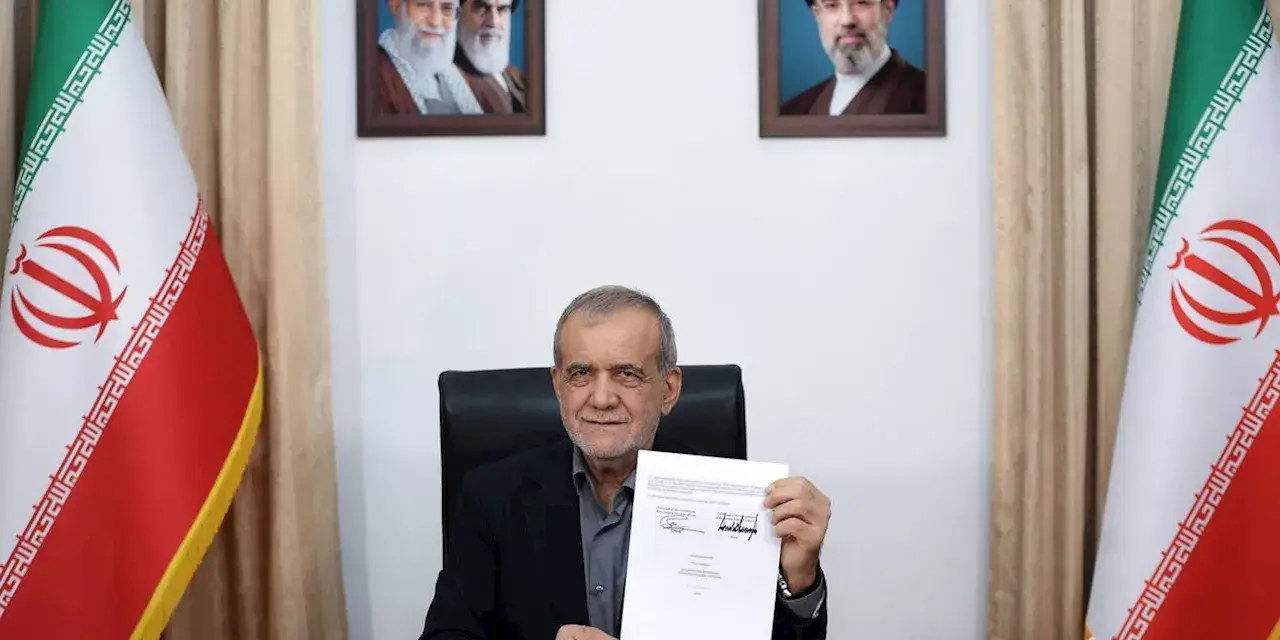

Trump Signs Memorandum of Understanding With Iran
On June 17, 2026, U.S. President Donald Trump signed a memorandum of understanding (MOU) with Iran.
The following day, Iranian President Masoud Pezeshkian signed the MOU in Tehran, Iran, on June 18, 2026.
Pakistan's Prime Minister Shehbaz Sharif mediated and also signed the agreement.
Key Provisions of the Agreement
- The MOU aims to immediately and permanently terminate military operations on all fronts, including in Lebanon.
- The agreement establishes a 60-day window for negotiating a final, comprehensive peace deal. This period can be extended by mutual consent.
Key provisions of the interim agreement include:
- The immediate reopening of the Strait of Hormuz.
- An Iranian commitment to allow toll-free passage for commercial vessels in the Strait of Hormuz for 60 days.
- A U.S. commitment to immediately lifting its naval blockade of Iran.
Regarding economic terms, the agreement includes a commitment from the United States and regional partners to develop a plan for at least $300 billion for Iran's reconstruction and economic development.
Nuclear Program Commitments
In relation to nuclear activities, Iran affirmed it would not procure or develop nuclear weapons. The nation also agreed to maintain the current status quo of its nuclear program pending a final deal.
Statements from Leadership
U.S. President Trump stated that the deal "achieves everything we set out to accomplish and much more," including preventing Iran from obtaining a nuclear weapon.
Iranian President Masoud Pezeshkian called the agreement a "historic" document.
The MOU received approval from Iran's Supreme Leader Ayatollah Mojtaba Khamenei. He stated that while face-to-face negotiations with the United States would occur, they do not mean accepting the enemy's point of view.
Political Reactions to the Deal
Critics questioned Democrats' opposition to Trump's Iran MOU. These critics argued that ending the costly, unnecessary war is the right move regardless of political credit.
The piece discussed the failure of what was described as a "war of choice" and warned that torpedoing the MOU would make Democrats co-owners of the next war. The text drew parallels to endless conflicts like Afghanistan. It emphasized that prolonging a failed war in hopes of better terms is denial, not resolve.
Democratic Responses
Many Democrats welcomed the end of the war but criticized the deal itself.
Senator Chris Murphy (D-Connecticut) called the deal "essentially a surrender to Iran on Iran's terms." He added that he would support it as an "off-ramp to a war we never should have gotten into."
Senator Chuck Schumer (D-New York) stated, "When you look at the 14 points that the administration has agreed to, it looks like Iran has won on just about every one of them."
Critical Voices from Both Parties
Republicans also voiced strong criticism regarding the agreement.
Senator Ted Cruz (R-Texas) called the MOU a "disastrous mistake."
Former Vice President Mike Pence described the MOU as "appeasement" and "a lifeline to the Iranian regime."
Critics from both parties raised concerns regarding:
- The lifting of sanctions.
- The $300 billion reconstruction fund.
Specific criticisms included perceived failures to secure firm commitments on Iran's nuclear program or ballistic missiles.
Postponement of Follow-Up Talks
Planned U.S.-Iran talks in Switzerland for June 19, 2026, were postponed. The postponement followed renewed fighting between Israel and Hezbollah in Lebanon.
Israel's military reported killing four Israeli soldiers during this period. Conducting retaliatory airstrikes that killed at least 18 people in south Lebanon also occurred.
Iranian Negotiator Stance
The semi-official Tasnim news agency indicated Iranian negotiators' position. They stated they needed to see signs of implementation of the interim agreement from the United States before proceeding with further peace talks.
Market and Traffic Impacts
Oil prices fell more than $1 per barrel on June 18, 2026, after the agreement was signed. Commercial vessel traffic in the Strait of Hormuz notably increased following the signing.