

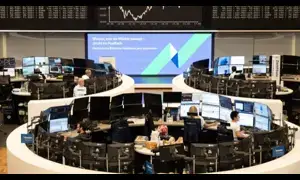

Stock Exchanges Report Divergent Closing Values
Major stock exchanges across Europe concluded their trading sessions on Tuesday with mixed results, reflecting a market environment where financial metrics were secondary to international diplomatic developments. The closing figures varied across the continent's primary indices, indicating that investors were not uniformly bullish or bearish but rather cautious as they monitored events unfolding beyond the trading floors.
The mixed performance suggests a lack of consensus among market participants regarding the immediate economic implications of the day's geopolitical news. While some sectors may have seen gains driven by specific commodity prices or corporate earnings, others likely faced pressure from uncertainty surrounding international relations. The overall picture presented by the European financial markets was one of hesitation, with capital flows adjusting to the shifting landscape of global power dynamics.
Trading volumes and volatility were influenced heavily by the timing of announcements coming from New York, where the United Nations General Assembly is currently in session. Investors across London, Paris, Frankfurt, and other major European financial hubs watched the proceedings closely, as decisions made by world leaders during these assemblies often have ripple effects on currency values, energy prices, and trade agreements that directly impact European economic stability.
Global Diplomacy Takes Center Stage at United Nations
The primary driver of market sentiment this week was the concentration of geopolitical tensions centered around the United Nations General Assembly. Attention from the business community and media outlets alike has shifted toward the diplomatic activities taking place in New York, where a significant number of high-ranking officials have gathered for the annual summit.
Among those present at the assembly are several leaders from European nations. Their attendance underscores the importance of the current international climate and the role that European governments play in shaping global policy responses to emerging crises. The presence of these officials has been a focal point for analysts, who track diplomatic outcomes as leading indicators for future economic cooperation or conflict.
The focus on the United Nations General Assembly has created an environment where geopolitical risk is priced into assets more aggressively than usual. As high-ranking officials engage in bilateral meetings and multilateral negotiations, market participants are attempting to decipher the potential outcomes of these discussions. The uncertainty inherent in diplomatic processes means that financial markets remain sensitive to every statement and press release issued by the attendees.
Impact of European Leadership Presence
The participation of European leaders at the UN General Assembly adds a layer of complexity to the market analysis. These leaders are not merely observers but active participants in shaping the discourse on global issues that affect trade, security, and economic policy.
Observers note that the statements made by these officials during the assembly could influence investor confidence in European markets. If the diplomatic efforts lead to tangible agreements or de-escalation of tensions, it may provide a boost to market stability. Conversely, if negotiations stall or result in heightened rhetoric, financial markets may react with increased volatility.
The media coverage surrounding the event has been extensive, highlighting the interconnectedness of political decisions and economic outcomes. Reports originating from breakingthenews.net and aggregated by Biztoc on September 22, 2026, indicate that the business world is closely monitoring these developments, treating the UN General Assembly as a critical barometer for the health of global markets in the coming weeks.
Market Focus Remains Fixed on International Relations
As the trading day concluded, the narrative dominating the financial news cycle was not corporate performance or domestic economic data, but rather the geopolitical landscape. The mixed closing values of European stock exchanges serve as a testament to the difficulty investors face in isolating economic fundamentals from political noise.
The concentration of high-ranking officials at the United Nations General Assembly has created a period of heightened scrutiny for European markets. With leaders from across the continent engaged in diplomatic dialogue, the potential for policy shifts that could alter trade relationships or energy supplies remains a key variable for market strategists.
Looking ahead, the outcomes of these diplomatic engagements will likely dictate the direction of European financial markets in the immediate future. Until clarity emerges from New York, investors are expected to maintain a cautious stance, with mixed trading sessions becoming a regular feature until the geopolitical situation stabilizes or provides clearer signals for economic policy.