

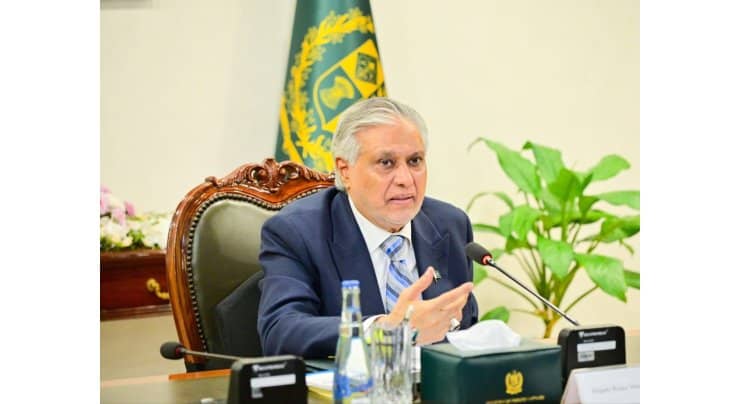

Dar Calls for Multilateral Diplomacy at Margalla Dialogue
Pakistan Deputy Prime Minister and Foreign Minister Ishaq Dar addressed the Margalla Dialogue 2026 on November 10, urging a stronger role for diplomacy, dialogue, and multilateral cooperation to address growing global tensions. Speaking at the event, Dar outlined Islamabad’s diplomatic initiatives regarding regional conflicts in South Asia, the Middle East, and Afghanistan.
Dar described the changing international landscape as being marked by intensifying great-power rivalries, prolonged conflicts, weakening arms control arrangements, and growing links between geopolitics and economic competition. He warned that instability in the Gulf and Red Sea could disrupt global trade, energy supplies, and economies. Additionally, he noted that rapid advances in artificial intelligence and cyber capabilities are creating new security challenges.
Citing Palestine and Gaza as examples of the consequences of impunity, Dar stated that Pakistan remains committed to United Nations Charter principles and keeping diplomatic channels open.
Regional Security and Sovereignty Stances
On South Asian stability, Dar warned that unresolved disputes, military asymmetries, and unilateral actions continue to pose threats. He referenced Pakistan's response to India's aggression in May 2025 through Operation Bunyan-un-Marsoos, describing it as a demonstration of the country's determination and capability to defend national sovereignty.
Dar reiterated that while Pakistan seeks peace, it will firmly defend its sovereignty. He stressed that a just settlement of the Jammu and Kashmir dispute in accordance with relevant UN Security Council resolutions is essential for lasting regional peace.
Addressing water security, Dar warned against attempts to weaponise water, reaffirming Pakistan's commitment to safeguarding its rights under the Indus Waters Treaty. He emphasized that protecting national resources remains a non-negotiable aspect of sovereignty.
Diplomatic Initiatives in the Middle East and Gulf
Dar highlighted Pakistan’s diplomatic initiatives at the UN, particularly its 2025–26 membership of the Security Council. He pointed to the facilitation of Islamabad Talks between the US and Iran in April as evidence of Islamabad’s commitment to resolving conflicts through dialogue. Dar described the subsequent Islamabad Memorandum of Understanding as an important foundation for further negotiations.
He acknowledged close coordination with China, particularly the joint Five-Point Initiative for Restoring Peace and Stability in the Gulf and Middle East Region issued on March 31, 2026, in Beijing. This initiative underscores Pakistan’s role in bridging regional divides through multilateral frameworks.
The deputy prime minister said Pakistan is maintaining diplomatic engagement with regional partners—including Qatar, Saudi Arabia, Türkiye, and Egypt—through the R-4 framework, as well as with European partners, to sustain negotiations and prevent escalation. He also referred to the Makkah Joint Defence Agreement with Saudi Arabia and Türkiye as key pillars of these security collaborations.
Afghanistan and International Partnerships
On Afghanistan, Dar described terrorism emanating from Afghan territory as a serious security challenge. He stated that Pakistan would continue protecting its people while supporting a peaceful, stable, and economically integrated Afghanistan. He stressed that Afghan territory must not be used for terrorist activities against other countries, particularly Pakistan.
Dar discussed international partnerships, describing relations with China as a cornerstone of foreign policy. He highlighted constructive engagement with the US and expanding cooperation with Saudi Arabia, Türkiye, Iran, Gulf countries, Europe, and Central Asia. These relationships form the basis of Pakistan’s broader strategy to navigate complex geopolitical landscapes while maintaining its independence.