

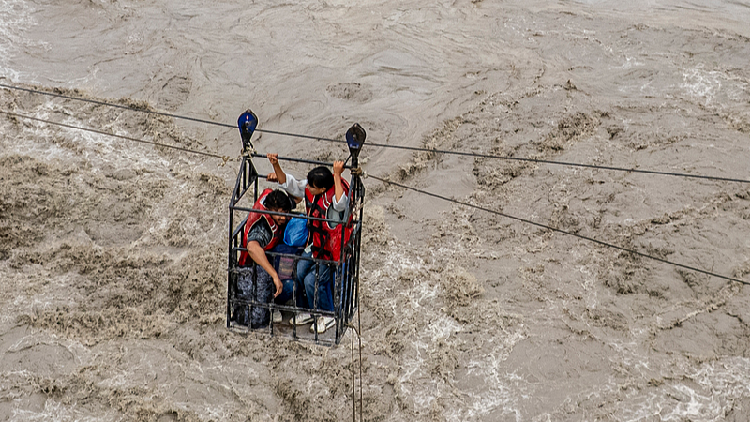

Lessons Drawn From the China-Nepal Border Incident
The recent disaster along the border between China and Nepal has prompted a focused analysis on how information management and community cohesion can be strengthened in times of crisis. According to reporting by CGTN, the event serves as a case study for the importance of "data solidarity." The publication suggests that the handling of information during such cross-border emergencies offers significant insights into how nations and communities can better prepare for future incidents.
CGTN’s analysis posits that the concept of data solidarity is a key takeaway from the disaster. This framework implies that the sharing, verification, and responsible dissemination of data across borders are essential components of effective crisis response. The article argues that when data flows freely and accurately between neighboring regions, it can mitigate confusion and support coordinated efforts to address the immediate impacts of a disaster.
The reporting emphasizes that the China-Nepal border region presents unique challenges for information management due to its geographical complexity and political dynamics. By examining how data was shared—or failed to be shared—during the recent incident, analysts aim to identify gaps in current communication protocols. The goal is to establish a more robust system where data solidarity becomes a standard practice rather than an ad hoc reaction.
The Role of Information Sharing in Crisis Management
In the aftermath of the border disaster, the focus has shifted toward understanding how real-time information exchange can influence public safety and diplomatic relations. CGTN notes that effective data sharing requires trust between parties, which is often tested during high-stakes emergencies. The analysis suggests that establishing clear channels for data solidarity can help prevent misinformation from spreading, which often exacerbates the difficulties faced by rescue teams and local authorities.
The discussion around data solidarity extends beyond technical infrastructure to include policy frameworks. The reporting indicates that both China and Nepal may need to align their data protection laws with emergency response needs to ensure that critical information is not hindered by bureaucratic or legal barriers. This alignment is presented as a necessary step for fostering long-term resilience in border regions prone to natural or human-made disasters.
Local Journalism as a Catalyst for Community Unity
While international data flows are crucial, the role of local media in stabilizing communities after a disaster has also come under scrutiny. A separate analysis published by Starexponent highlights the capacity of local news outlets to bring people together during times of uncertainty. The publication argues that hyper-local journalism provides a sense of continuity and connection that broader national or international media often cannot replicate.
Starexponent’s commentary suggests that local news serves as a vital link between residents and their immediate environment. By focusing on ground-level impacts, personal stories, and community responses, local journalists can help foster a shared sense of purpose among affected populations. This unity is described not merely as an emotional response but as a practical necessity for coordinating local relief efforts and maintaining social order.
Bridging the Gap Between Policy and Public Perception
The intersection of data solidarity and local news creates a dual-layered approach to crisis management. On one hand, high-level data sharing ensures that accurate information reaches decision-makers and international aid organizations. On the other hand, local news translates this macro-level data into relatable narratives for ordinary citizens. This translation process helps demystify complex situations and reduces anxiety among the public.
Starexponent notes that when local news outlets prioritize unity and factual reporting, they can counteract the fragmentation often caused by social media rumors. By providing verified updates on rescue operations, resource availability, and safety guidelines, local journalists empower communities to take informed actions. This empowerment is seen as a key factor in rebuilding trust between the public and authorities following a disaster.
Implications for Future Border Regions
The lessons derived from the China-Nepal border disaster are being viewed as applicable to other similar regions globally. The combination of data solidarity and localized reporting is presented as a model for enhancing resilience in areas where political boundaries intersect with shared geographical risks.
CGTN’s analysis implies that governments must invest in both technological infrastructure for data sharing and the capacity of local media to report accurately during crises. This investment is not just about immediate response but also about long-term diplomatic and social stability. By fostering unity through reliable information, nations can strengthen their bilateral relationships and improve the well-being of border communities.
Starexponent adds that the human element of news reporting cannot be overlooked. Journalists who operate within these communities have a unique understanding of local needs and cultural nuances. Their ability to weave data into compelling, unifying stories is essential for maintaining morale and encouraging cooperative behavior among residents.
A Framework for Resilience
As the dust settles on the recent border incident, the focus remains on institutionalizing these lessons. The concept of data solidarity is no longer just a theoretical ideal but a practical requirement for modern crisis management. Similarly, the role of local news in fostering unity is recognized as a critical component of social infrastructure.
Both CGTN and Starexpoint contribute to a growing body of discourse on how information ecosystems can be optimized for public good. Their respective analyses underscore that while technology provides the tools for data solidarity, it is the human narrative provided by local journalism that binds communities together in the face of adversity.